

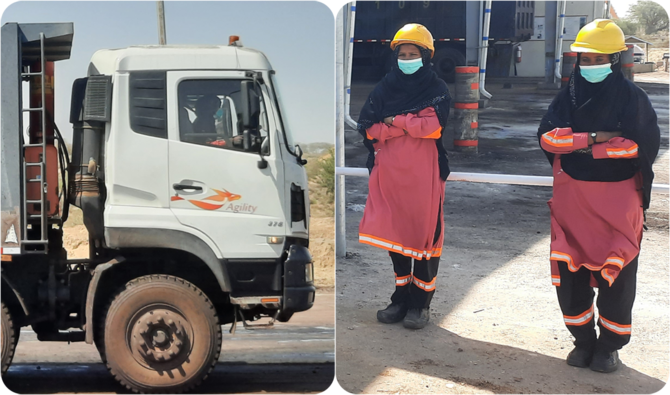

KARACHI: Sharifan descends into a 160-meter-deep pit with a gigantic dumper truck and returns with a huge quantity of coal every day to supply nearby power plants in a remote and one of the most impoverished districts of Pakistan's southern Sindh province.
The combustible, black rock has provided residents of Tharparkar district a way out of abject poverty and a source to accelerate economic growth in the country.
According to the China-Pakistan Economic Corridor’s Energy Planning Report, the impoverished desert region has 175 billion tons of coal reserves which were discovered by the Geological Survey of Pakistan in the 1980s. In terms of energy, these coal deposits are equivalent to 50 billion tons of oil — more than Saudi and Iranian oil reserves combined.
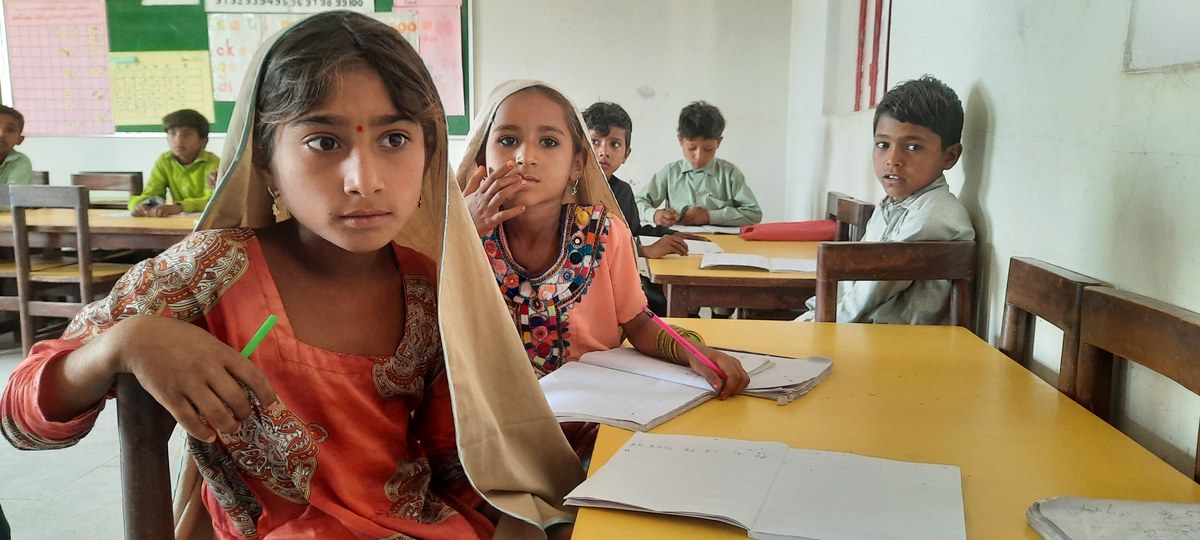
Children can be seen at a school in Tharparkar, Pakistan, on February 22, 2022. (AN Photo by Khurshid Ahmed)
Like hundreds of others in the region, Sharifan, who goes by just one name, also decided to grab the opportunity that was knocking at her door and joined a mining firm as a dump truck driver — a job mostly performed by men — last year.
She said that women in her village were not allowed to work, but she went ahead with it along with some others.
“I joined the workforce because of poverty,” she told Arab News. “The times were tough for us and everyone in the family was struggling for survival.”
In 2014, Pakistan decided to utilize Thar coal for power generation under the multi-billion-dollar China-Pakistan Economic Corridor (CPEC) framework. For this purpose, it formed Sindh Engro Coal Mining Company (SECMC) that has been annually extracting 3.8 million tons of coal since 2019.
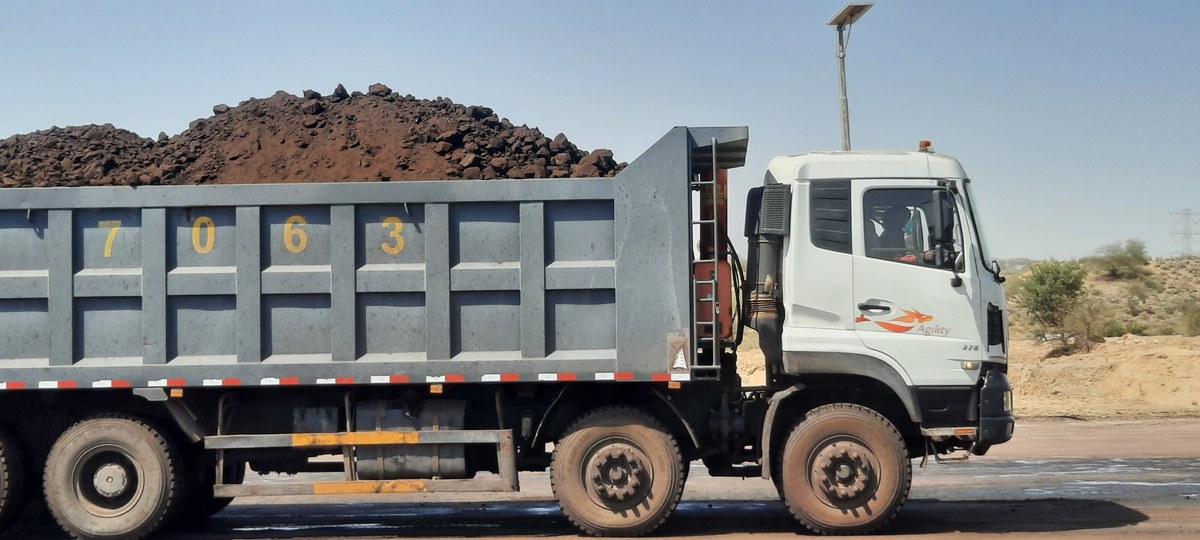
A woman is driving a truck loaded with coal in Tharparkar, Pakistan, on February 22, 2022. (AN Photo by Khurshid Ahmed)
This coal is sold to Engro Powergen Thar Limited (EPTL), the country’s only indigenous coal-fired power plant which generates 660 megawatts (MWs) of electricity. The provincial administration of Sindh controls 54.7 percent stakes in the coal mining company.
“Training women to drive trucks was an uphill task,” said Naseer Memon, SECMC corporate social responsibility and communications general manager, while briefing a group of journalists from Karachi on a recent visit to Thar. “We took up the challenge and opened a training school for them.”
“Out of the 55 trained women, now we have 25 full-time dumper drivers and there is no discrimination between male and female employees in terms of wages and benefits,” he added.
Women drivers, some of whom are uneducated, said they agreed to perform the job, which is otherwise considered masculine in nature, to ward off poverty.
Sharifan said she was initially scared of driving the giant vehicle, adding she could now do it with her “eyes closed” after 10 months of training.
“The financial condition of my family was very difficult with no earner,” Amina, another female driver with the company, told Arab News. “However, everyone is comfortable now since I am earning and our children are going to school.”
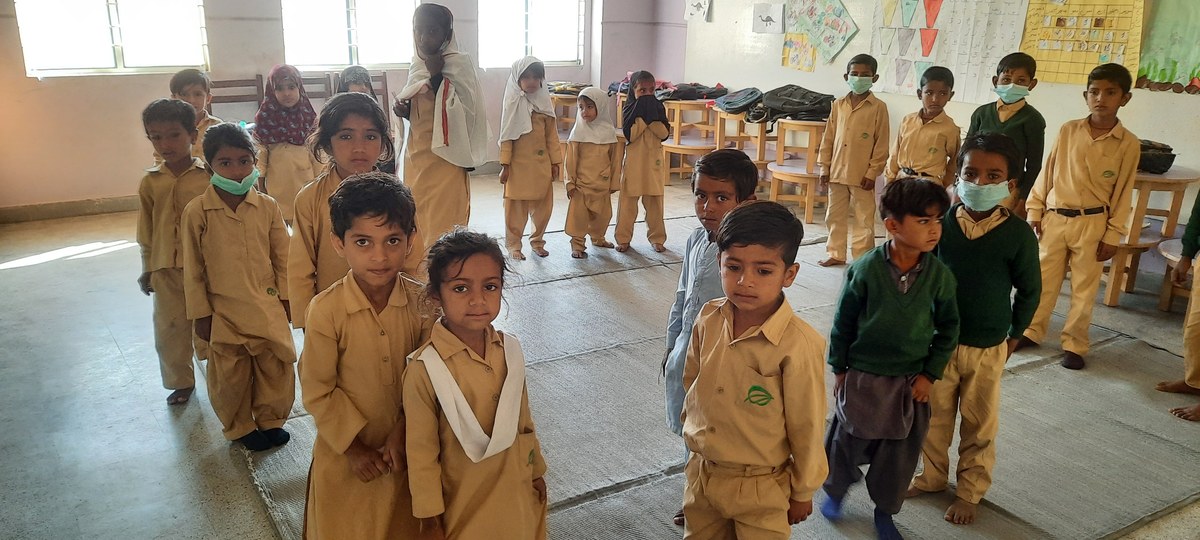
Young children are attending Thar Foundation Primary School in Tharparkar, Pakistan, on February 22, 2022. (AN Photo by Khurshid Ahmed)
The women drivers earn as much as Rs35,000 ($200) a month. In addition to that, they get medical facilities and other fringe benefits as well.
“Women empowerment without economic independence is nothing but a hollow slogan,” Memon said. “The whole of Tharparkar was desolate and disconnected just 10 or 15 years ago.”
Coal mining in the region created job opportunities and the local workers now constitute 60 to 70 percent of the total workforce at mines and power plants, according to SECMC officials. These workers can earn as much as Rs60,000 ($340) a month.
The area with coal reserves is divided into 13 different blocks of various sizes. Currently, coal is only extracted from blocks I and II.
SECMC, which operates in Block-II, is not the sole operator in the region: A Chinese power generation company, Shanghai Electric, has recently hit the first layer of three billion tons of coal in Block-I.
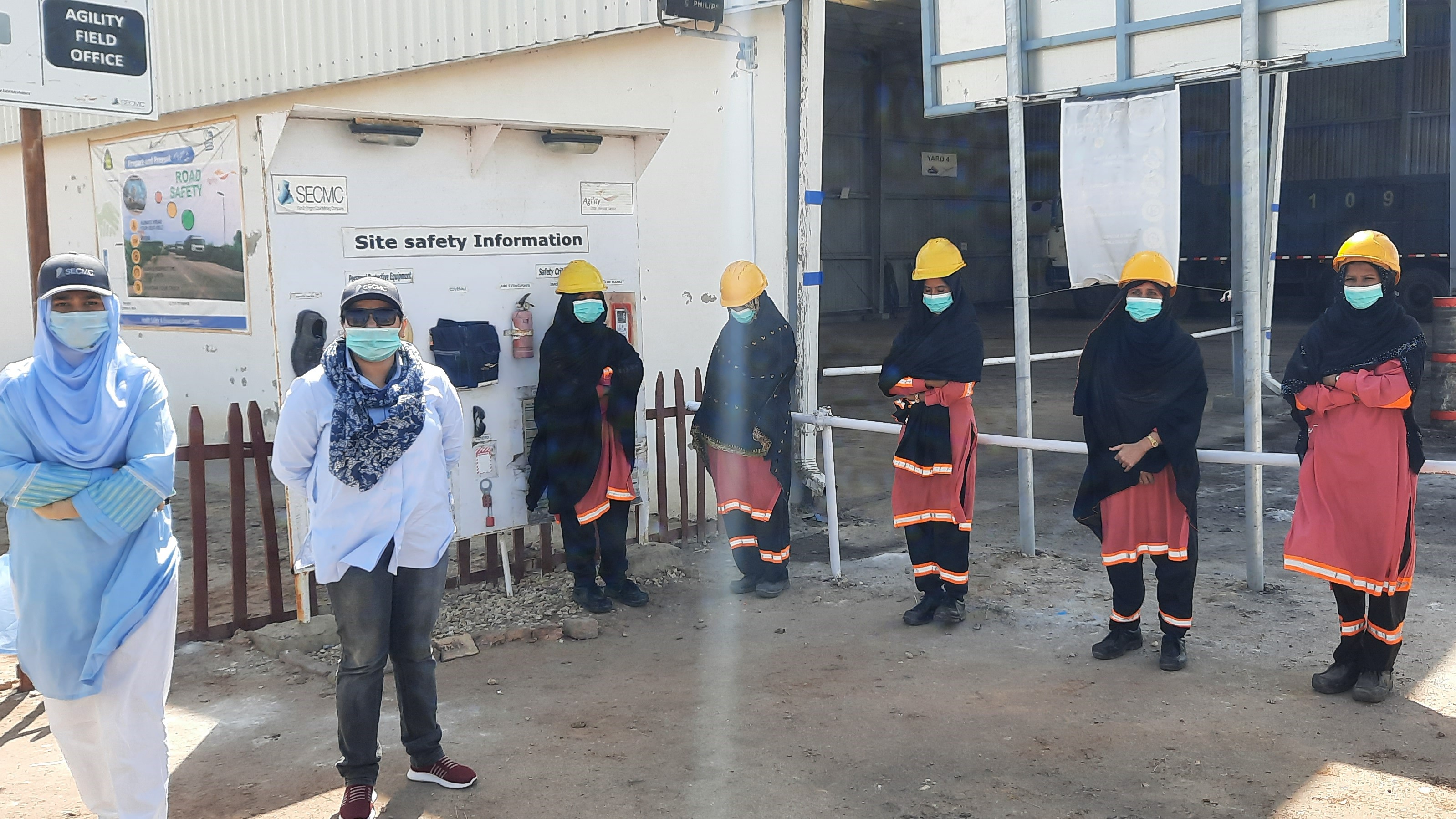
A group of female dump truck drivers pose for a picture at a coal mining site in Tharparkar, Pakistan, on February 22, 2022. (AN Photo by Khurshid Ahmed)
The Chinese firm employs around 7,000 Pakistani workers, according to a report by Pakistan’s state-run APP news agency.
The integrated project, which includes 1,320MW mine-mouth power plant, is projected to supply electricity to four million households in Pakistan.
Apart from providing employment opportunities, these firms have also been engaged in community development in Tharparkar, which ranked 109th among Pakistan’s 114 districts on the 2020 United Nations Human Development Index (HDI).
An HDI report published in 2017 described Tharparkar as “the most deprived district in Sindh, and as the only district in the very low category, it lags far behind other districts in the province.”
Today, as part of corporate social responsibility, companies are annually spending about Rs350 million ($1.98 million) in the region through Thar Foundation, a non-profit organization established by the Sindh government along with SECMC, EPTL and other partners.
The Sindh government has contractually bounded firms to allocate two percent of mining and one percent of power generation profit for community development in the area, according to SECMC officials.
“Thar Foundation has set up 27 schools in its beneficiary areas, Islamkot and Mithi, which have a capacity of 5,500 students,” Memon informed. “So far, 4,100 students are enrolled and one-third of them are girls. Sending a girl to school is the most difficult task in the area.”
Going forward, Thar Foundation plans to adopt and operate all government-run schools in Islamkot town of the district.
“Children hailing from far-flung areas are now able to attend schools where we give them books, uniforms and transportation almost free,” said Pooja Goswami, principal of The Citizens Foundation School in Islamkot. “This is happening due to the development taking place in the area.”
Mining firms have also been imparting vocational education. They operate 17 reverse osmosis (RO) plants, of which 10 have been adopted from the government and rehabilitated. These plants supply 331,340 gallons of water per day to around 15 villages.
“We trained local women as RO operators and now 13 of them run these plants in Tharparkar. Most of them belong to Islamkot and Mithi,” Rashna Zamir, a social mobilizer and coordinator for RO plant operators, told Arab News.
Thar Foundation is also providing medical facilities by setting up a hospital in Islamkot. It has also invited Shanghai Electric to play its part in community development which may help generate additional resources to benefit people.
However, social activists remain concerned all this development may ultimately undermine the area’s natural habitat and culture.
“The companies are extracting underground water for mining and the process is impacting local population and grazing lands,” Ali Akbar Rahimoon, an activist, told Arab News.
“Even the British made a separate land policy for Thar due to its unique culture, requirements and sources of livelihood,” he continued. “The companies paid to acquire entitled lands from the government, but they have also occupied communal lands which has started impacting the livelihoods of people who are associated with livestock and farming.”
Rahimoon said locals also complained of being left out of the development process, adding that many of those who did not belong to the region were considered for jobs.
“The government must set up an institution in the area for providing skills to locals,” he said while demanding a long-term policy to benefit Thar residents.


