

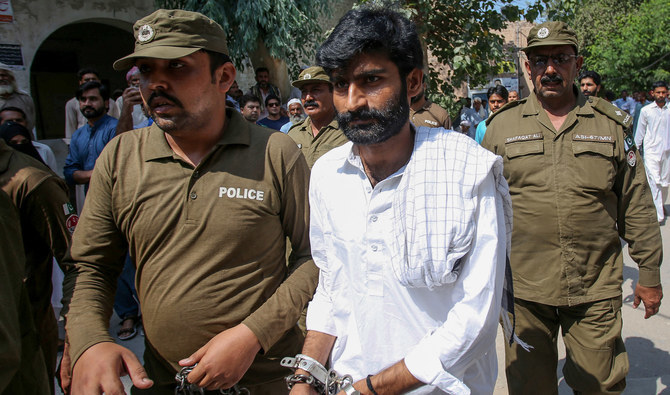

ISLAMABAD: Parliamentary Secretary for Law Maleeka Bokhari on Saturday said the Pakistani government would appeal before the Supreme Court the verdict in the murder case of social media star Qandeel Baloch, whose brother was acquitted by the Lahore High Court (LHC) earlier this month.
Baloch was strangled to death in 2016 by her brother Muhammad Waseem, who described her suggestive behavior on social media as “intolerable.” Waseem walked free last week after a court ruled it was not an “honor killing,” lawyers said, allowing their mother to pardon him.
In response to public outrage over Baloch’s murder, Pakistan had passed legislation supposedly closing a legal loophole that allowed family members to forgive those behind so-called “honor killings,” imposing a mandatory life sentence instead.
But after less than six years in prison, an appeal judge ruled that Baloch’s murder could not be defined as a crime of honor, dismissing his confession. In line with Pakistan’s other laws on murder, the mother was allowed to grant his freedom.
“State has decided to appeal the decision in the Qandeel Baloch case before the SC (Supreme Court),” Bokhari said on Twitter.
“Any decision which disregards evidence and is premised upon weak interpretation of law cannot be allowed to set a dangerous precedent.”
Bokhari earlier described “honor killings” as a black mark on the society, saying the law had been amended to “ensure murderer[s] of women — whether a celebrity or ordinary woman — does not walk free.”
Last week, the National Commission on the Status of Women (NCSW) also announced its plans to appeal the verdict before the Supreme Court.
Earlier, Pakistan’s information minister Chaudhry Fawad Hussain had said the government would challenge the verdict at Pakistan’s top court.
“We as a nation should be ashamed of such (legal) system,” Hussain said on Twitter.
Baloch became famous for her flirty and defiant posts which flew in the face of the nation’s conservative mores.
Waseem was arrested immediately after her death and later sentenced to life in prison for strangling her — brazenly telling the media he had no remorse.
The case became the most high-profile “honor killing” of recent years — where women are dealt lethal punishment by male relatives for purportedly bringing “shame” to the reputation of a family.
The court’s verdict published last week said he had been “acquitted from the case on the basis of compromise,” saying a confession from the killer “cannot be considered more than a piece of paper.”
In Baloch’s case, her parents initially insisted their son would be given no absolution, but they later changed their minds and said they wanted him to be forgiven.
A lawyer for the mother said she had given “her consent” to pardon him.


