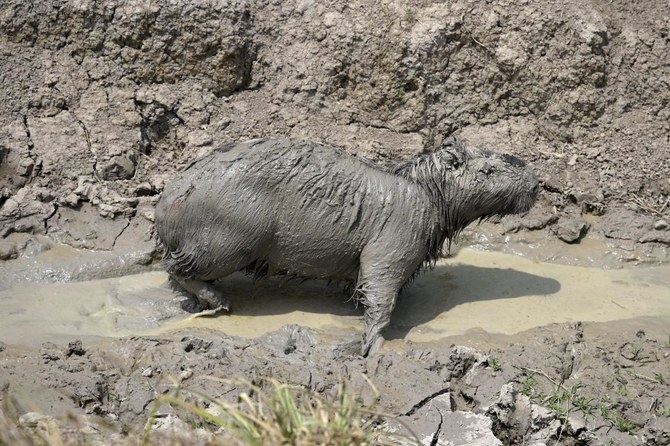
PASO DE LA PATRIA, Argentina: Wildfires in Argentina’s north are forcing local species of wildlife including capybaras, marsh deer and anteaters to attempt to flee ahead of the flames, with many animals killed or injured while trying to escape as the fires spread.
The blazes in Corrientes province, which borders Paraguay, have burned through nearly 900,000 hectares of forest and pasture land, some 12 percent of the region, including destroying habitats in the biodiverse Iberá Park wetlands.
“There are sectors of the Iberá where animals have been trapped,” said Sofía Heinonen, executive director of Rewilding Argentina, a foundation that works to protect at-risk species.
“They usually have water as a refuge area, they always have the mountains, but in this case the extraordinary recent drought has caused many of the ravines, many of the lagoons and a large part of the mountains to be dry,” Heinonen said.
Images show alligators, capybaras and marsh deer fleeing from the fire, with some burned. Heinonen said the foundation, which has reintroduced animals to the wild in Iberá, had found jaguars and bird species alive and brought them back to its centers.
Amid prolonged periods of drought, firefighters have been battling the blazes for some two months, which have caused millions of dollars of damage to ranch lands and farming business as well as putting plant and animal life at risk.
“Many animals fleeing from the fire are hit by vehicles, others are burned or have respiratory problems,” said Eric Pelozo, in charge of rehabilitation at the Aguará Conservation Center, which is helping care for animals from Ibera.
He said some species like capybaras and deer were faster, helping them escape, while snakes and anteaters were more at risk. Many animals, he added, would have “nowhere to return once the fire is over.”
“We are just beginning with the hard work of what is the rescue of animals burned or injured, both directly or indirectly by the effects of the fire,” he said.
Heinonen, a biologist, said rains would eventually help restore the land, with grasslands recovering faster while huge swathes of burned forests would take far longer.
A United Nations report this week said the number of extreme wildfires is expected to rise 30 percent within the next 28 years, with climate change triggering droughts and farmers clearing forests, something Heinonen agreed was hitting Corrientes.
“What’s happening now is extraordinary,” said Heinonen, citing the impact of climate patterns like La Niña, which usually leads to lower rainfall in key parts of the South American country.
“We are facing an event of great dimensions never seen before and we understand that it is due to the global warming that the planet is suffering,” she added.


![]()
Capybaras, marsh deer, anteaters flee Argentina wildfires; many don’t escape

Short Url
https://arab.news/p6msp
Capybaras, marsh deer, anteaters flee Argentina wildfires; many don’t escape
- "There are sectors of the Iberá where animals have been trapped," said Sofía Heinonen, executive director of Rewilding Argentina
- Images show alligators, capybaras and marsh deer fleeing from the fire, with some burned


Latest updates


© 2026 SAUDI RESEARCH & PUBLISHING COMPANY, All Rights Reserved And subject to Terms of Use Agreement.