

Sri Lanka seeks compensation for illegal waste shipment from Britain

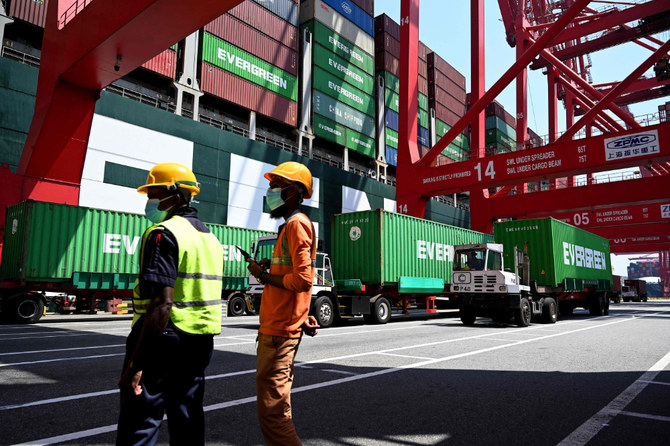
Authorities transport containers of garbage to be returned to Britain after authorities refused to process the illegally imported hazardous cargo, in Colombo on February 21, 2022. (AFP)
Short Url
Updated 22 February 2022
Follow

Sri Lanka seeks compensation for illegal waste shipment from Britain

  • Environment lawyer hails ‘significant step’ after 3,000 tons of illegally imported waste returned to the UK
  • Sri Lanka among Asian nations that have rejected exports of hazardous material from developed countries in recent years

COLOMBO: Sri Lanka is seeking compensation for damage caused by waste imported illegally from the UK, an official said on Tuesday, as the South Asian country shipped out the last of several hundred containers of unwanted refuse. 

A total of 263 shipping containers from Britain, holding more than 3,000 tons of waste, arrived at the port of Colombo under the guise of scrap metal for recycling in 2019. But a foul smell emanating from the shipment led to the discovery of rotting hazardous waste, including soiled mattresses and suspected human remains. 

“There were delays in repatriation due to COVID-19,” Ajit Weerasundara, deputy chairman of Sri Lanka’s Central Environmental Agency, told Arab News, “but the last 45 containers left (on Monday).”

Sri Lanka sent back the first batch to the UK in 2020, while the remaining containers were sealed “to make sure there was no more damage to the environment” before being returned, Weerasundara said. 

Sri Lanka is party to the Basel Convention, which controls transnational movements of hazardous waste and its disposal, especially in developing nations. 

The government has confirmed it has written to the Basel Secretariat in Switzerland, and is finalizing paperwork seeking compensation for damage caused by the hazardous material that arrived two years ago. 

Environmental lawyer and activist Jagath Gunawardene described this week’s developments as “a significant step for Sri Lanka.”

The country is one of several Asian nations to reject exports of hazardous material from developed nations in recent years. These include Malaysia, which between 2019 and April last year sent 267 containers of illegal plastic waste back to their countries of origin. 

Gunawardene highlighted efforts by the Colombo-based Center for Environmental Justice, which filed a case against the parties it held responsible for the import, specifically the CEA and Customs, following the 2020 discovery. 

“We filed because we wanted to have this garbage repatriated and because we wanted to hold those responsible accountable,” Hemantha Withanage, CEJ executive director, told Arab News. 

The government has managed to send back the waste, but the CEJ is still waiting for officials to file a case against those who imported the illegal waste. 

“There may still be other containers with material like this at the port, we don’t know — these were the only ones that were discovered,” Withanage said.


India plans AI ‘data city’ on staggering scale

Updated 56 min 27 sec ago
Follow

India plans AI ‘data city’ on staggering scale

  • ‘The data city is going to come in one ecosystem ... with a 100 kilometer radius’

NEW DELHI: As India races to narrow the artificial intelligence gap with the United States and China, it is planning a vast new “data city” to power digital growth on a staggering scale, the man spearheading the project says.

“The AI revolution is here, no second thoughts about it,” said Nara Lokesh, information technology minister for Andhra Pradesh state, which is positioning the city of Visakhapatnam as a cornerstone of India’s AI push.

“And as a nation ... we have taken a stand that we’ve got to embrace it,” he said ahead of an international AI summit next week in New Delhi.

Lokesh boasts the state has secured investment agreements of $175 billion involving 760 projects, including a $15 billion investment by Google for its largest AI infrastructure hub outside the United States.

And a joint venture between India’s Reliance Industries, Canada’s Brookfield and US firm Digital Realty is investing $11 billion to develop an AI data center in the same city.

Visakhapatnam — home to around two million people and popularly known as “Vizag” — is better known for its cricket ground that hosts international matches than cutting-edge technology.

But the southeastern port city is now being pitched as a landing point for submarine internet cables linking India to Singapore.

“The data city is going to come in one ecosystem ... with a 100 kilometer radius,” Lokesh said. For comparison, Taiwan is roughly 100 kilometers wide.

Lokesh said the plan goes far beyond data connectivity, adding that his state had “received close to 25 percent of all foreign direct investments” to India in 2025.

“It’s not just about the data centers,” he explained while outlining a sweeping vision of change, with Andhra Pradesh offering land at one US cent per acre for major investors.