


RIYADH: Super Thursday saw the top four all in action in the Saudi Professional League and amid the goals and the talking points, here are five things learned.
1. Diaz provides Al-Hilal with classic new coach bounce
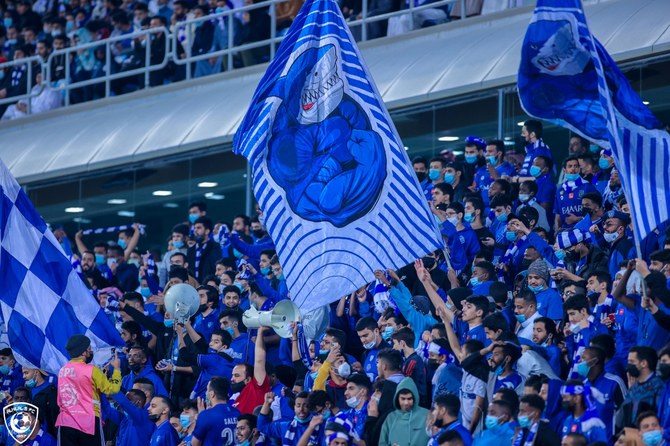
There had been some doubts about the wisdom of replacing Leonardo Jardim with Ramon Diaz, but the early signs were pretty emphatic as Al-Hilal thrashed local rivals Al-Shabab 5-0. The defending champions, who started the day in fourth, swept their second-placed rivals aside with three goals in the first half hour.
There had been some debate as to the best way to fit strikers Moussa Marega and Odion Ighalo into the lineup, but Diaz played them both and was well-rewarded as the pair got a pair each. The Argentine’s philosophy was simple: There is a lot of attacking talent in the ranks so get as much as it into the team as possible and get the ball to those players.
Ighalo, who left Al-Shabab just a few weeks ago, will get the headlines but Andre Carrillo repaid his fellow South American for the starting spot. It was the Peruvian’s delightful cross with the outside of the boot that was hooked home by the Nigerian for the opener. He then scored a beauty of a second, volleying the ball into the top corner of the net from the edge of the area.
Soon after came the real turning point. Al-Shabab almost pulled one back as the ball bounced off Yasser Al-Shahrani’s knee and hit the Al-Hilal post. Moments later Marega scored at the other end. Instead of the scoreline being 2-1 it was 3-0 and there was no coming back from that. The result was impressive. It may just be that classic bounce after the appointment of a new coach, or it may just be the start of Al-Hilal’s late title challenge.
2. The title is not Al-Ittihad’s just yet
It was looking like a stroll for Al-Ittihad, but the 10-game winning streak ended against relegation battlers Al-Taawoun after a 1-1 draw. The gap at the top is now seven points, still sizable but manageable.
It was looking so good in just the second minute when Abderrazak Hamdallah scored his fifth goal in five games. It was the kind of goal that the Moroccan could almost trademark, a turn and low shot from just inside the area. It was going past the goalkeeper almost before he realized there was even a goalscoring opportunity.
Yet Al-Taawoun recovered quickly from that early blow and started asking questions of Al-Ittihad goalkeeper Marcelo Grohe who was his usual, reliable self. Well, he was until just before the hour and a mistake that will give the other teams at the top a bit of hope. A low cross from the left byline seemed to be no problem for the Brazilian shot-stopper at his near post but somehow, he let the ball squirm through and there was Mostafa Fathi to stab the ball home from the closest of ranges. The dropping of two points may not matter in the great scheme of things but then it could be a huge turning point.
3. Pity Martinez holds nerve to keep Al-Nassr’s title hopes alive
No Talisca, no problem for Al-Nassr. Well almost. Fresh after their 3-0 loss at the hands of Al-Ittihad last weekend, Al-Nassr bounced back into second with a last-gasp 4-3 win at Al-Batin. The nine-time champions made very hard work of it though and were twice two goals ahead before allowing the hosts to level. All seemed well in the fourth minute when Vincent Aboubakar, back for the first time since returning from the Africa Cup of Nations where he finished as top scorer, showed his poaching instincts.
With 11 minutes remaining, Al-Nassr were 3-1 ahead and cruising but conceded two goals in quick succession. At 3-3, their title chances were hanging by a thread as this game against the relegation strugglers was a must-win. And then video assistant referee intervened in the final minutes to give the Riyadh club a penalty for handball in the area.
Pity Martinez may have missed much of the season through injury but in just his third start, the Argentine was not missing this and side-footed home from the spot. The relief for the men in yellow was palpable.
4. Al-Shabab’s struggles with Al-Hilal continue
Losing 5-0 to Al-Hilal must have felt like deja vu for Al-Shabab’s fans. Last year as the two were fighting it out for the title, Al-Hilal won 5-1, a victory that gave them the edge and ultimately the championship. There is more time left this year, but it still feels like it will be hard for Al-Shabab to come back from this shattering loss against their bogey team.
And if Al-Shabab cannot find a way to defeat their city rivals in the future then they may have to keep waiting to add to the sixth of their titles won back in 2012. Incredibly, the last time they triumphed in the Riyadh derby was way back in October 2014 – that streak is now 17 games, the same number of games that Al-Shabab had gone unbeaten before Thursday. The team needs to get this Al-Hilal problem sorted out.
5. Al-Ahli getting hard to beat but…
It is unimaginable that the Jeddah giants could be relegated but form this season has been, to say the least, disappointing. Yet there are signs that a corner has been turned with the 1-1 draw with Al-Feiha another decent result though it came courtesy of a very late penalty.
The four-time champions are now six games unbeaten, a run that has moved them almost clear of danger. Besnik Hasi, who has managed to keep his job, has tightened the backline and the next step is to turn draws, four of which have come in the last six games, into victories. Perhaps that can come next season with the right recruitment and a little more creativity in midfield as not enough chances are being created at the moment.
Al-Ahli are harder to beat these days but need to do more going forward. A better supply to striker Omar Al-Somah and the Syrian will score goals and win games.


