

EU delegation hosts diplomatic training with Saudi, Oman and Bahrain

1 / 2
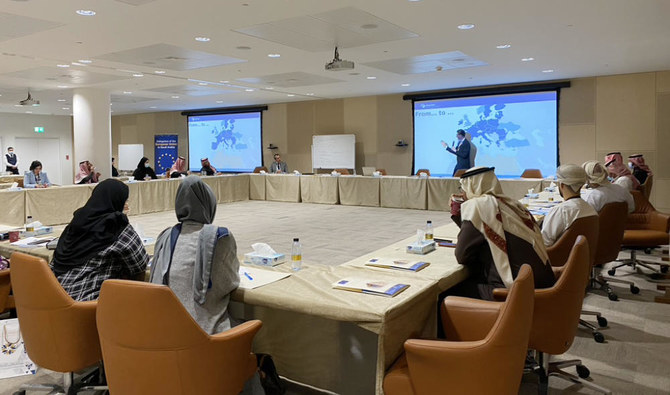
The program demonstrates the commitment between the EU and the GCC to further advance bilateral relations and mutual understanding. (AN photo by Lama Alhamawi)
2 / 2
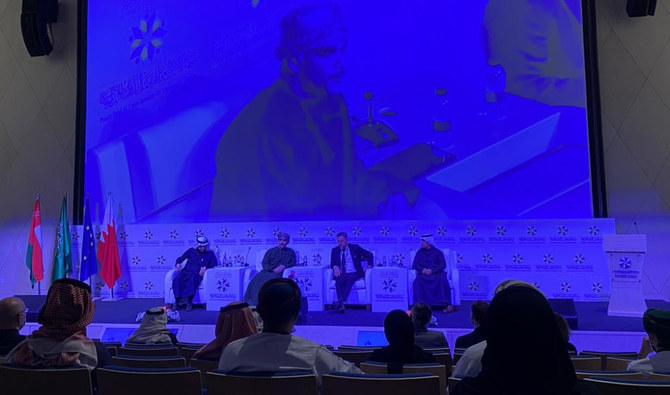
(Left to right): The opening cermony was hosted by Dr. Adel Alomrani, H.H. Sayyid Faisal bin Turki Al Said, EU Ambassador Patrick Simonnet, and Dr. Turki AlTurki. (AN photo by Lama Alhamawi)
Short Url
Updated 14 February 2022
Follow

EU delegation hosts diplomatic training with Saudi, Oman and Bahrain

  • The five-day training, titled “EU policies and decision making,” is hosted by Clingendael, the Netherlands Institute of International Relations, from Feb. 13-17 and will include workshops, lectures and group discussions

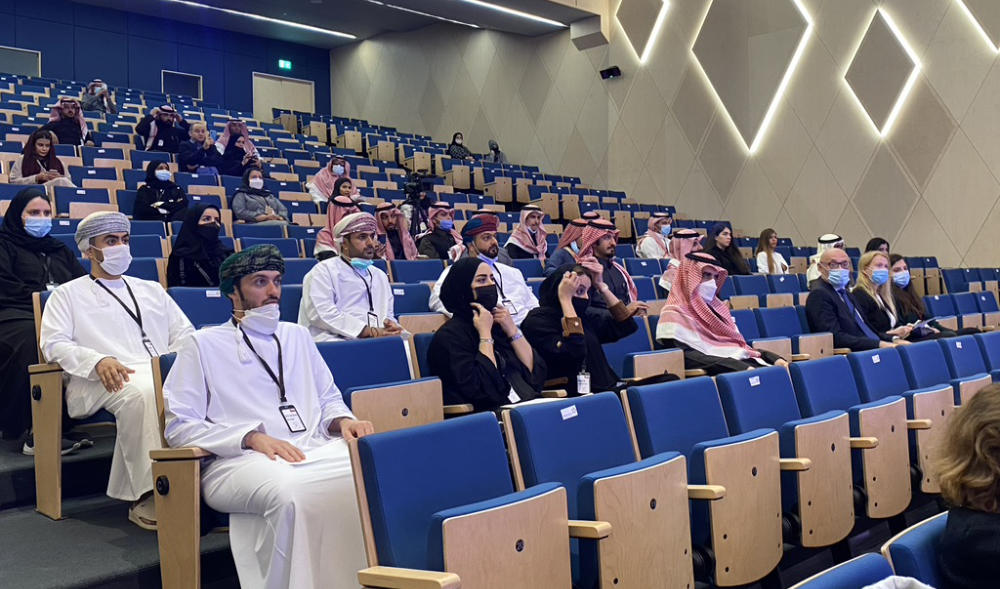
RIYADH: The EU delegation to Saudi Arabia, Oman and Bahrain held today a high-level training for 35 diplomats from the three countries in EU affairs at the Prince Saud Al-Faisal Institute of Diplomatic Studies in Riyadh.

“Our aim is to enhance mutual understanding with our partners in the Gulf region, and we believe enhancing understanding of the workings of the EU … will contribute to this objective,” EU Ambassador Patrick Simonnet said.

The EU Delegation to the Kingdom of Saudi Arabia, the Kingdom of Bahrain and the Sultanate of Oman aims to increase engagement with the Gulf region by fostering EU knowledge, understanding and cooperation.

During the opening ceremony, speeches were made by Simmonet, H.H. Sayyid Faisal bin Turki Al-Said, Ambassador of Oman to the Kingdom of Saudi Arabia; Dr. Adel Alomrani, acting director general of the IDS; and Dr. Turki Al-Turki, head of International Cooperation at the IDS.
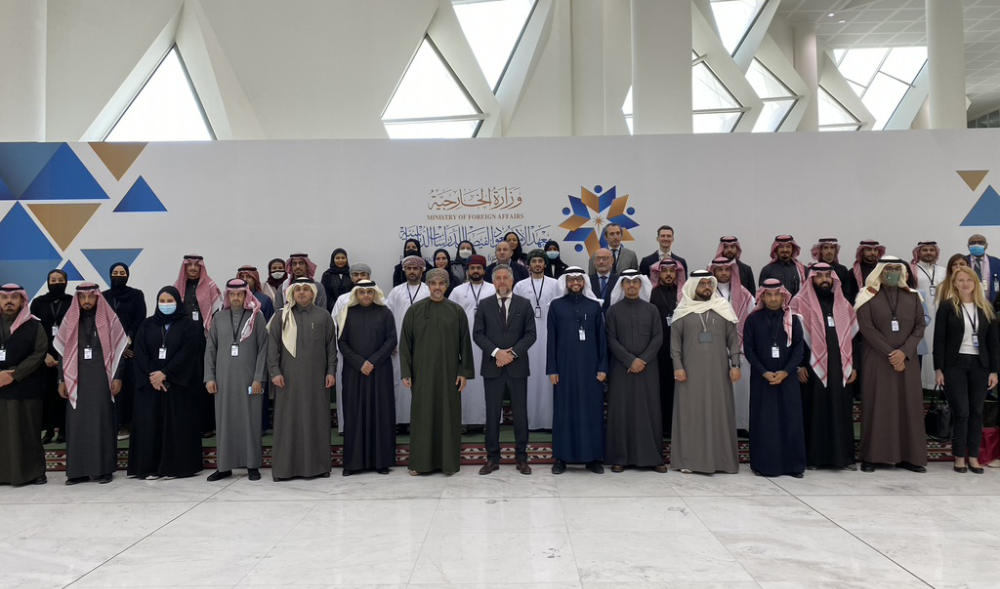
“This program is designed to advance participants’ knowledge and skills in the EU. I am confident that this training will have a lasting impact on participants to further deepen relationships with the members of the EU,” Al-Turki said.

The five-day training, titled “EU policies and decision making,” is hosted by Clingendael, the Netherlands Institute of International Relations, from Feb. 13-17 and will include workshops, lectures and group discussions, bringing together participants from the three Gulf Cooperation Council countries.

“The training is unique; it provides a very state-of-the-art approach and will include proactive approaches, workshops and study cases. It’s a result of the fruitful cooperation of the EU,” Alomrani said.
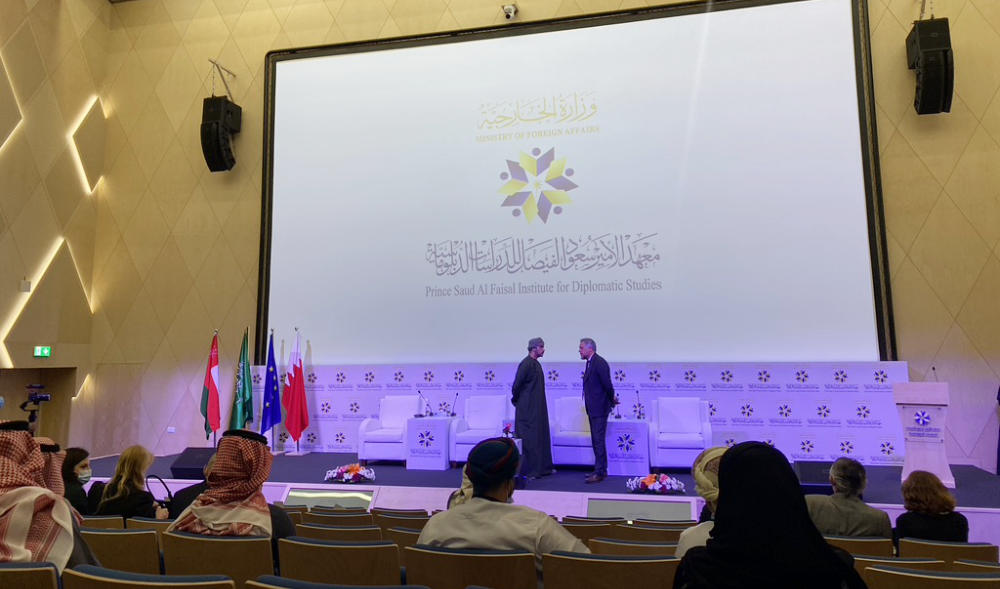
The program demonstrates the commitment between the EU and the GCC to further advance bilateral relations and mutual understanding.

“This training represents the closeness of the EU-GCC relationships and demonstrates our joint commitment to advance those relations,” Simonnet said.

In the opening ceremony, the EU ambassador said that the training will be useful for the future diplomatic careers of Gulf participants representing their countries in the EU.

The opening session of the training, titled “EU in Motion: Shifting Power Balances,” involved an overview of the EU and allowed the students to have an open discussion during the lecture.

The training will teach diplomats how decisions are made, how negotiations are conducted and how to better form networks for the future.
“I am confident that this program will help the participants gain a deeper understanding of decision-making processes,” Alomrani said.

The focus of the training will also include discussions of the EU’s external communications with GCC countries.

In addition to extending GCC and EU collaboration, the program will touch on trade agreements, policies and various energy cooperations between the two entities.

Throughout the lessons, students will discuss the different challenges facing the EU and GCC.

“This program offers a unique opportunity for diplomats to gain valuable insights and a professional understanding of the EU — which represents an important voice in global affairs as well as one of the world’s leading economies,” Dr. Muneera Al-Khalifa, director-general of the Mohamed bin Mubarak Al Khalifa Academy of Diplomatic Studies in Bahrain, said.

Upon completing the training, students will be recognized with personalized certificates during the closing ceremony, which will take place on Feb. 17 in Riyadh’s Diplomatic Quarter.


Ramadan brings local communities together to engage in volunteering activities

Updated 8 sec ago
Follow

Ramadan brings local communities together to engage in volunteering activities

  • For the Jeddah Volunteer group, local volunteers head out to lower-income neighborhoods to distribute meals
  • Supervisor Ahmed Al-Hamdan told Arab News that the iftar project is among the group’s most significant Ramadan initiatives

JEDDAH: Since the start of Ramadan, charities, mosques, restaurants, generous individuals and young volunteers across Saudi Arabia are coming together to make a tangible difference to the lives of those in need.

Volunteering activities usually peak in the weeks preceding Ramadan, with several initiatives taking place across the country.

“Every Ramadan, we are proud to see citizens and residents step up as volunteers across the Kingdom of Saudi Arabia, in Riyadh, Jeddah, Damam, Tabuk, Hail, Najran, Qassim and the rest of cities, embodying the spirit of giving and solidarity during this holy month. The people’s dedication and compassion have been a true reflection of Saudi Arabia’s values,” Sheikh Mansour Al-Shareef, imam of Al-Tawheed Mosque in Jeddah, told Arab News.

Al-Shareef underscored the spiritual essence of volunteerism, saying: “Volunteerism in Ramadan is not only about helping the needy but also about showing unity within communities.”

He noted the remarkable rise in community engagement in recent years. “Volunteering is on the rise with individuals from all walks of life contributing their time and resources to foster social solidarity, particularly during Ramadan.”

For the Jeddah Volunteer group, local volunteers head out to lower-income neighborhoods to distribute meals.

Supervisor Ahmed Al-Hamdan told Arab News that the iftar project is among the group’s most significant Ramadan initiatives.

He noted that the program aims to strengthen social solidarity and ease the burden on needy families, adding that every day during Ramadan, more than 100 volunteers arrive at the various iftar sites by the afternoon Asr prayer.

They work together to prepare special meals which include water, dates and rice, and later they distribute meals by hand. For many, the reward of helping those in need is what drives them to participate in volunteer campaigns.

It is becoming an act of duty for volunteer Noura Abdulaziz, who has been involved in such initiatives for the last two years.

She said: “I dedicate myself to this cause because it is the month of giving and it is our duty to give a hand in this special month. I really enjoy every minute of it.”

She pointed out that she sacrificed her time spent with her family to hand out meals to those who are in need.

“The number of iftars I have with my family is minimal, but they have no complaints as they understand the greater purpose,” she said.

Under the slogan “Ramadan Kareem,” fulfilling its annual commitment to community service, Kayani Event Management launched its annual “Iftar for the Fasting” campaign in the heart of Al-Balad district (historic Jeddah) for the fifth consecutive year, creating a scene of social solidarity within the ancient city.

The aim was to deliver Iftar meals to needy families and charitable organizations in the area, reinforcing the spirit of compassion embodied by the holy month.

Rana Bajouda, CEO of Kayani, told Arab News: “Our continuation for the fifth year is a confirmation of our commitment to our neighbors and our people in Jeddah, and our belief that giving is the true engine of success for any organization.”

From individual acts to organized government efforts, the General Directorate of Education in the Makkah Region launched a broad community initiative to provide Iftar meals for fasting visitors to the Holy Mosque, aiming to distribute 5,000 meals daily throughout the holy month of Ramadan.

Behind this initiative stands a team of 500 volunteers from the education sector, who work side by side, in a scene of faith that embodies the spirit of cohesion and clearly reflects the leading community role of the education sector in serving those who visit the Grand Mosque.