ISLAMABAD: Iranian Interior Minister Ahmad Vahidi will arrive in the Pakistani capital of Islamabad on February 14 to hold bilateral talks, including discussions on border management, the Pakistani interior ministry said on Sunday.
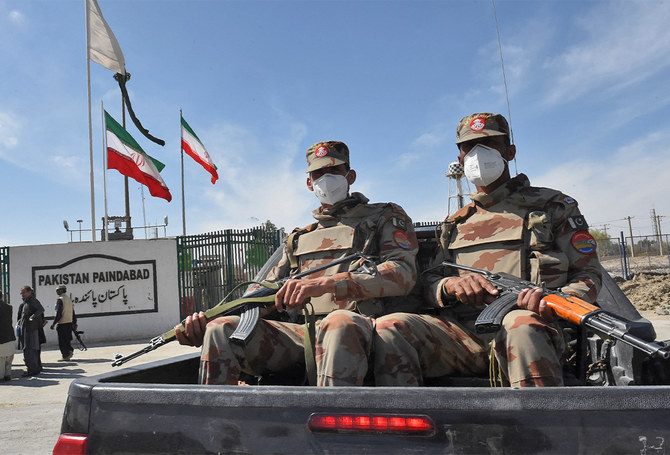
The visit by the Iranian interior minister follows a string of militant attacks in Pakistan’s southwestern Balochistan province, which shares a long and porous border with Iran.
Ten Pakistani soldiers were killed in an attack on a checkpoint in Kech on January 28, while another nine troops and 20 militants were killed in an operation to regain control of two military camps in Panjgur and Noushki from militants of the outlawed Balochistan Liberation Army (BLA).
Days later, Pakistani officials also said militants were launching these attacks from Afghanistan and Iran, and that they would raise the issue on the diplomatic level with both the countries.
“Iranian Interior Minister Ahmad Vahidi will arrive in Pakistan on the invitation of his Pakistani counterpart Sheikh Rashid Ahmed,” the Pakistani interior minister said in a statement.
He will meet key Pakistani officials, including Prime Minister Imran Khan, during his one-day visit, it said.
“Talks will be held relating to Pak-Iran border management and implementation of the prisoner exchange [agreement],” the statement read.
Balochistan, the southwestern Pakistani province which borders Iran and Afghanistan, has been marred by an insurgency for the last two decades, fueled by anger that its abundant reserves of natural resources are not relieving citizens from crushing poverty.
Militants often target security forces along Pakistan’s 959-kilometer-long border with Iran. Pakistan has also been erecting a fence along the border, which is expected to be completed within a year.
On Saturday, Pakistan Army Chief General Qamar Javed Bajwa visited Panjgur and spent a day with troops who repulsed terrorist attack on the security forces camp on February 2.


Iranian interior minister to visit Pakistan Monday for talks on border management
https://arab.news/makn3
Iranian interior minister to visit Pakistan Monday for talks on border management

- Ahmad Vahidi’s visit follows a string of militant attacks in Pakistan’s Balochistan that borders Iran
- Iranian minister will hold meetings with key Pakistani officials, including Prime Minister Imran Khan

Pakistan urges pilgrims to complete Saudi biometrics as Hajj preparations gain pace
- Government warns pilgrims biometric verification is required for Hajj visas
- Step follows tighter oversight after last year’s Hajj travel disruptions
ISLAMABAD: Pakistan’s government on Friday urged aspiring pilgrims to complete mandatory Saudi biometric verification for Hajj visas, as preparations for the 2026 pilgrimage gather pace following stricter oversight of the Hajj process.
The announcement comes only a day after Pakistan’s Religious Affairs Minister Sardar Muhammad Yousuf said regulations for private Hajj operators had been tightened, reducing their quota following widespread complaints last year, when tens of thousands of pilgrims were unable to travel under the private Hajj scheme.
“Saudi biometric verification is mandatory for the issuance of Hajj visas,” the Ministry of Religious Affairs said in a statement, urging pilgrims to complete the process promptly to avoid delays.
“Hajj pilgrims should complete their biometric verification at home using the ‘Saudi Visa Bio’ app as soon as possible,” it added.
The statement said the pilgrims who were unable to complete biometric verification through the mobile application should visit designated Saudi Tasheer centers before Feb. 8, adding that details of the centers were available on Pakistan’s official Hajj mobile application.
Pakistan has been steadily implementing digital and procedural requirements for pilgrims ahead of Hajj 2026, including mandatory training sessions, biometric checks and greater use of mobile applications, as part of efforts to reduce mismanagement.
Saudi Arabia has allocated Pakistan a quota of 179,210 pilgrims for Hajj 2026, with the majority of seats reserved under the government scheme and the remainder allocated to private tour operators.


