

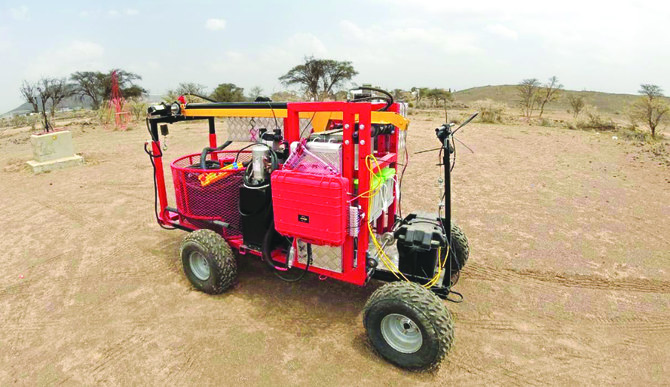

JEDDAH: A well rescue device developed and patented in Saudi Arabia can prevent incidents like the Rayan tragedy, its inventor has said.
Abdul Aziz Jalkhaf, 47, is hopeful that his device will put an end to the struggles that civil defense rescuers across the region face in extracting people from artesian wells.
Media outlets have shone a spotlight on Jalkhaf’s device in the wake of the tragedy of five-year-old Rayan, who died in Morocco last week despite several rescue attempts, making headlines around the world.
Jalkhaf said that he closely followed the attempts to rescue the child, adding that artesian wells have different topographies and that every rescue attempt “has its own challenges.”
The rescue attempt needs no more than two persons to do the whole job.
Abdul Aziz Jalkhaf
Speaking to Arab News, Jalkhaf said that the idea of inventing a well rescue device came after he witnessed several tragic incidents in the Kingdom and around the Gulf.
HIGHLIGHTS
• Abdul Aziz Jalkhaf, 47, is hopeful that his device will put an end to the struggles that civil defense rescuers across the region face in extracting people from artesian wells.
• Media outlets have shone a spotlight on Jalkhaf’s device in the wake of the tragedy of five-year-old Rayan, who died in Morocco last week despite several rescue attempts, making headlines around the world.
• In practice attempts two months ago, the inventor said that he succeeded in extracting a 30 kilogram doll from a 30-meter-deep well in just nine minutes, adding that the device can retrieve even heavier objects.
“I have made several designs and models before this one, which I think is efficient enough to save the lives of people in artesian well accidents. I then applied through King Abdulaziz City for Science and Technology, which granted me the patent,” he said.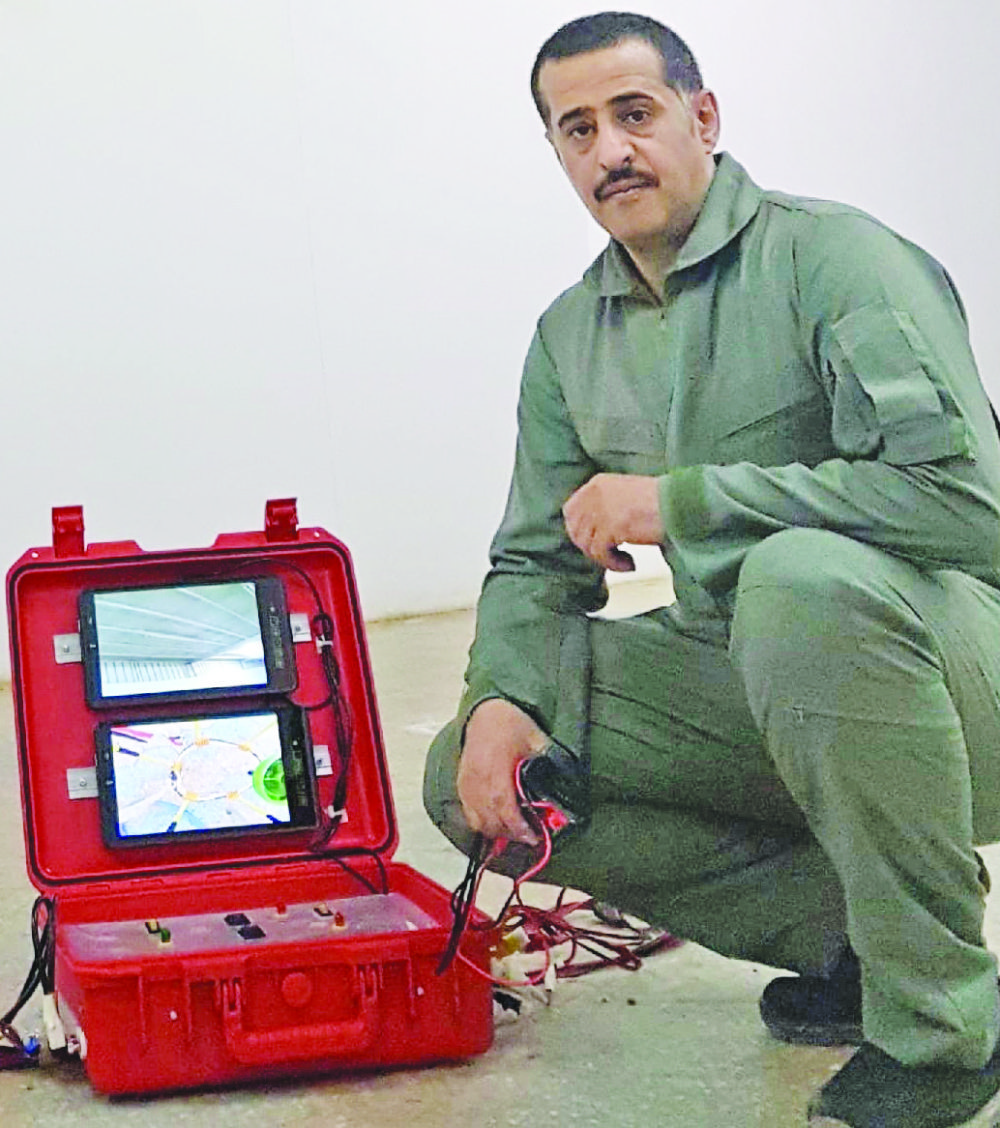
Jalkhaf added that his electromechanical device can easily be controlled remotely through a control panel. He said that it takes no longer than 13 minutes to prepare the machine for a rescue attempt.
In practice attempts two months ago, the inventor said that he succeeded in extracting a 30 kilogram doll from a 30-meter-deep well in just nine minutes, adding that the device can retrieve even heavier objects.
Jalkhaf said that his device captured the attention and interest of the director general of the General Directorate of Civil Defense, who directed a specialized team to test the machine.
“I gave the team all the technical details about the device and how it can help in rescue operations, and I am just waiting for the results of the report the team had filed to come out,” he said.
The Directorate of Civil Defense has said that the device is still in the testing phase and has yet to be approved, but that all measures will be taken to ensure that the device is safe and effective for use in well rescues.
Speaking about the features of the device, Jalkhaf said that it is equipped with cameras, sensors and lights to help operators locate people trapped in wells.
“With the help of this device, we can professionally pull out the person inside a well with the least possible harm or injury. The rescue attempt needs no more than two persons to do the whole job,” he said.
He added that the rescue device is also flexible enough to maneuver inside curved depths. “It is also equipped with an oxygen supplying pipe to provide the person in a well with the air that they need to keep them alive until they are brought out of any deep hole in the ground,” he said.
Despite his confidence in the well rescue device, Jalkhaf said that he is now working to further develop the machine to “give the best possible performance and results.”
In 2017, KACST said in a statement that Jalkhaf had received a patent from the KACST’s Saudi Patent Office for his mechanical well rescue device. The statement was issued three years before the Saudi Authority for Intellectual Property took over responsibilities for issuing and controlling Saudi patents.
The statement acknowledged that the innovative device features several tools, including a camera.
Public interest in rescue capabilities across the Middle East and North Africa region surged after the Rayan tragedy, which saw the child remain trapped in a 30-meter-deep well for more than 100 hours before his corpse was retrieved.


