

Dubai to charge for single-use plastic bags in environmental sustainability push 

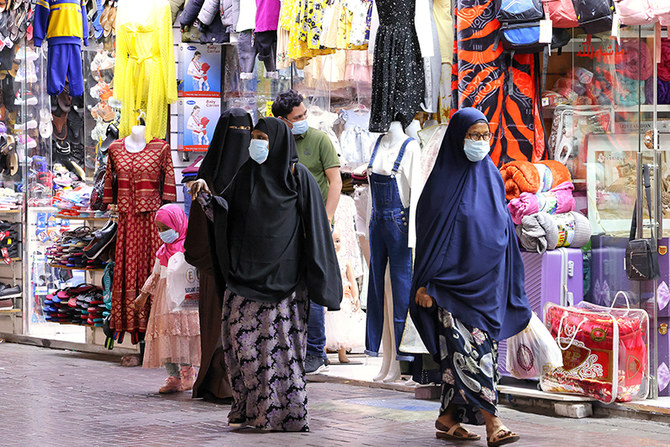
Shoppers walk outside stores in Dubai on May 5, 2021. (AFP/FILE)
Short Url
Updated 08 February 2022
Follow

Dubai to charge for single-use plastic bags in environmental sustainability push 

  • The decision will come into force at the start of July
  • Dubai aims to completely ban such bags within two years 

DUBAI: Dubai is ending the free distribution of single-use plastic bags in a drive towards more sustainable practices for the glitzy emirate known for its unbridled consumerism. 

From home deliveries to supermarkets and shops, single-use plastic bags are ubiquitous across the emirate. 

"In line with enhancing environmental sustainability and encouraging individuals to reduce the excessive use of plastics, the Executive Council of Dubai has approved the policy to limit single-use bags by imposing a tariff of 25 fils (about $0.07) on single-use bags," the authorities said. 

The decision will come into force at the start of July in shops, restaurants, pharmacies, and for home deliveries. 

The emirate vowed that this is the first step of a strategy planned over several stages, aimed at completely banning single-use plastic bags within two years. 

"With sustainability becoming a global priority, changing the behavior of the community to reduce the environmental footprint of individuals is crucial to preserve natural resources and environmental habitats," the authorities said. 

In March 2020, Abu Dhabi, the capital of the United Arab Emirates, announced its "new environmental policy" aiming to eliminate single-use plastics by 2021 -- but regulations have yet to be applied. 

This comes as the UAE prepares to host the COP28 global environmental conference in 2023, having set a target to become carbon neutral by 2050, in line with goals set by the COP26 conference in Britain last year. 

Like much of the region's countries, the UAE's economy is principally reliant on fossil fuels. 

Its neighbour Saudi Arabia -- the region's heavyweight and the world's largest exporter of crude oil -- targets carbon neutrality by 2060.


Syrian government and SDF agree to de-escalate after Aleppo violence

Updated 23 December 2025
Follow

Syrian government and SDF agree to de-escalate after Aleppo violence

  • Turkiye views the US-backed SDF, which controls swathes of northeastern Syria, as a ⁠terrorist organization and has warned of military action if the group does not honor the agreement

DAMASCUS: Syrian government forces and the Kurdish-led Syrian Democratic Forces agreed to de-escalate on Monday evening in the northern city of Aleppo, after a wave of attacks that both sides blamed on each other left at least two civilians dead and several wounded.
Syria’s state news agency SANA, citing the defense ministry, said the army’s general command issued an order to stop targeting the SDF’s fire sources. The SDF said in a statement later that it had issued instructions to stop responding ‌to attacks ‌by Syrian government forces following de-escalation contacts.

HIGHLIGHTS

• SDF and Syrian government forces blame each other for Aleppo violence

• Turkiye threatens military action if SDF fails integration deadline

• Aleppo schools and offices closed on Tuesday following the violence

The Syrian health ministry ‌said ⁠two ​people ‌were killed and several were wounded in shelling by the SDF on residential neighborhoods in the city. The injuries included two children and two civil defense workers. The violence erupted hours after Turkish Foreign Minister Hakan Fidan said during a visit to Damascus that the SDF appeared to have no intention of honoring a commitment to integrate into the state’s armed forces by an agreed year-end deadline.
Turkiye views the US-backed SDF, which controls swathes of northeastern Syria, as a ⁠terrorist organization and has warned of military action if the group does not honor the agreement.
Integrating the SDF would ‌mend Syria’s deepest remaining fracture, but failing to do ‍so risks an armed clash that ‍could derail the country’s emergence from 14 years of war and potentially draw in Turkiye, ‍which has threatened an incursion against Kurdish fighters it views as terrorists.
Both sides have accused the other of stalling and acting in bad faith. The SDF is reluctant to give up autonomy it won as the main US ally during the war, which left it with control of Daesh prisons and rich oil resources.
SANA, citing the defense ministry, reported earlier that the SDF had launched a sudden attack on security forces ⁠and the army in the Sheikh Maqsoud and Ashrafiyah neighborhoods of Aleppo, resulting in injuries.
The SDF denied this and said the attack was carried out by factions affiliated with the Syrian government. It said those factions were using tanks and artillery against residential neighborhoods in the city.
The defense ministry denied the SDF’s statements, saying the army was responding to sources of fire from Kurdish forces. “We’re hearing the sounds of artillery and mortar shells, and there is a heavy army presence in most areas of Aleppo,” an eyewitness in Aleppo told Reuters earlier on Monday. Another eyewitness said the sound of strikes had been very strong and described the situation as “terrifying.”
Aleppo’s governor announced a temporary suspension of attendance in all public and private schools ‌and universities on Tuesday, as well as government offices within the city center.