



DUBAI: Fawaz Qetaifan, a six-year-old Syrian boy who was kidnapped on his way to school in Deraa three months ago, could be returned to his parents in the coming hours or days after his family raised the ransom to secure his release, sources have told Arab News.
“It seems that the issue will be resolved within the next 48 hours as the money has been raised,” Rami Abdulrahman, founder of the UK-based Syrian Observatory for Human Rights told Arab News.
“We do not know who kidnapped him for sure. Kidnappings have been increasing in all areas of Syria.”
The abduction of Fawaz captured the world’s attention in recent days after graphic video footage surfaced on social media showing the boy, stripped to his underwear, being savagely beaten by his kidnappers.
In the shocking images, the boy can be heard crying: “For Allah’s sake stop hitting me.”
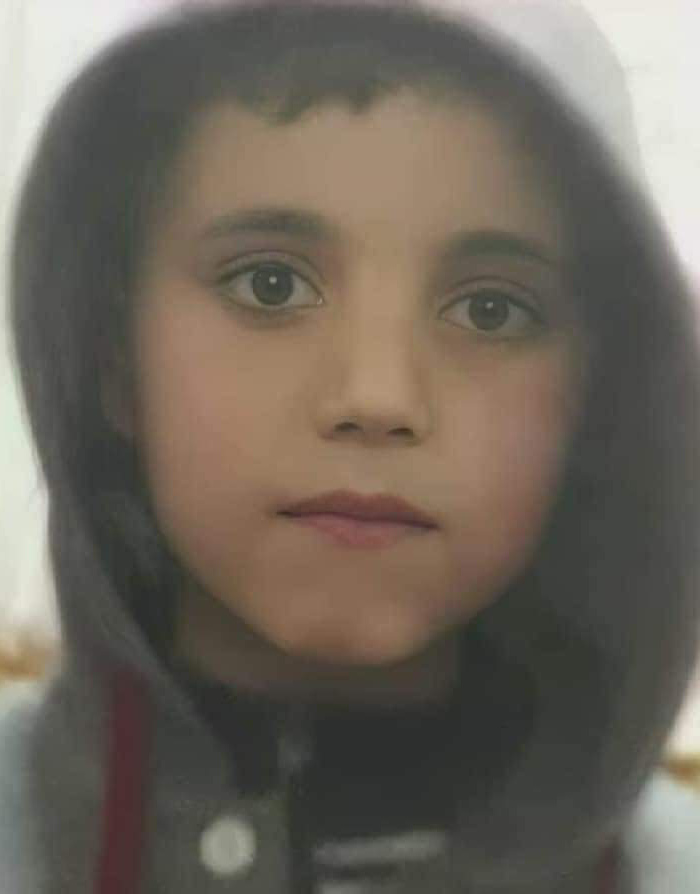
The boy has not been seen in person since but his story became widely known across Syria. (Supplied)
His cries for mercy touched a nerve with people throughout the Arab world and beyond, especially in Morocco, where this week a desperate struggle to save a five-year-old boy named Rayan Aourram from the bottom of a well ended in tragedy.
For a moment, Rayan’s ordeal placed renewed focus, importance and value on the life of a child, drawing reactions from hundreds of thousands of well-wishers hoping for his survival. Fawaz is now widely seen as “Syria’s Rayan,” with calls on social media for him to be rescued from a “different type of hole.”
Fawaz’s ordeal began in November as he walked to school with his sister in their home village of Itmaa in Deraa, southern Syria, and two motorbikes pulled up alongside them. According to witnesses, a female passenger pointed at Fawaz and three men grabbed him before speeding away with their captive.
The boy has not been seen in person since but his story became widely known across Syria owing to a series of chilling videos his kidnappers have used to extort ransom money from his family.
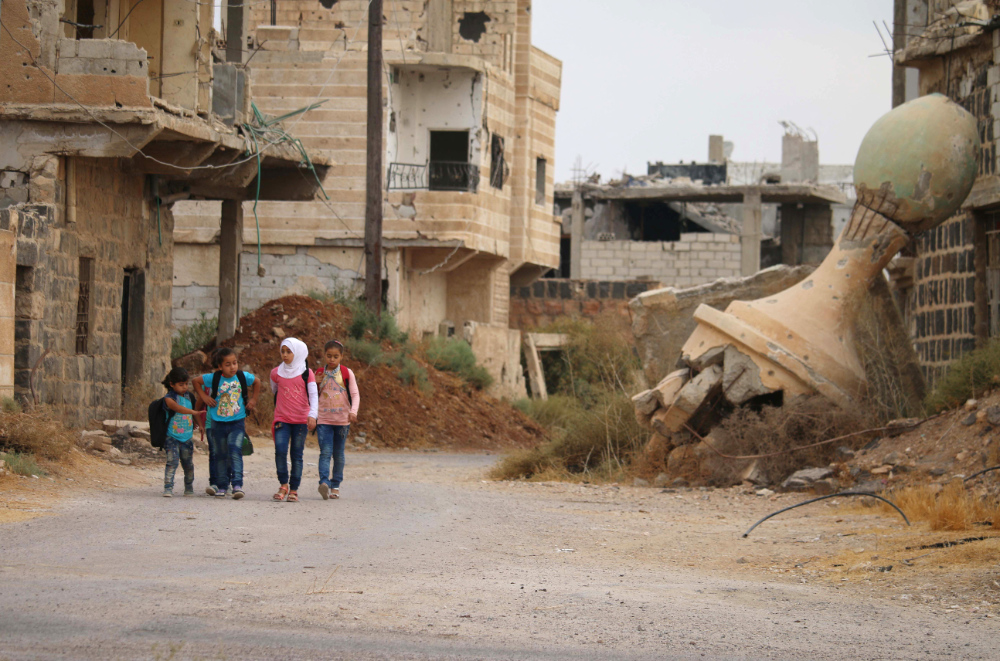
The failure of the Syrian authorities to track down the kidnappers means many more children could be at risk of similar ordeals. (AFP)
The abductors contacted Fawaz’s parents on WhatsApp before switching to Telegram, which allows the sender to remain untraceable. They initially demanded a ransom of 500 million Syrian pounds ($200,000) for the safe return of their child but reduced the sum to 400 million. The brutality in the videos sent by the kidnappers has gradually grown worse.
“This will be the state of the boy every day,” the kidnappers said in a message accompanying the video of Fawaz being beaten.
Fawaz’s uncle told local media that the captors had threatened to torture the child unless the ransom is paid. He added that they said they would cut off one of the boy’s fingers each day until the family pays up.
The family reportedly cobbled together much of the ransom by selling their land and anything else they had of value. The rest was crowdfunded in the past few days by the Qetaifan tribe.
Abdulhakim Al-Qetaifan, a Syrian actor who is from the same tribe, recently posted a video on Facebook in which he talked about the child’s plight.
“We thank everyone who has extended their love and aid to help free (Fawaz) from these beasts,” he said. “We have decided to collect the money. If we are not able to, we will reach out, but we thank everyone who has offered.”
Even if Fawaz is returned safely to his family, the payment of the ransom and the failure of the Syrian authorities to track down the kidnappers means many more children could be at risk of similar ordeals.
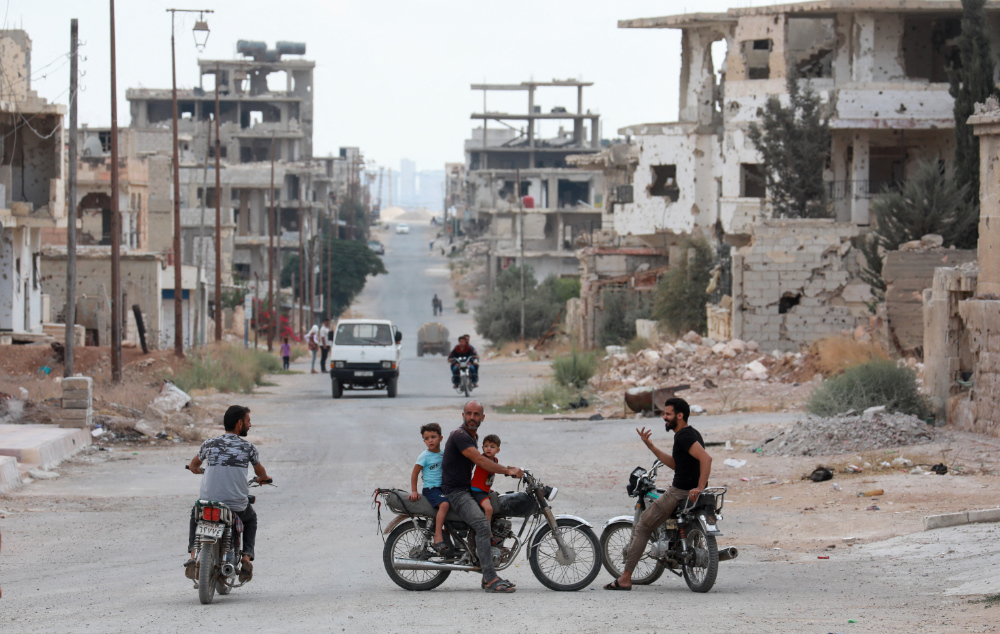
A 2020 report titled Deraa: Child Kidnappings Haunt Locals, documented 31 abductions of children between January and August that year. (AFP/File)
Even in a war-torn country so inured to cruelty and lawlessness in recent years, scenes of a young child begging for his life as his adult captors ruthlessly beat him have stirred a collective pushback against the country’s seemingly never-ending social decay.
Syria has become one of the most lawless places on earth. Extortion, kidnapping, blood feuds and revenge killings are rampant — and often occur with impunity.
“I worry about my children,” Hassan, a resident of Deraa who did not want to give his full name, told Arab News. “I bought a gun and I sleep near it every night.
“I am in a constant state of worry because I cannot accompany my girls to school. I dread to think what these beasts would do to my girls, who are 7 and 12. This country has turned into a lawless land; it is kill or be killed. It is a struggle for safety and survival every day.”
A 2020 report by Syrians For Truth and Justice, titled Deraa: Child Kidnappings Haunt Locals, documented 31 abductions of children between January and August that year. Like Fawaz, many of the victims were taken on their way to school. Others were playing outdoors. As in the case of the abduction of Fawaz, the report mentioned a woman accompanying the kidnappers.
It also found that many of the kidnappings happened near government security checkpoints, giving rise to suspicions that the army or security personnel were somehow complicit. Moreover, when families reported the kidnappings to authorities, no action was taken. Some of the children mentioned in the report were rescued but others, as young as 10 years old, are still missing.
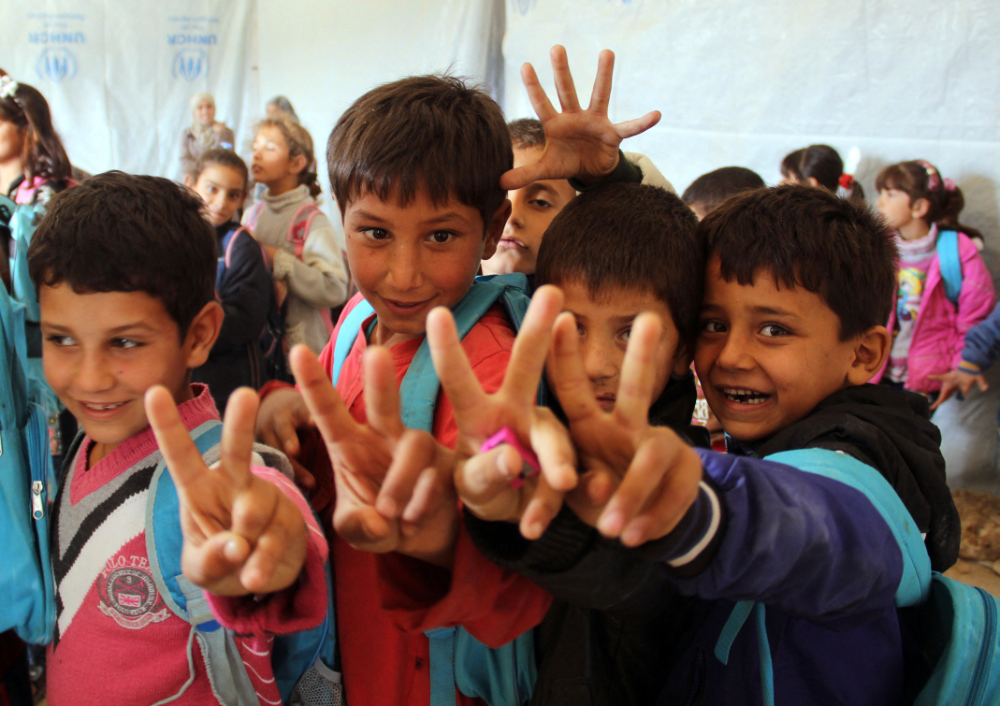
Extortion, kidnapping, blood feuds and revenge killings are rampant in Syria — and often occur with impunity. (AFP/File)
“Kidnapping cases have been happening throughout the Syrian war,” Bassam Al-Ahmad, the co-founder and CEO of Syrians For Truth and Justice, told Arab News.
“Deraa has witnessed a lot of cases. Abductors came from all factions, rebels, mercenaries and regime thugs. The kidnappings continued to happen despite the areas falling under Russian and governmental control.”
Under Syrian law, kidnappings are classified as “crimes against freedom and honor.” The penal code states that if a kidnapper abducts a minor, he can be imprisoned for between six months and three years. If a ransom is demanded, the perpetrators can face up to 20 years in jail. If the child is murdered or sexually abused, the death penalty can be imposed.
Such cases rarely reach a courtroom, however. And with multiple armed factions roaming the country — be they pro-government, opposition or extremist elements — it is almost impossible to know who to turn to for help if a family member is abducted.
A decade of war, a crumbling economy and a complete breakdown in trust have left the population facing living conditions that continue to deteriorate. Food prices have skyrocketed beyond the means of many to pay, and job opportunities are scarce or nonexistent. Against this backdrop, kidnapping for ransom has become a lucrative alternative.
“People have resorted to such ways to make money,” Al-Ahmad told Arab News. “We are talking about a country with no laws, a country with hungry people. The abductors coming from all sides is actually the norm.
“While the Syrian government is technically the one responsible for people’s safety and implementing the law, it is difficult to expect any results with everything going at the moment.”


