

Shell’s carbon capture plant releases more CO2 than it captures, study claims

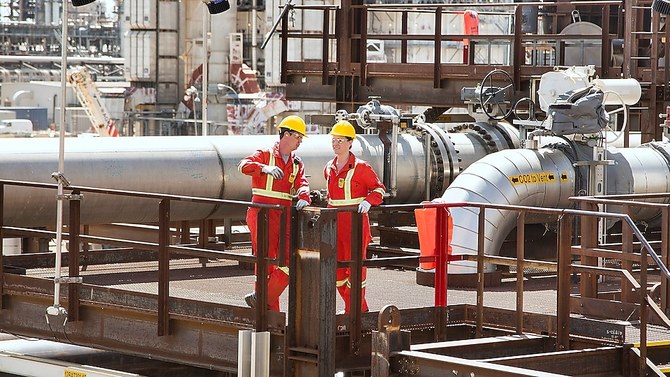
Quest CCS facility. Shell.com
Short Url
Updated 25 January 2022
Follow

Shell’s carbon capture plant releases more CO2 than it captures, study claims

  • The emission figure compares to the carbon footprint of 1.2 million diesel vehicles annually


RIYADH: Shell's carbon capture plant, better known as Quest, has been accused of releasing more greenhouse gases than it captures by UK human rights organization Global Witness.

The UK multinational oil and gas firm's carbon capture facility, located in Alberta, Canada, has averted 5 million tons of carbon dioxide from breaking free into the atmosphere since 2015.

However, Global Witness claim its investigation shows that at the same time it has emitted 7.5 million tons of greenhouse gases.


The emission figure compares to the carbon footprint of 1.2 million diesel vehicles annually, the study added.

The oil giant rebutted the study analysis by Global Witness stating it was “simply wrong”, CNBC reported citing a spokesman for Shell.

While the carbon capture and storage industry vowed a 90 percent carbon capture rate, the Global Witness study indicates that only 48 percent of Quest’s carbon emissions were, in fact, captured.

The Quest plant poses a potential solution to the energy transition and is designed to capture around 33 percent of carbon dioxide emissions, the Shell spokesman claimed.


King Abdulaziz Airport among world’s busiest after record-breaking 2025

Updated 02 January 2026
Follow

King Abdulaziz Airport among world’s busiest after record-breaking 2025

RIYADH: King Abdulaziz International Airport has achieved a new historical milestone, reaching 53.4 million passengers in a single year.

This is the highest number ever recorded at a Saudi airport since the beginning of air travel in the Kingdom, placing it among the world’s mega airports in terms of passenger traffic, according to the Saudi Press Agency.

The airport handled a total of 310,000 flights and 60.4 million bags, representing a 12 percent increase compared to 2024. It also handled 9.57 million Zamzam water containers and 2,968 cargo flights. 

This achievement reflects the airport’s qualitative transformation and its position as a regional hub and national gateway connecting the Kingdom to the world. It also highlights its role in facilitating the movement of visitors and pilgrims, promoting tourism in line with the goals of Vision 2030, diversifying the economy, and providing a distinguished travel experience. 

For his part, CEO of Jeddah Airports Co. Mazen Johar, affirmed that reaching 53.4 million passengers confirms the airport’s high operational readiness and represents a pivotal milestone for moving to the next phase, in preparation for doubling this number, God willing, in the coming years. 

He pointed out that this national achievement would not have been possible without the grace of God Almighty, followed by the directives of the wise leadership and the continuous follow-up from the minister of transport and logistics, the president of the General Authority of Civil Aviation, and the CEO of Airports Holding Co. 

He explained that King Abdulaziz International Airport is strengthening its position as a major aviation hub in the region through expansions, increased capacity, and improved services, supporting the objectives of the aviation program and aligning with the goals of the Kingdom’s Vision 2030. 

The CEO of Jeddah Airports Co. expressed his gratitude to the partners in success from various government and private sectors for their fruitful cooperation through a collaborative work system that contributed to providing the best services.