



RIYADH: A two-day Diriyah art forum is building links between Saudi cultural authorities as part of a broader plan to make the At-Turaif district a lifestyle and culture destination.
The Diriyah Gate Development Authority, the body overseeing the development of the historic site, is taking part in the event.
Dalya Mousa, DGDA director of culture, spoke about new projects and developments set to take place in Diriyah, including At-Turaif district, the first capital of Saudi Arabia and an important political and historical site.
Speaking on the importance of At-Turaif — one of six heritage sites recognized by UNESCO in the Kingdom — Mousa told Arab News: “When we are talking about At-Turaif, we are talking about the first Saudi capital in the 18th century.
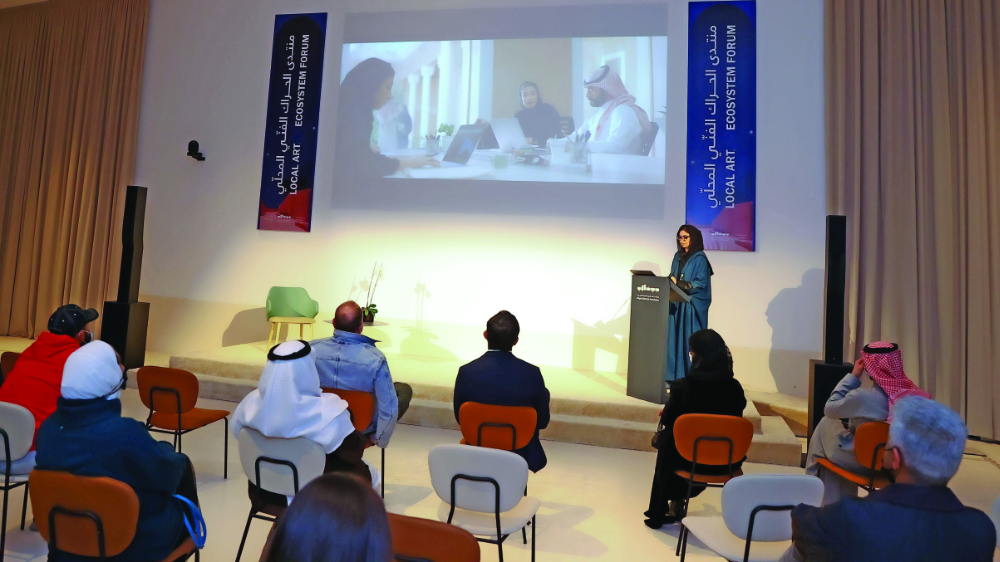
Dalya Mousa shed light on the culture, history and heritage of At-Turaif and revealed that six museums and an art district are being developed as key cultural sites in the district. (AN photo by Basheer Saleh)
“We are talking about the foundation of the Kingdom, with really diverse cultural landscapes and architecture that goes back 300 years. We aim to show the world how people used to live here and we will include museums, galleries and ancient palaces in the plans.”
The director also shed light on the culture, history and heritage of At-Turaif and revealed that six museums and an art district are being developed as key cultural sites in the district.
Culture plays a vital role in our lives. It reflects our identity and shapes our future. Our mission is to create a best in class culture platform that connects Diriyah’s past with its present and future.
Dalya Mousa, DGDA director of culture
Mousa said: “Culture plays a vital role in our lives. It reflects our identity and shapes our future. Our mission is to create a best in class culture platform that connects Diriyah’s past with its present and future.
“When we talk about art and culture, it includes visual art, performances, commissions, collections, traditional arts and crafts, multimedia urban intervention and more,” she added.
“At-Turaif will have cultural museums, cultural academies, a cultural district and most importantly, art commissions across the master plan. We’re talking about digital libraries and archives, in-house expertise, capacity building, traditional arts and craft schools, and more.”
The historic district will also offer world-class education to nurture the future cultural leaders of the Kingdom, including the opening of King Salman University, six academies and new public schools.
Diriyah will also contain boutique hotels and resorts as part of its strategy to become a premium lifestyle destination where visitors can shop and dine in the presence of unique cultural history.
Mousa said that “working with and for the local community” will strengthen Diriyah’s creative ecosystem across cultural sectors in alignment with the Ministry of Culture’s plan to celebrate the town nationally, regionally and globally.
Launching Diriyah as the culture capital of the Middle East 2030, the Diriyah Gate Development Authority partnered with the Ministry of Culture and Diriyah Biennale Foundation on a series of multidisciplinary cultural programs to achieve that goal.


