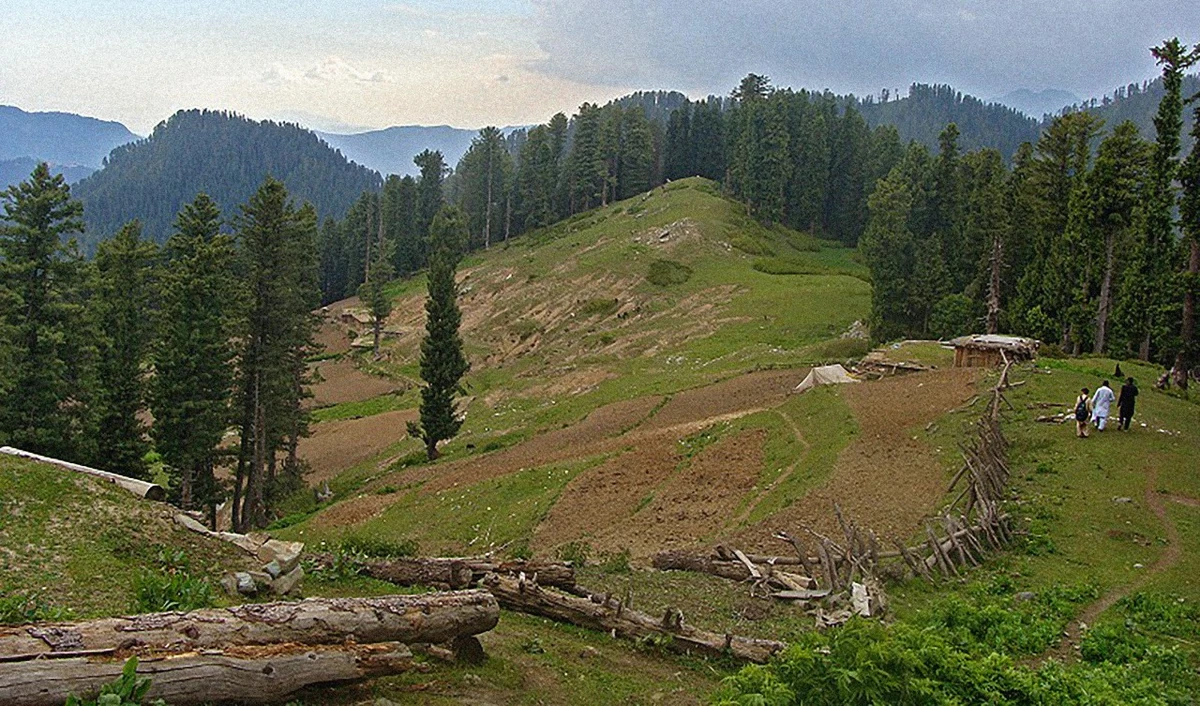
Northwestern Pakistan increases number of protected areas for wildlife conservation

In this undated photo, backpackers walk past a hillside in Kamal Ban National Park, a protected area in Mansehra district of Pakistan’s Khyber Pakhtunkhwa province. (Photo courtesy: KP Forest Environment & Wildlife Department)
Short Url
Updated 22 January 2022
Follow

Northwestern Pakistan increases number of protected areas for wildlife conservation

  • These areas are designated to ensure conservation of flora and fauna, mitigate environmental disasters
  • Initiative comes as the UN declared years 2021 through 2030 as the Decade on Ecosystem Restoration

PESHAWAR: Pakistan’s northwestern Khyber Pakhtunkhwa province has launched a major wildlife conservation project by designating several new sites in diverse ecological zones as protected areas, a provincial minister told Arab News. 
The initiative comes as the UN has declared years 2021 through 2030 as the Decade on Ecosystem Restoration. 
Given KP’s landmass, it will collectively take the size of these special zones from 10.22 percent to 14.91 percent. 
“Our coverage of protected areas is around 15 percent but we intend to increase it to 17 percent in the coming year,” the provincial minister for forest, environment and wildlife, Syed Ishtiaq Urmar, said earlier this week. 
“I am sure we will meet our ambitious target and achieve global standards by further increasing the volume of protected areas such as wetlands, national parks and wildlife reserves.”
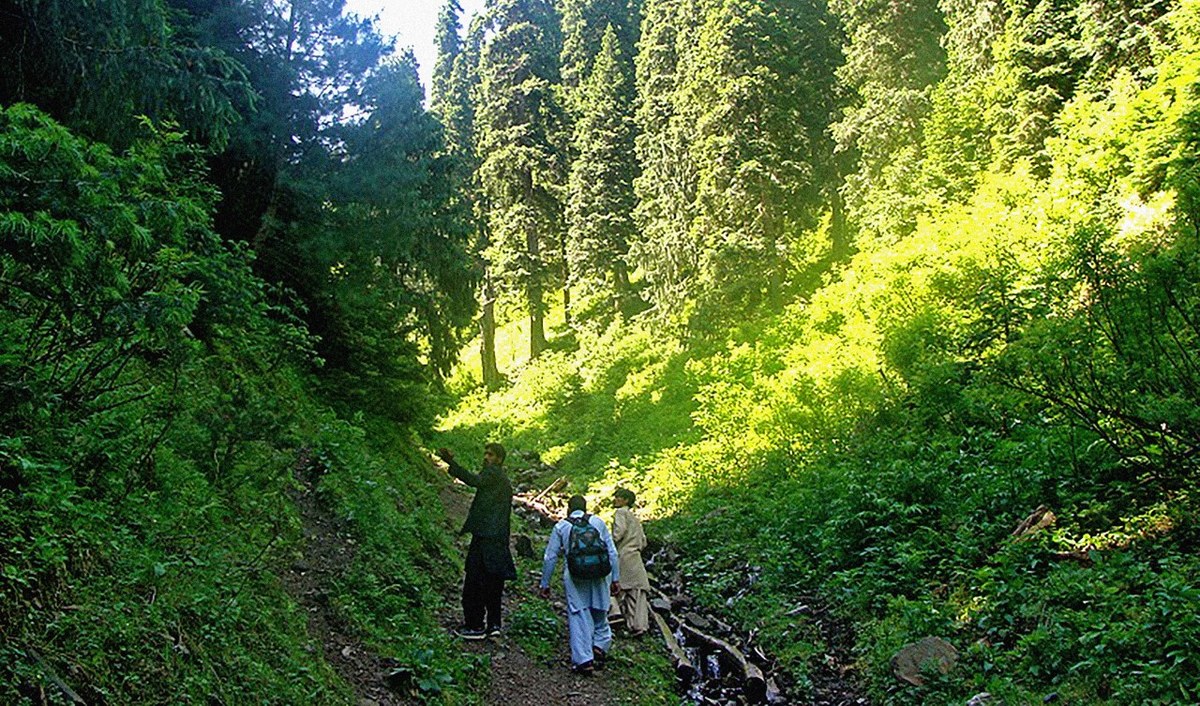


In this undated photo, backpackers walk past a hillside in Kamal Ban National Park, a protected area in Mansehra district of Pakistan’s Khyber Pakhtunkhwa province. (Photo courtesy: KP Forest Environment & Wildlife Department)

He said that designating appropriate sites as protected areas was helpful for the conservation of flora and fauna, adding it could ultimately reduce environmental challenges such as droughts and flooding.
According to KP’s Wildlife and Biodiversity Act, 2015, wildlife sanctuaries, national parks, biosphere reserves and game reserves all fall under protected areas. 
Pakistan is signatory to the United Nations Convention on Biological Diversity, making officials of the wildlife department say they aspire to meet international benchmarks in Khyber Pakhtunkhwa. 
“The initiative aims to preserve and rehabilitate threatened or endangered wildlife species in their natural habitats,” KP Forest Environment and Wildlife Department spokesman Latif-ur-Rehman said. “It will play a highly significant role in the protection and conservation of wildlife.” 
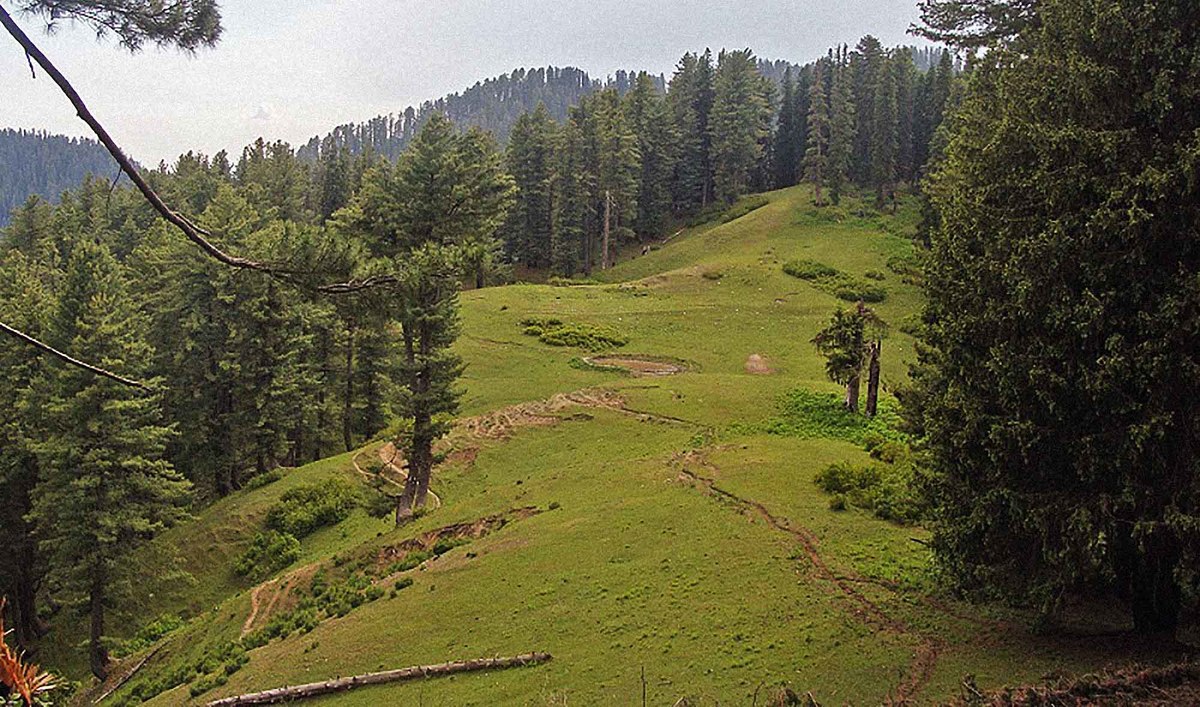


In this undated photo, backpackers walk past a hillside in Kamal Ban National Park, a protected area in Mansehra district of Pakistan’s Khyber Pakhtunkhwa province. (Photo courtesy: KP Forest Environment & Wildlife Department)

Dr. Muhammad Nafees, who teaches environmental sciences at the Peshawar University, told Arab News that about 12 percent of the country’s land had been declared protected by the government, though the international benchmark was 31 percent. 
He said the KP’s initiative was “encouraging,” but the whole country needed to devise a proper management plan for protected areas and infrastructure around them to “ensure effective outcomes.” 
He added that the inhabitants of these areas should also be given incentives to make the initiative successful. 
“For example, if we want to breed particular species of birds in a certain area, for instance, we will have to completely ban its hunting there,” Nafees said. “Protected areas mean that human activities should be curtailed over there to achieve long-term environmental targets and purposes.” 

Planning minister says Pakistan to set up advanced technology centers to support economic growth

Updated 13 sec ago
Follow

Planning minister says Pakistan to set up advanced technology centers to support economic growth

  • Ahsan Iqbal says planned centers to focus on artificial intelligence, quantum computing and nanotechnology
  • He also cites satellite technology as key tool for climate monitoring, early warning and disaster management

ISLAMABAD: Pakistan plans to set up technology Centers of Excellence, including facilities focused on quantum computing and nanotechnology, as it seeks to benefit from rapid advances in artificial intelligence and emerging technologies, state media reported on Friday.

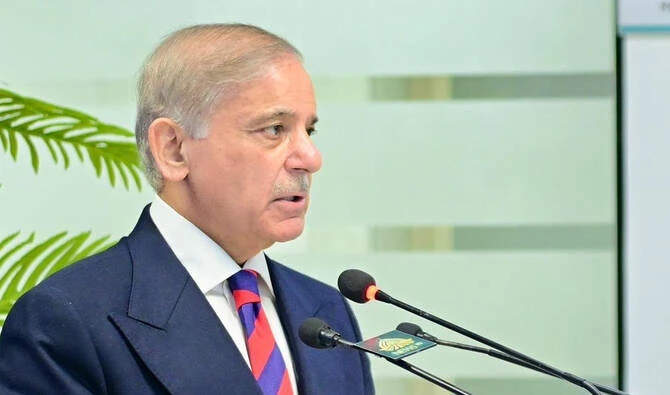
The announcement was made by Planning and Development Minister Ahsan Iqbal, who said the government aims to position Pakistan to compete in future technologies that are expected to drive economic growth and reshape global industries.

Quantum computing, which uses the principles of quantum mechanics to process information far more quickly than conventional computers, has applications ranging from complex data analysis and cryptography to climate modeling and materials science. Nanotechnology focuses on engineering materials at the molecular level and is widely used in energy storage, medicine and electronics.

Addressing a ceremony in Islamabad, Iqbal said countries that master artificial intelligence, robotics, quantum computing and space technologies would lead the global economy in the coming decades.

“During the address, the minister said Pakistan’s efforts to align itself with rapid advancements in artificial intelligence, robotics, space innovation and emerging technologies reflect the country’s ambition to participate confidently in shaping the future,” Radio Pakistan reported.

“Ahsan Iqbal further announced that the government plans to establish three Centers of Excellence, including a National Center for Quantum Computing and a National Center for Nanotechnology, aimed at upgrading the national economy,” it added.

He informed the ceremony that measures were underway to develop a new Silicon Valley in Pakistan “to promote cross-fertilization of ideas and innovation by bringing talent, research and industry together under one roof.”

The minister also highlighted the role of technology in tackling climate challenges, noting that satellite systems are increasingly used worldwide for disaster management, early warning systems and climate monitoring.

Pakistan, one of the world’s most climate-vulnerable countries, can benefit from satellite technology to track weather patterns, manage floods and improve disaster preparedness, he said, adding that more than 9,000 satellites currently orbit the Earth and are transforming how economies and governments operate.

Iqbal said the planned centers would support Pakistan’s broader “Uraan Pakistan” vision, which focuses on exports, digital development, energy and infrastructure, environmental resilience and social equity, Radio Pakistan reported.