


RIYADH: The people of Kosovo want to see more international involvement in the Western Balkans to stem a rising tide of hate speech and preserve peace in a still tense region, its ambassador to Saudi Arabia has told Arab News.
In an interview with Arab News in the run-up to Kosovo’s Independence Day on Feb. 17, Lulzim Mjeku cited a statement issued by the Office of the UN High Commissioner for Human Rights on Jan. 14 as Kosovars were preparing to commemorate the 23rd anniversary of the Recak massacre.
The statement said individuals in Bosnia and Herzegovina, and in Serbia, have glorified atrocities, praised war criminals, targeted communities with hate speech and, in some cases, directly incited violence.
Mejku said that the OHCHR “called upon the international community to intervene and to take concrete action against hate speech. Unfortunately, we have seen denialism in recent times.” Denialism refers to the practice of rewriting the past and pretending that historical events did not happen as they did.
The incidents the OHCHR was referring to involved large groups of people chanting the name of Ratko Mladic, a Serbian war criminal, while holding torchlight processions and singing nationalistic songs urging the takeover of various locations in the former Yugoslavia.
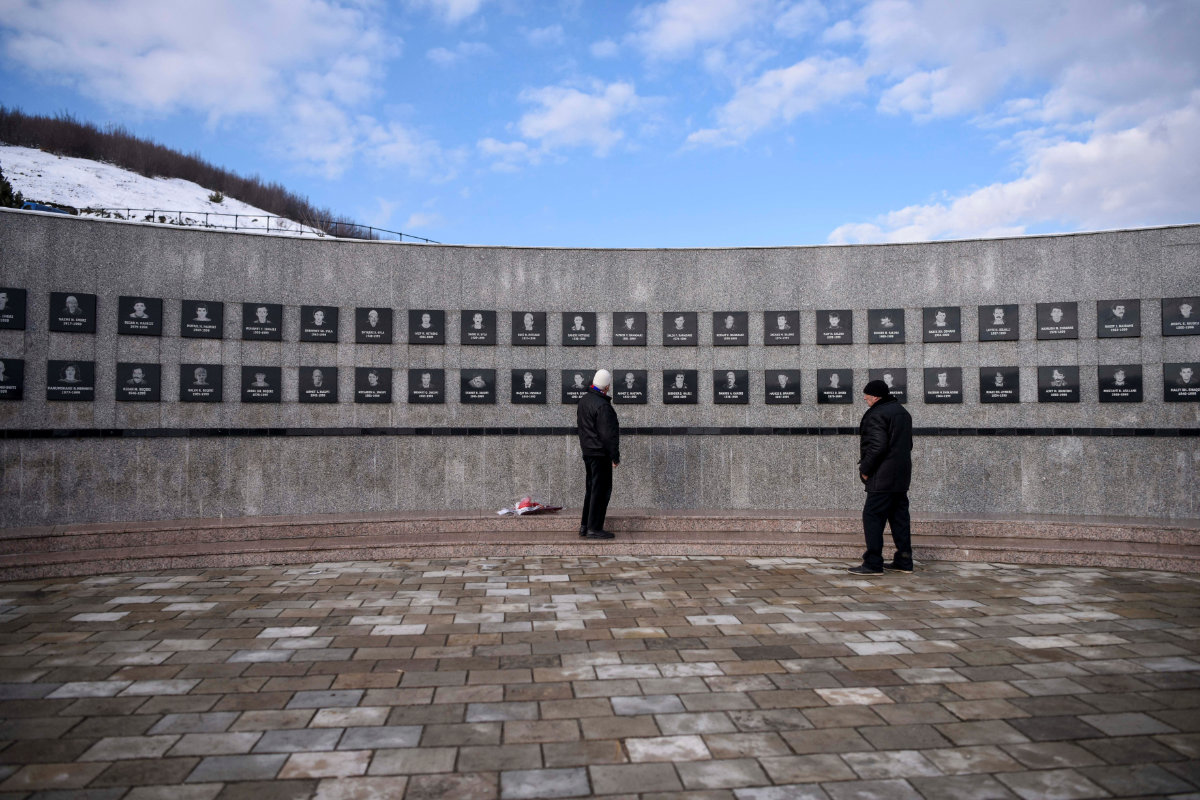
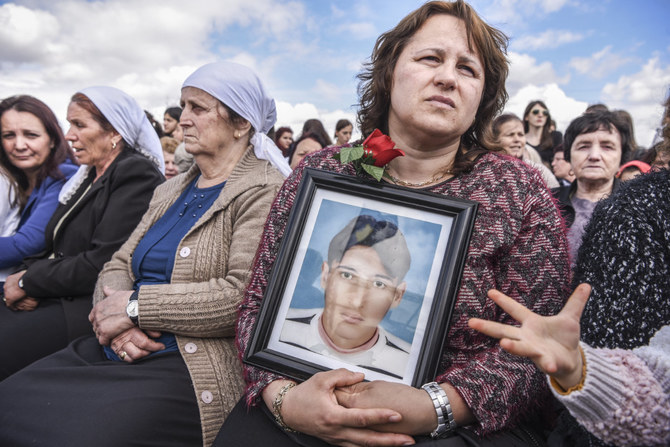
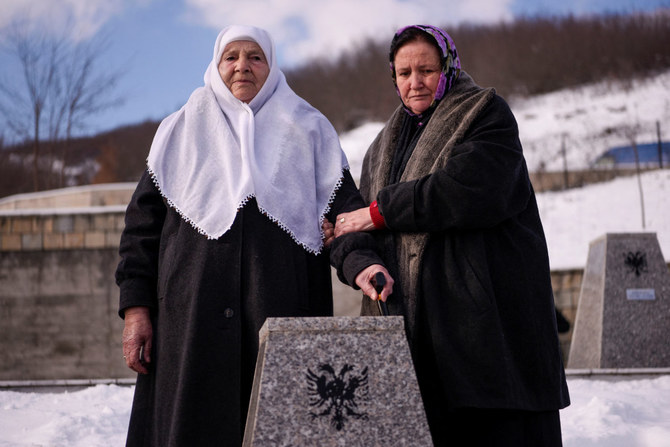
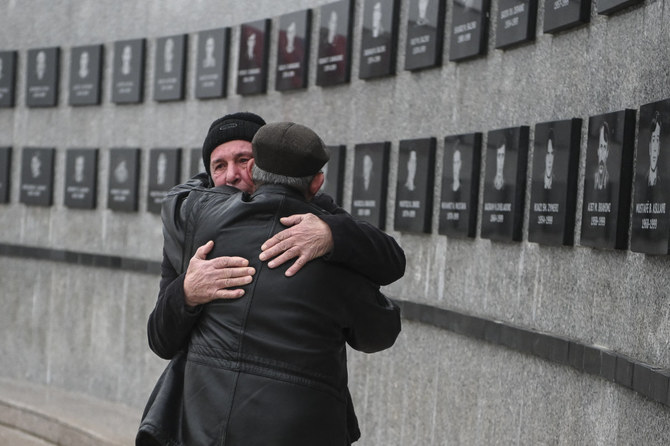
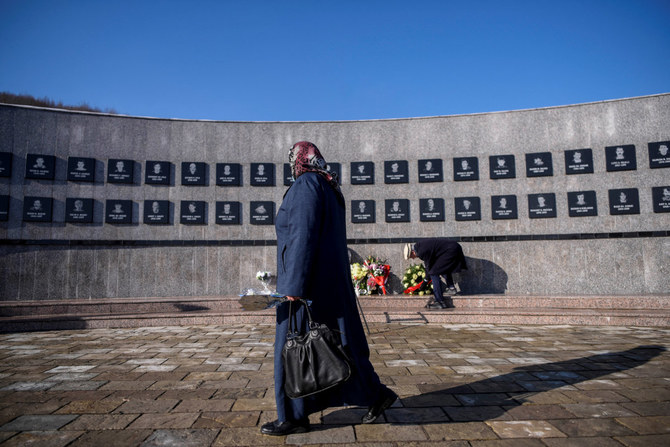
Kosovo Albanians pay their respects to their relatives and victims of the 1999 Racak massacre in the village of Racak on Jan. 15, 2022. (AFP)
The hate crimes cited by the UN statement occurred in Serbia and in several locations in the Republika Srpska, an entity of Bosnia and Herzegovina northwest of Kosovo. In one incident, shots were fired near a mosque in Janja in northeastern Bosnia, where local Bosniaks (Bosnian Muslims) were mocked and threatened while returning from prayers.
Muslims populations of the Western Balkans know only too well the ugly history of ethnic hatred. “Forty years ago, the father of Donika Gervalla-Schwarz, Kosovo’s current minister of foreign affairs, was assassinated,” Mejku said, referring to the murders of Jusuf and Bardhosh Gervalla, Kosovar Albanian artists, writers and political activists, allegedly by the Serbian-Yugoslav secret police on January 17, 1982, near Heilbronn, a city in Baden-Wurttemberg, Germany.
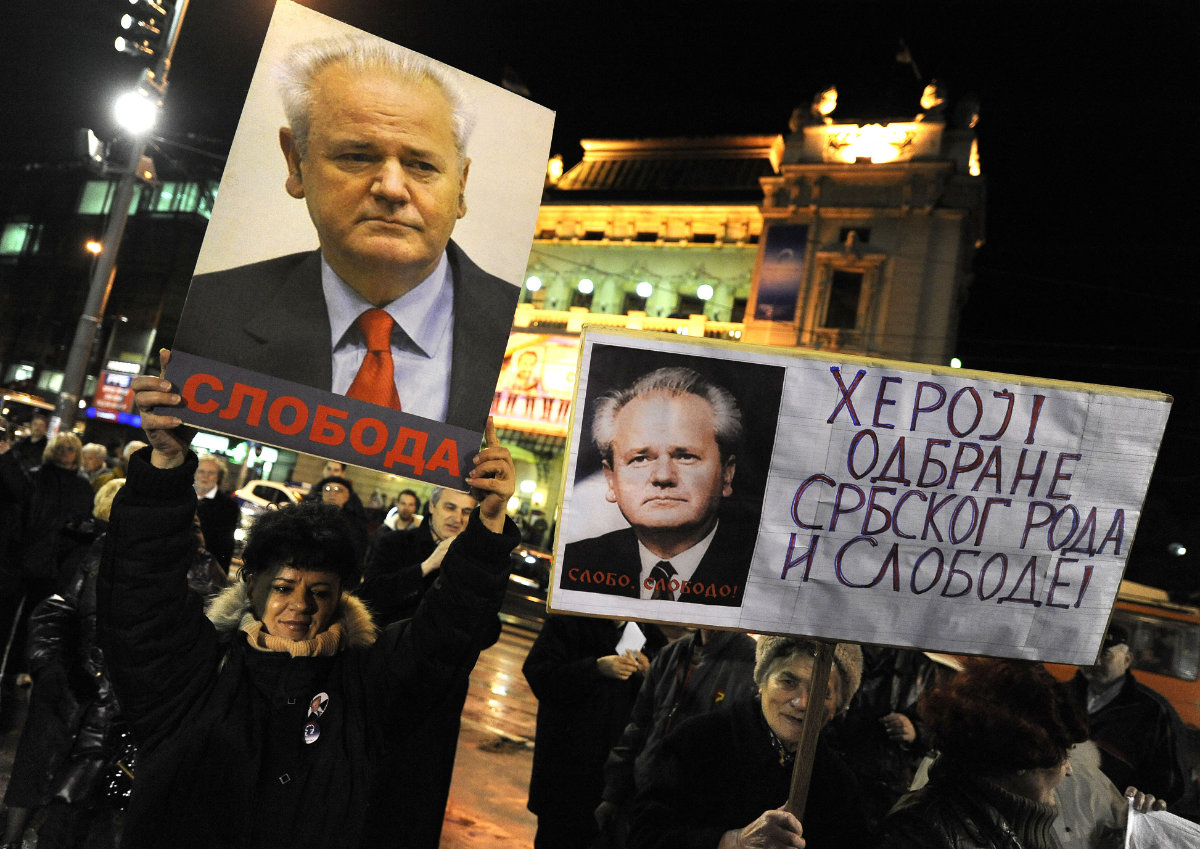
The Yugoslav Wars were marked by frequent mass killings, such as the Rezalle massacre, where 98 Kosovar Albanians were killed by Serbian forces. (AFP)
“The gunmen also killed Kadri Zeka, a friend and collaborator of the Gervalla brothers. As dissidents who opposed Serbia’s oppressive regime in Kosovo and worked for their province’s independence, the three activists had been living in exile since 1980. The assassins have never been brought to justice.”
As a young journalist in 1999, Mjeku covered the massacre which occurred on Jan. 15 in Recak, a village in Kosovo. Forty-five people had been shot and their bodies dumped in a ravine outside Recak, apparently by ethnic Serb policemen and soldiers.
Other massacres of Kosovar Albanians followed, including in Krusha in March 1999, Meja on April 27, 1999, and Dubrava prison on May 22, 1999.
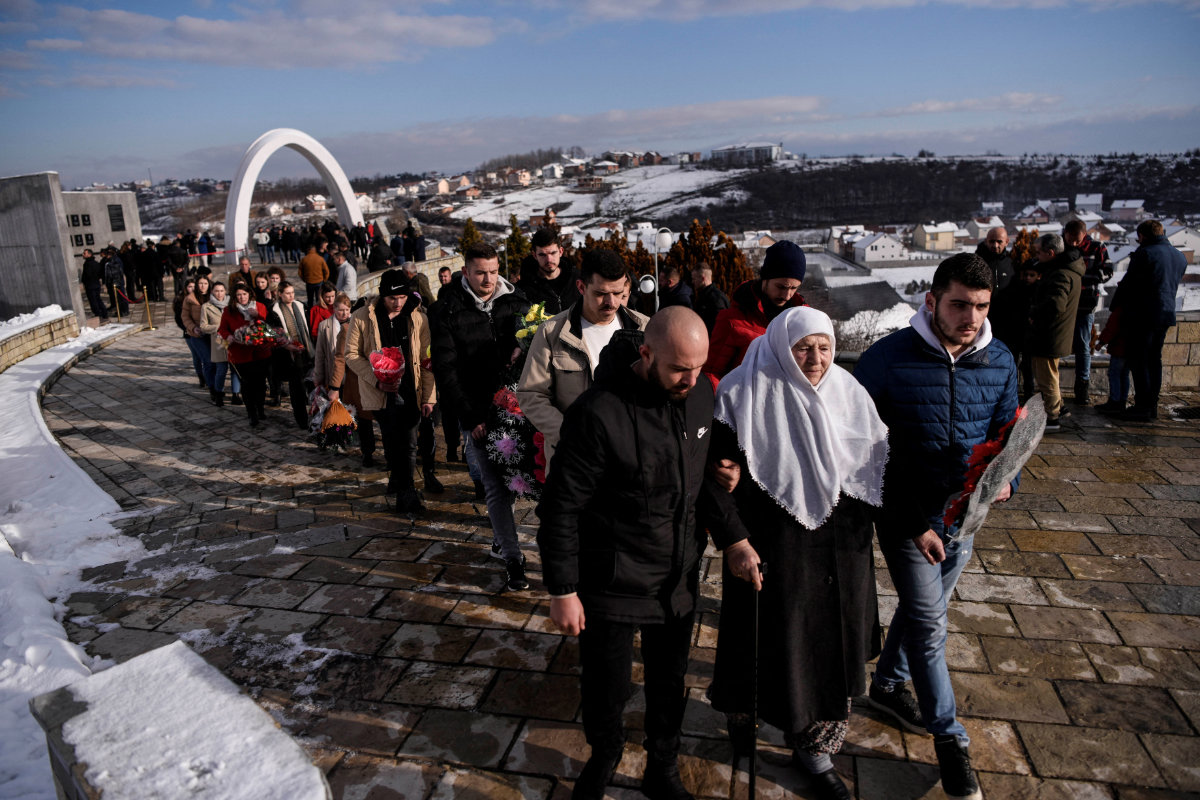
Kosovo Albanians pay their respects to their relatives and victims of the 1999 Racak massacre in the village of Racak on Jan. 15, 2022. (AFP)
“As we commemorate this month the 23rd anniversary of the Recak massacre, the horrible crime is still fresh in our memories,” Mjeku told Arab News. “As sad as it may sound, the Republic of Kosovo owes its very existence to the crimes that were committed against the Kosovan people.”
Nikola Sainovic, a former deputy prime minister of Serbia, was among those responsible for spreading widespread terror among the Kosovar Albanian population.
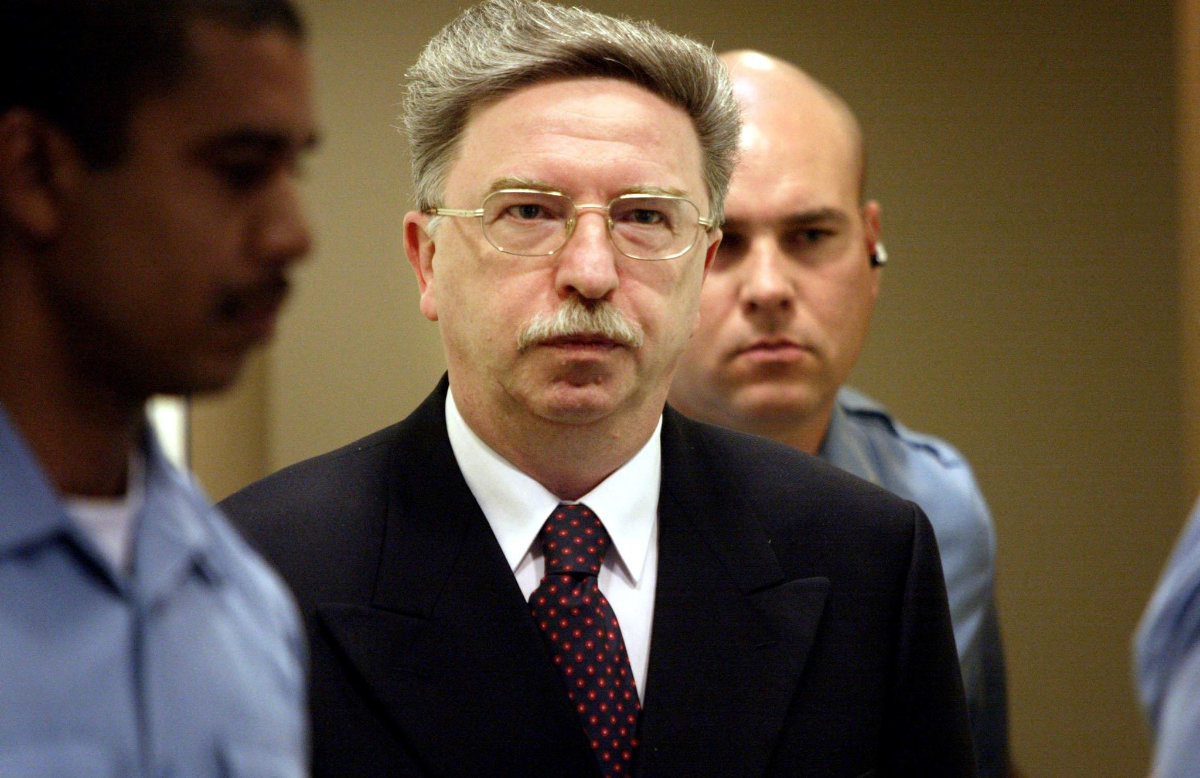
Nikola Sainovic, former Yugoslav president Slobodan Milosevic' right hand during the Serb crackdown in Kosovo, faces trial at the UN War Crimes Tribunal in The Hague in 2002. (AFP)
In 2009, he was convicted by the International Criminal Tribunal for the Former Yugoslavia in The Hague for crimes against humanity and war crimes committed against ethnic Albanian civilians during the Kosovo War. Soon after he was granted early release in 2015, Sainovic was appointed to the board of the Socialist Party of Serbia.
Allegations of war crimes have also dogged members of the Kosovo Liberation Army, the main ethnic Albanian guerrilla force in Kosovo which fought against the Serbs.
After politicians unsuccessfully waged a years-long peaceful struggle for greater autonomy or independence, the KLA launched an armed uprising against Serbian rule in the mainly Muslim Yugoslav province in March 1998.
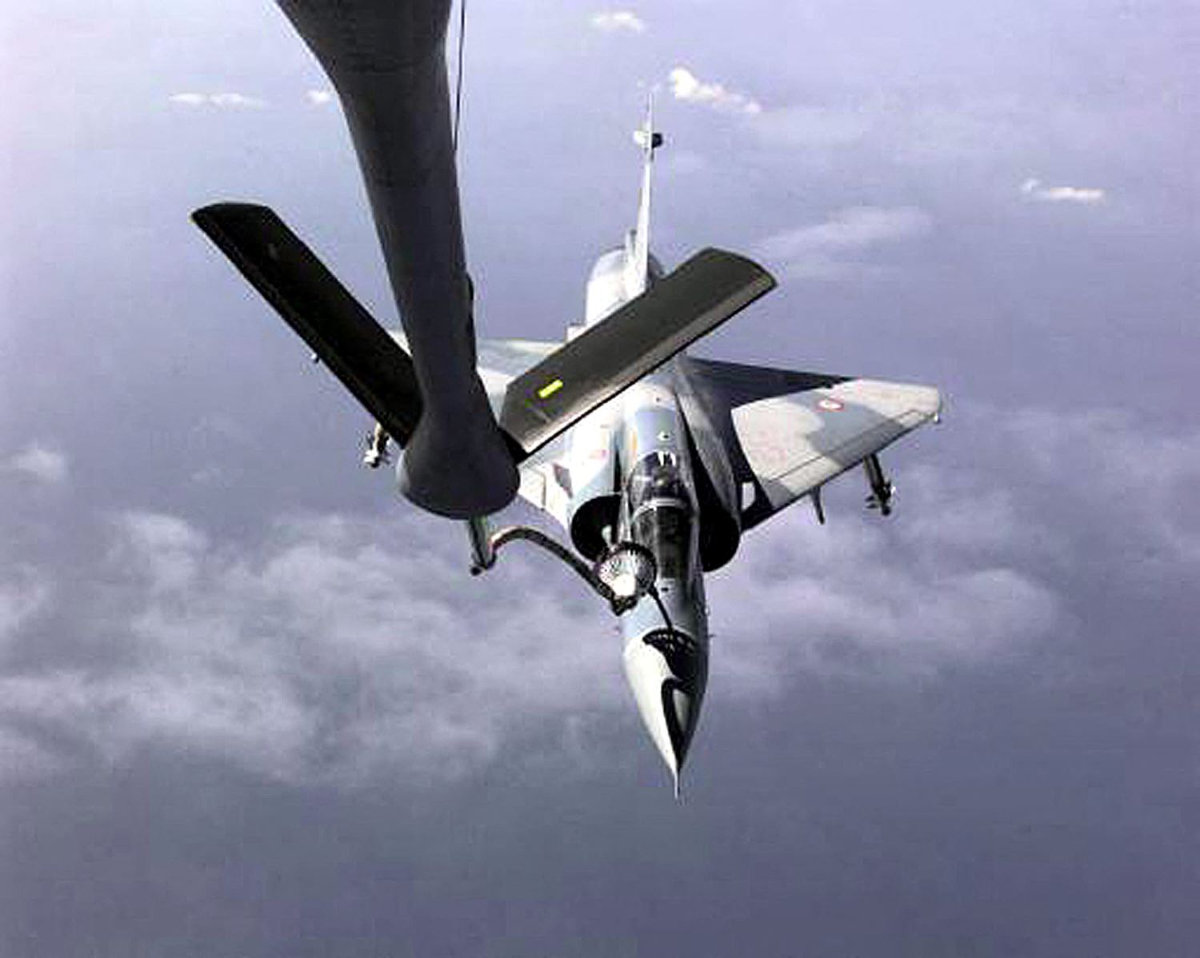
A French Mirage 2000N participating in the campaign against Serbia refuels from a US Air Force KC-135R tanker over the Adriatic Sea. (AFP/USAF handout photo)
This galvanized a disproportionate response from the Serb political establishment, which did not discriminate between Kosovar Albanian fighters and civilians, sending thousands of refugees into neighboring Albania and North Macedonia.
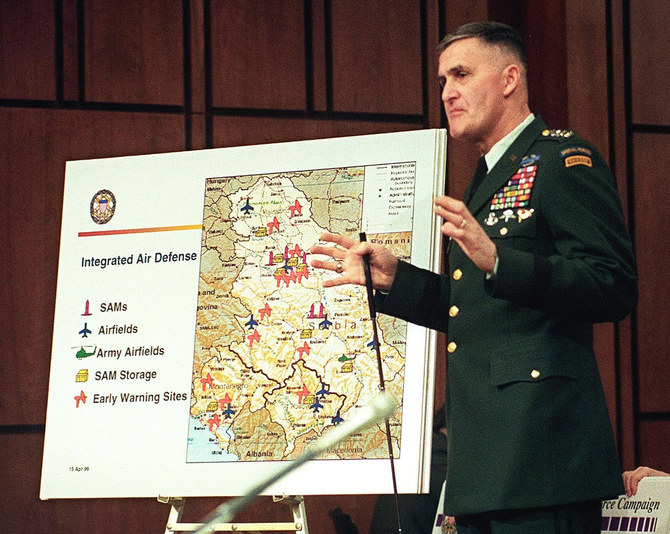
In response to the escalating violence, notably the Recak massacre, NATO launched a 78-day bombing campaign that eventually forced Serb policemen and soldiers to withdraw from Kosovo.
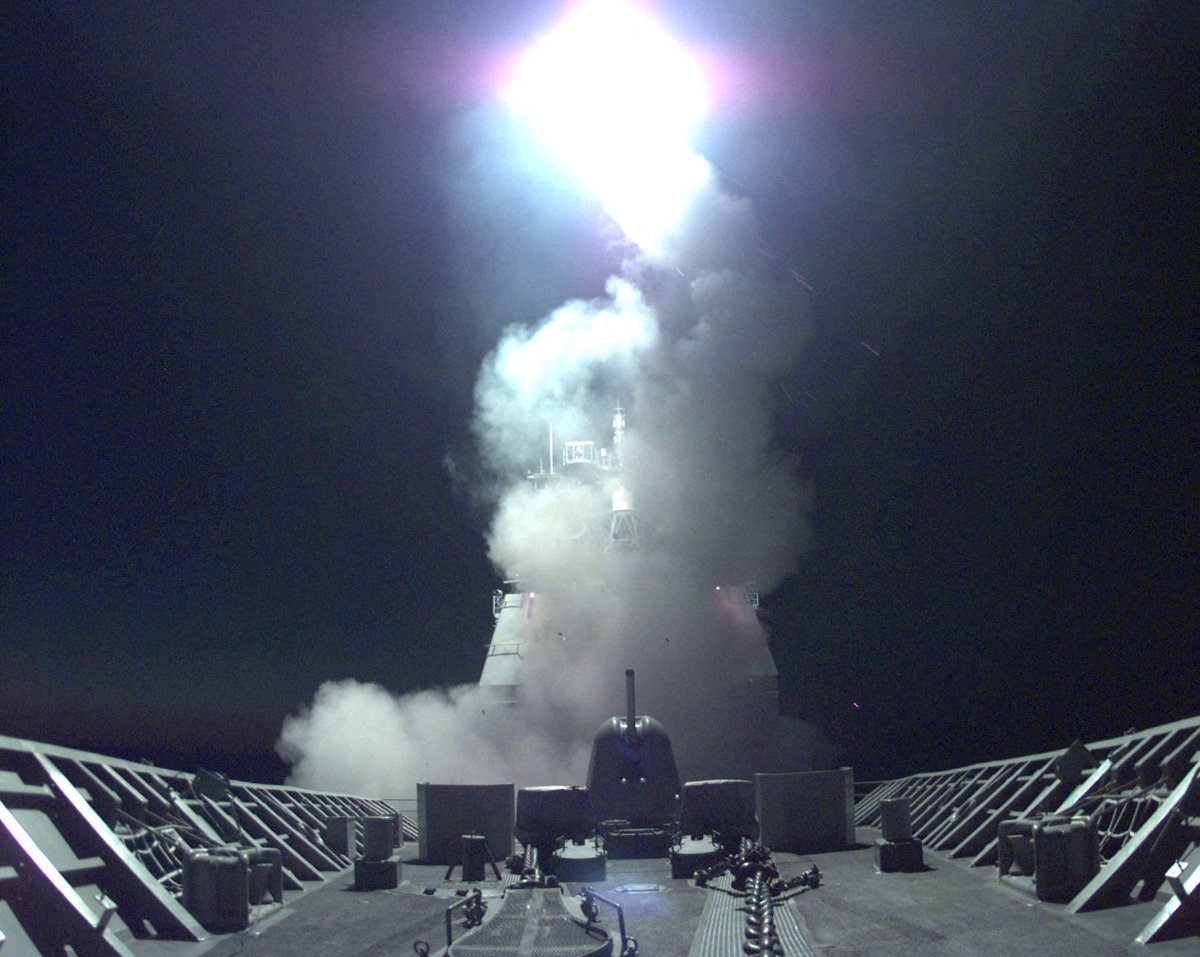
A "Tomahawk" cruise missile launches from the bow of the US Navy cruiser USS Philippine Sea at targets throughout Yugoslavia and Kosovo on March 24, 1999. (US Navy photo via AFP)
After Yugoslavia accepted a peace proposal in June 1999, NATO ended the bombing campaign and the UN Security Council adopted Resolution 1244, suspending Yugoslav rule in Kosovo and forming the United Nations Interim Administration in Kosovo with a NATO peacekeeping element, KFOR.
The cessation of violence brought hope to Kosovars at a time of great despair, paving the way for a new reality and prompting a return of refugees.
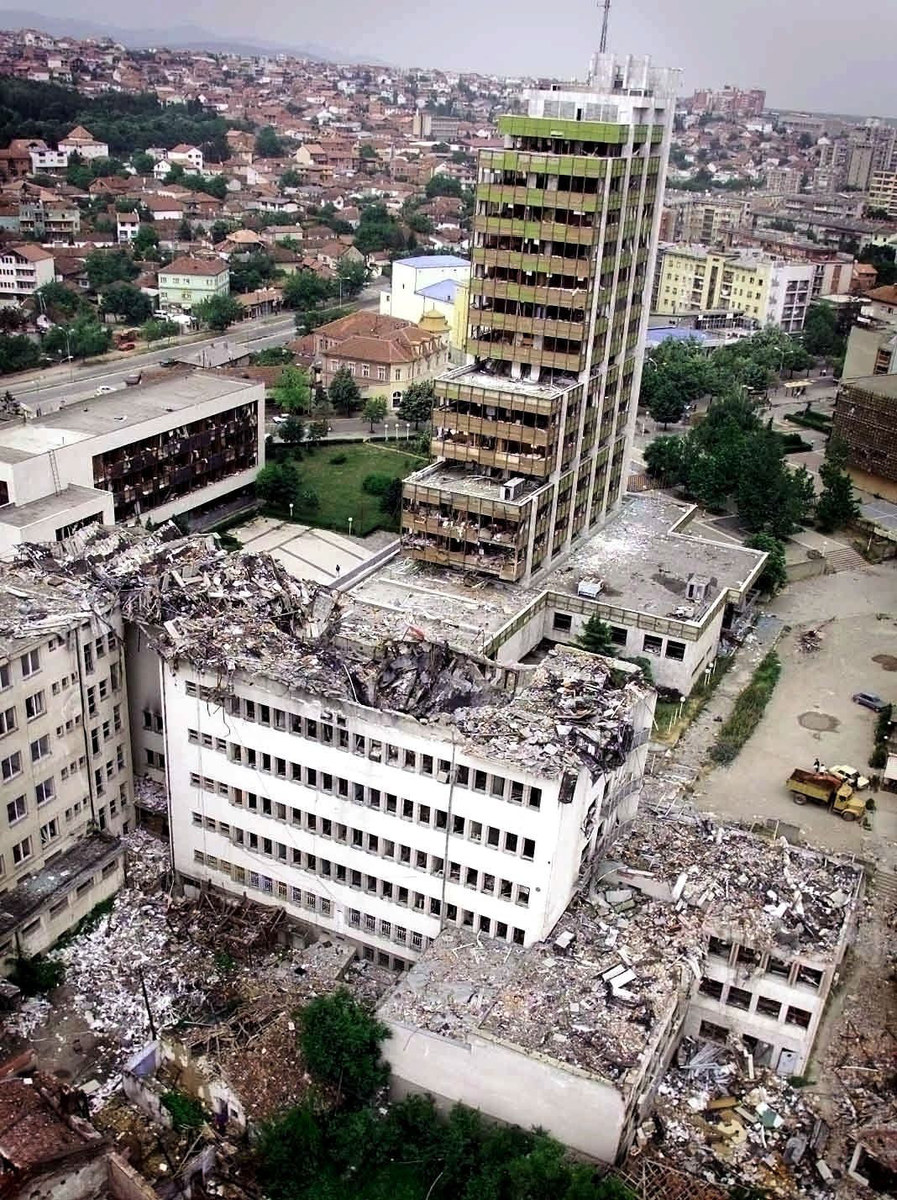
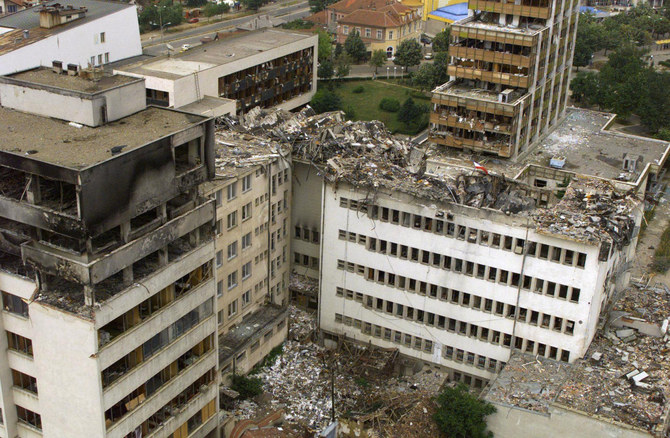
An aerial photograph shows the devastation inflicted Serbia's capital, Belgrade by the NATO bombing campaign. (AFP)
Many KLA leaders subsequently moved into politics. Hashim Thaci, a former president of Kosovo and a commander in the KLA, stands accused by a court in the Netherlands of responsibility for almost 100 murders.
Mjeku believes now is the time for diplomacy to take primacy. “During all these years, Kosovo as a country has voted for stability and security, not only for its own population, but also for the wider Balkan region and Europe,” he told Arab News.
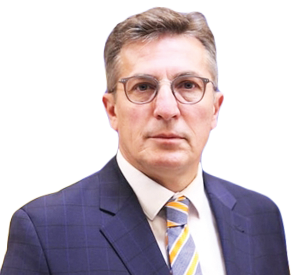
Lulzim Mjeku, Kosovo ambassador to Saudi Arabia
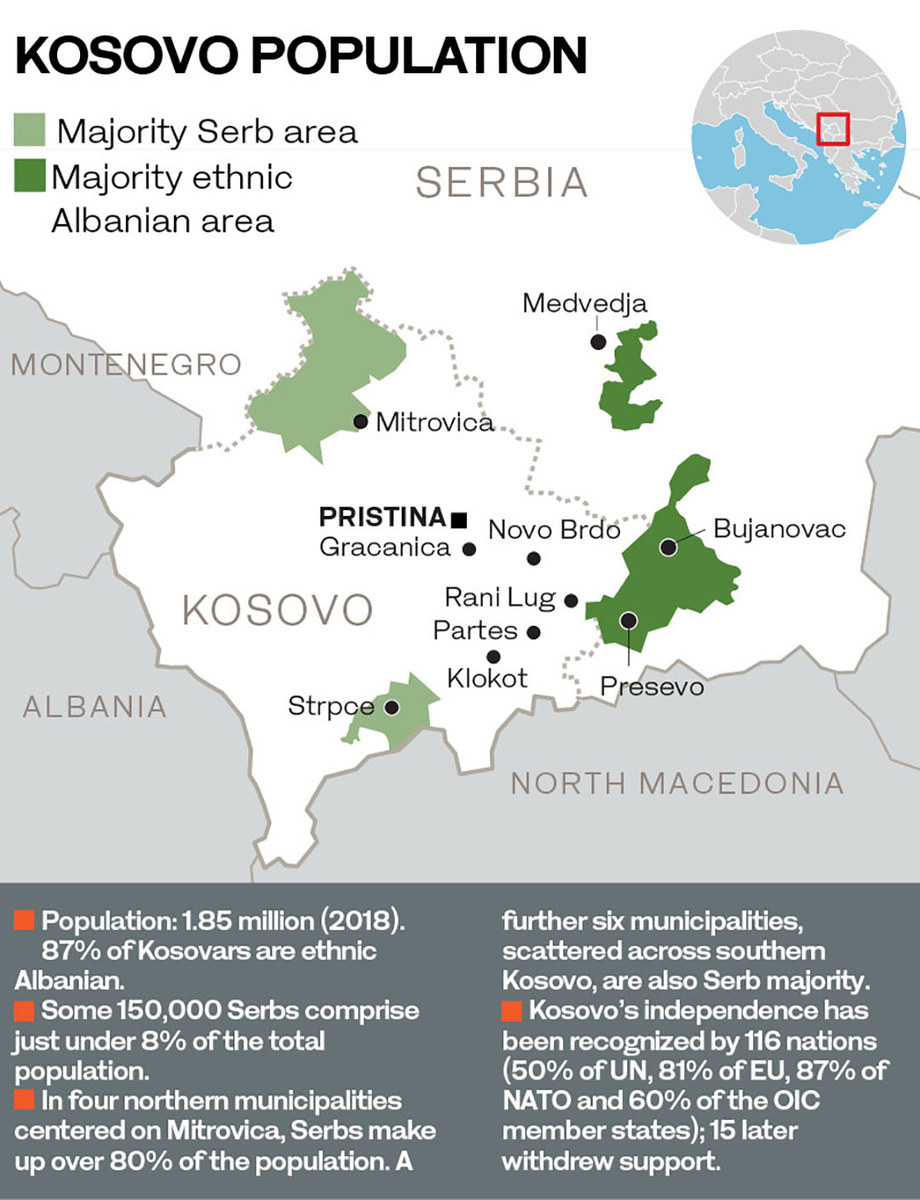
Kosovo, a country of almost 2 million people, is 90 percent ethnic Albanian. After nine years under UN control, Kosovo declared independence through its assembly on February 17, 2008. Since then, more than 100 countries have recognized Kosovo.
The US, several EU member states and the GCC countries recognized Kosovo’s independence early on. Today Saudi Arabia, which was among 35 states that submitted statements supporting Kosovo, covers the country on non-residential basis from its embassy in Tirana, Albania
Mjecku said that with the generous assistance of its friends, Kosovo has made progress in healing the wounds of the past. Sixty percent of the population is under the age of 30, and many have little memory of the years of grief and violence, he said.
The Western Balkans is calmer than it was 20 years ago, although ethnic tensions are rising again in advance of elections in Serbia in April, and in Bosnia and Herzegovina in October.
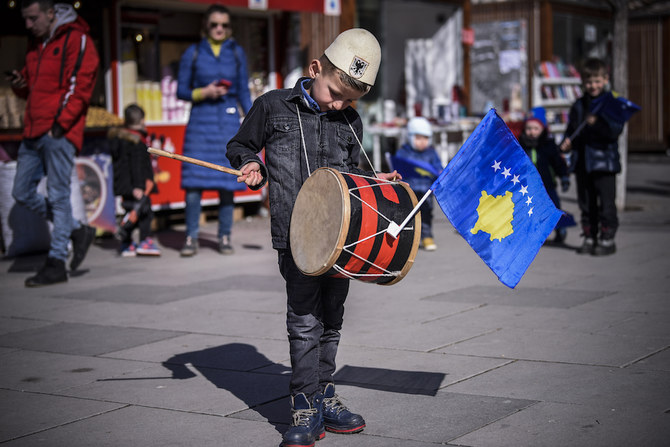
A Kosovo Albanian boy with a traditional hat plays drum in downtown Pristina on Feb. 17, 2020, on the day of 12th anniversary of Kosovo's declaration of independence. (AFP File Photo)
UNMIK, which at its peak fielded more than 50,000 soldiers, is now down to 3,500 men, headquartered in Pristina, the capital of Kosovo. The mission seeks to support a normalization agreement, better known as the Brussels Agreement, between Belgrade and Pristina brokered by the EU in 2013.
“As a young nation, we have made great progress in rebuilding our lives and healing our wounds,” Mjeku told Arab News.
“In this long-term journey, we have not been alone. We have had the assistance of our friendly countries, such as the Kingdom of Saudi Arabia and the institutions of our allies, notably the US and the EU.”