

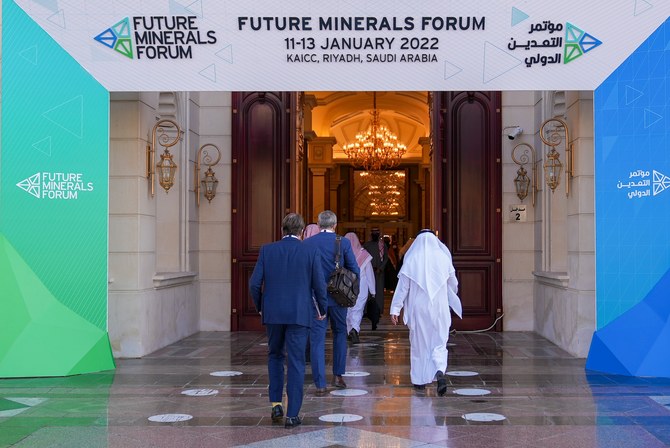
AS IT HAPPENED: Future Minerals Forum, Day 3

(The event discusses the role that each country in the region can play in developing sustainable and responsible mineral value chains. Future Minerals Forum)
Short Url
Updated 13 January 2022
Follow

AS IT HAPPENED: Future Minerals Forum, Day 3

  • A major theme of the previous day was the role of minerals in the global transition to clean energy

RIYADH: The Future Minerals Forum in Riyadh continues on Thursday for its last set of high-level discussions about the future of the mining industry.

The three-day summit, which gathers more than 2,000 participants at the King Abdulaziz International Conference Center, held back-to-back discussions on Wednesday spanning topics from attracting investments to responsible mining.

A major theme of the previous day was the role of minerals in the global transition to clean energy.

Major Saudi personalities, including top officials from the Public Investment Fund, Ma’aden, and the Minister of Energy, spoke in several sessions throughout the day.

FMS2022: Click here for more stories on the Future Minerals Forum

The third day will continue the previous insightful talks with topics on technology in mining, women’s participation in the industry, as well as industry outlook in the coming years.

Saudi Arabia’s environment, water and agriculture minister Abdulrahman Al-Fadley is opening the forum with a keynote address.

Follow our coverage (all timings in GMT):

11:00NEOM wants to convince the world that mining can be done in a sustainable manner, according to the CEO of the megacity being built on Saudi Arabia’s northwest Red Sea coast.

Nadhmi Al-Nasr said that the $500 billion project is starting with “no legacy” when it comes to excavations, but has ambitions to bring “technology and innovation” to the sector.

He acknowledged that mining has a bad reputation, saying: “No matter what we do, mining perception is not good enough yet.”

He went on to argue that “it is time for the mining industry to compete with the oil industry” as he called for the sector to move to “the next era.”

09:30 – Robert Friedland, chairman of Ivanhoe Mines, said demand for copper, which is used for electric vehicles, will rise 10 times by 2030.

He said the excavation of the mineral should “dramatically increase if the world wants to switch to electric vehicles.

07:45 – ‘Women in Mining’panel discussion saw calls for the industry to do more to attract female talent.

Christine Gibbs Stewart, CEO of Australia-based Austmine, said that just 9 percent of the global mining workforce are women, and even in her country which is a “very mature market” it is just 16 percent.

She added: “We need the best and brightest to join the mining industry because of the challenges that we face in the future.

“In order to do that, we need to think differently because of the perception of mining we have been talking about that it is not a woman-friendly industry, we really need to step up and we need to be leaders.”

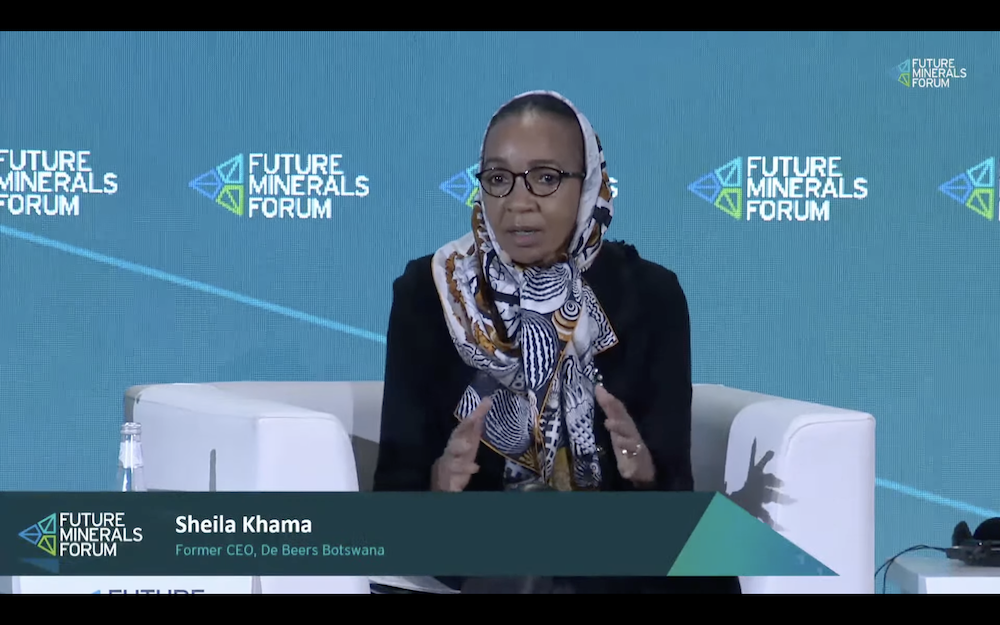
07:00 – A keynote panel on the participation of women in the traditionally male-dominated mining space, which sees participation from the Saudi mining company Ma’aden.

“Only 7 percent to 8 percent of of women are working in the global mining workforce and that is a huge gap that needs to be filled, says Sheila Khama, the former CEO of De Beers Botswana.
06:30Saudi Minister of Environment, Water, and Agriculture Abdulrahman Al-Fadley reiterated the government’s commitment to achieve a sustainable economy, as part of the Saudi Vision 2030.

He added the government is keen to limit desertification and preserve wildlife, and ultimately “increase community participation in such activities.”
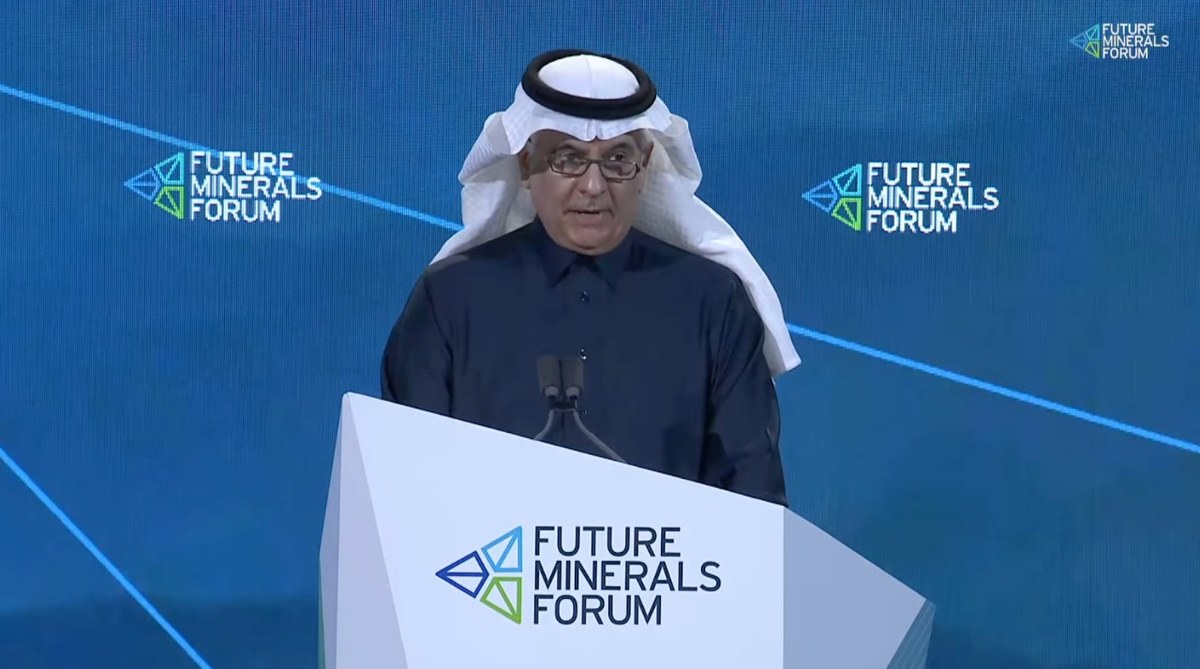
“Achieving the national objectives to protect the environment comes only by participation of all segments, from both public and private sector,” the minister said, emphasizing the critical role of partnerships in the fight against climate change.

The minister also talked about the issue of funding major environmental projects, as well as the delicate balancing act between climate action and economic growth.


Oman special zones investment rises 6.8% to $3.6bn

Updated 14 sec ago
Follow

Oman special zones investment rises 6.8% to $3.6bn

JEDDAH: Investment in Oman’s special economic zones, free zones and industrial cities rose 6.8 percent in 2025, reaching 1.4 billion Omani rials ($3.64 billion), official data showed. 

The figure raises the total committed investment under the supervision of the Public Authority for Special Economic Zones and Free Zones, known as OPAZ, to 22.4 billion rials, the Oman News Agency reported. 

This increase underscores the central role of the zones in Oman’s Vision 2040 strategy to diversify the economy, drive growth, create jobs and expand the private sector. 

The authority said 325 investment agreements were signed across sectors during the year, with additional land allocated for industrial projects in several zones. 

“Development is ongoing in the Al-Dhahira Special Economic Zone, the Al-Rawdah Economic Zone, and the Muscat International Airport Free Zone, alongside four new industrial cities in Al-Mudhaibi, Al Suwaiq, Thumrait and Madha to accommodate diverse industrial activities, enhance local manufacturing, and create additional job opportunities for Omani youth,” the ONA report stated. 

Qais bin Mohammed Al-Yousuf, chairman of OPAZ, emphasized the authority’s commitment to fostering a competitive and attractive investment environment that supports economic diversification and financial sustainability. 

He said the authority’s strategy focuses on positioning special economic zones, free zones and industrial cities as preferred investment destinations through business-friendly regulations, targeted incentives and maximizing value added by projects. 

Al Yousuf added that these zones have established themselves as integrated economic platforms that support diversification, enhance investment attractiveness and maximize the benefits of free trade agreements and comprehensive economic partnerships. 

OPAZ expanded its international outreach in 2025 by joining the World Free Zones Organization, a move aimed at aligning local zones with global standards and attracting cross-border investment. 

The authority is developing specialized clusters including an integrated cold chain hub in Duqm, an aluminum cluster in Sohar Industrial City and a mining cluster in Shaleem, as well as a proposed silica and mining complex in the Duqm Special Economic Zone. 

Ahmed bin Hassan Al-Theeb, deputy chairman of OPAZ, said that 2025 witnessed numerous achievements across the authority’s key focus areas, including planning and development; regulation and supervision; facilitation and aftercare services; marketing and investment attraction; operations and business acceleration; and institutional excellence. 

He further said that the authority increased foreign investment outreach, contacting over 500 companies in sectors such as pharmaceuticals, food, and sustainable construction, as well as services, logistics, storage, and renewable energy technologies. 

A new digital project-tracking system registered 294 investments across sectors including renewables, petrochemicals, fisheries and minerals by year-end, he added. 

The zones created 4,467 jobs for Omanis in 2025, exceeding the 2,500 target and raising total national employment in the network to 30,780 out of about 85,000 workers. Omanization reached 36 percent, with 4,774 small and medium enterprises operating across the zones.