SEOUL: A person who crossed the border into North Korea on New Year’s Day was likely a defector who had slipped through the same heavily fortified frontier in the other direction to settle in South Korea in late 2020, South Korea’s military said Monday.
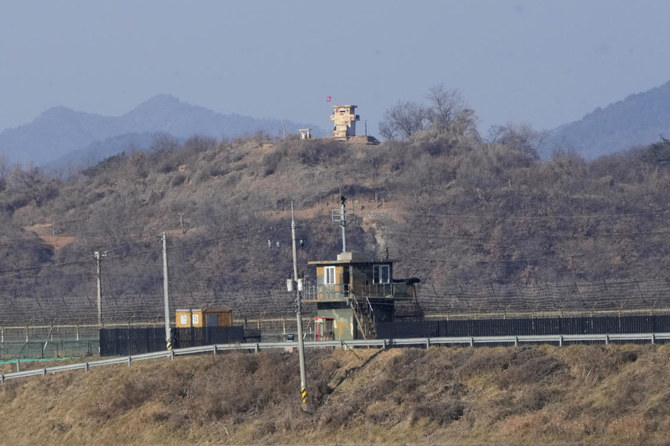
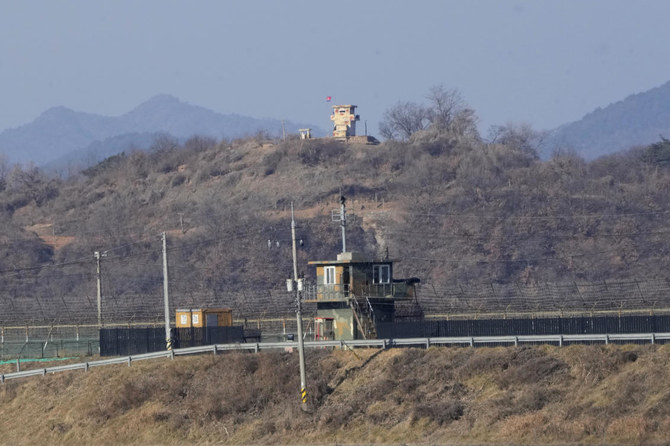
South Korean surveillance equipment earlier detected an unidentified person entering North Korean territory across the eastern portion of the border on Saturday. The military said its security camera showed the person crawling over a barbed-wire fence established along the southern edge of the border.
On Monday, the Defense Ministry said in a statement it suspects a North Korean defector was the latest border-crosser and that it is trying to confirm related information.
A ministry official said the statement refers to a former North Korean citizen who was captured at the southern part of the border, also on the eastern section, in November 2020. The man identified himself as a former gymnast and told investigators that he had crawled over barbed wire fences to defect before being found by South Korean troops, the official said requesting anonymity citing department rules.
Ministry spokesman Boo Seung-Chan said earlier Monday that North Korea has not responded to a South Korean message sent the previous day to ensure the person’s safety.
In September 2020, North Korea killed a South Korean fisheries official found floating in its waters along a sea boundary. South Korea said that North Korea troops were under orders to shoot anyone illegally crossing the border to protect against the coronavirus pandemic.
The South Korean ministry didn’t provide further details such as why it believes the defector went back to the North.
About 34,000 North Koreans have fled to South Korea for economic and political reasons since the late 1990s, and only about 30 of them have returned home in the past 10 years, according to South Korean government records.
Observers say those returnees likely failed to adjust to new highly competitive, capitalistic lives in South Korea, had big debts or were blackmailed by North Korean agents who threatened to do harm to their loved ones if they didn’t return.
Defecting via the border is rare. Unlike its official name, the Demilitarized Zone, the 248-kilometer-long, 4-kilometer-wide border is guarded by land mines, tank traps and combat troops on both sides as well as barbed wire fences. A vast majority of the North Korean defectors in South Korea have come here via China and Southeast Asian countries.
Saturday’s border crossing has raised questions about South Korea’s security posture as the border crosser’s entry into the DMZ was not immediately notice by South Korean troops though their surveillance equipment was later found to have detected the person. The military acknowledged it had sent soldiers but failed to locate the person before he or she crossed the border.
In recent years, the South Korean military faced similar criticism when North Koreans snaked through DMZ areas unnoticed to defect, including one who knocked on the door of a South Korean army barrack.


![]()
Seoul: North Korea defector likely made rare border crossing
Short Url
https://arab.news/w2s8p
Seoul: North Korea defector likely made rare border crossing
- Security camera showed the person crawling over a barbed-wire fence established along the southern edge of the border


Latest updates


© 2026 SAUDI RESEARCH & PUBLISHING COMPANY, All Rights Reserved And subject to Terms of Use Agreement.