



JEDDAH: When the Kuwait-born Jordanian filmmaker Darin Sallam was a child, she was told the story of Radieh, a young Palestinian girl who watched from a locked cellar as catastrophe consumed her village. Hidden by her father, Radieh would bear witness to the violent displacement of her people before making her way to Syria, where she passed on her story to another young girl. That girl would grow up, marry, and share the same story with her own daughter.
“And that daughter is me,” says Sallam with a smile. “The story travelled over the years to reach me. It stayed with me. When I was a child, I had this fear of closed, dark places and I kept thinking of this girl and what happened to her. So, when I grew up and became a filmmaker, I decided that this would be my debut feature.”
That debut is “Farha,” which had its regional premiere at the Red Sea International Film Festival this month and was awarded a special mention at the festival’s Yusr Awards. Inspired by the story that Sallam was told as a child (although Radieh has become Farha — played by newcomer Karam Taher), it addresses the horror of the Nakba (the violent removal of Palestinians from their homeland), which is harrowingly depicted from the unique perspective of a young girl trapped inside a single room.
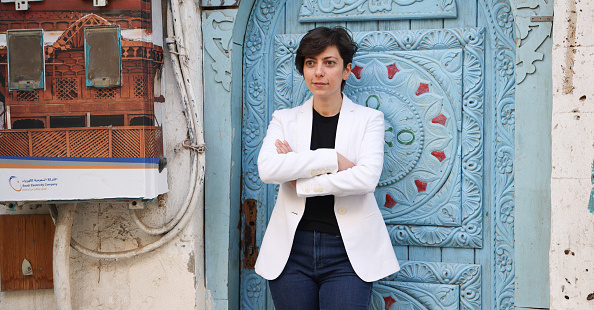
The film is harrowingly depicted from the unique perspective of a young girl trapped inside a single room. (Getty)
To shoot this pivotal moment in Palestinian history from such a limited perspective was a bold directorial decision. Predominately set inside one room (the camera never leaves that room), the film gives its protagonist just two restricted views of the world outside — a slit in the cellar door and a small hole in one of the walls. As a result, Sallam relied heavily on both her cinematographer Rachel Aoun, who would act as Farha’s eyes, and her sound designer Rana Eid, who would be her ears. For Aoun and Sallam, the primary challenge was to avoid repeating certain shots and angles, while Eid was handed the responsibility of recreating the sound of the Nakba.
“I talked to Rana when the script was still on paper,” says Sallam, whose previous film was the award-winning short “The Parrot.” “She read the script, we discussed it, and she was attracted to the fact that sound was written and very important in this film. I was, like, ‘Rana, most of the time sound is more important than the camerawork and the picture.’ I wanted the audience to feel and hear what Farha hears and that would only be possible if the sound was perfect.”
Interestingly, Sallam didn’t tell her actors where the camera was, especially when shooting the movie’s central, traumatic sequence, which Farha is forced to endure in hiding. That scene took four days to shoot, and involved 10 actors (some trained, some not) and a huge amount of planning and choreography.
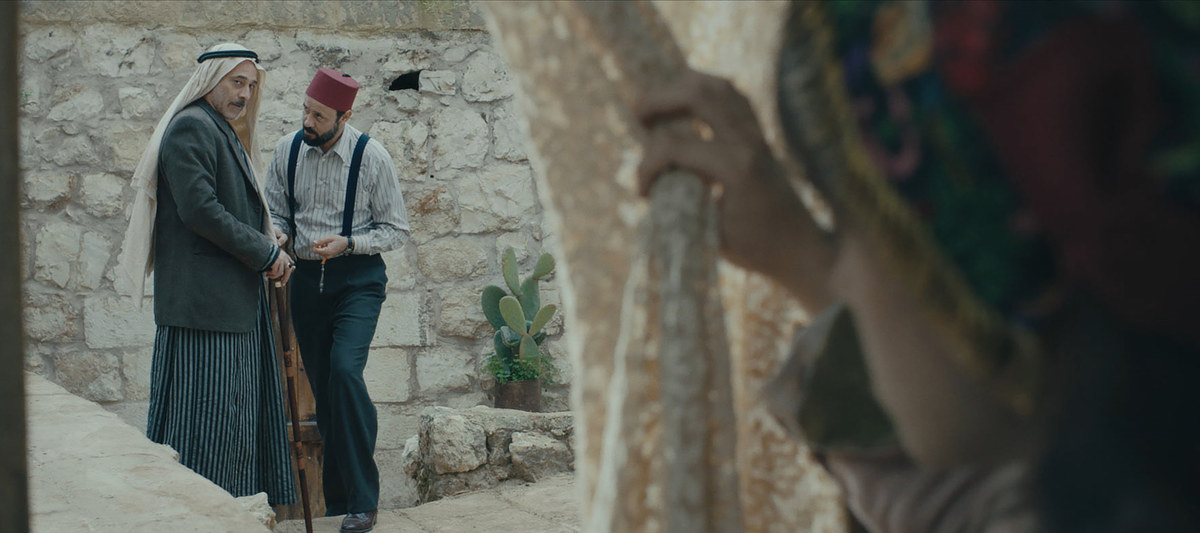
Sallam didn’t tell her actors where the camera was, especially when shooting the movie’s central, traumatic sequence, which Farha is forced to endure in hiding. (Supplied)
“We had four days and every day we had to pick up emotionally from where we left off the day before, so I was worried about them,” says Sallam. “It was already draining and tiring and every day we had to make sure we were in the same place, that we got into the mood of the scene, and remembered everything together.”
It was tough, not just because of the physical demands being placed upon the actors, but because of the psychological weight of what was being portrayed. After the film’s initial screening in Jeddah, the actress Sameera Asir (Um Mohammad) said that shooting such painful scenes had affected her deeply on an emotional level. She was not alone. “Some of the crew members were crying behind the monitor while shooting, remembering their families and their stories, and the stories they heard from their grandparents,” says Sallam.
Although a witness and not an active participant, Farha is the film’s focal point throughout. The camera spends more than 50 minutes inside the cellar with her, which is why Sallam knew the performance of Taher would make or break the film.
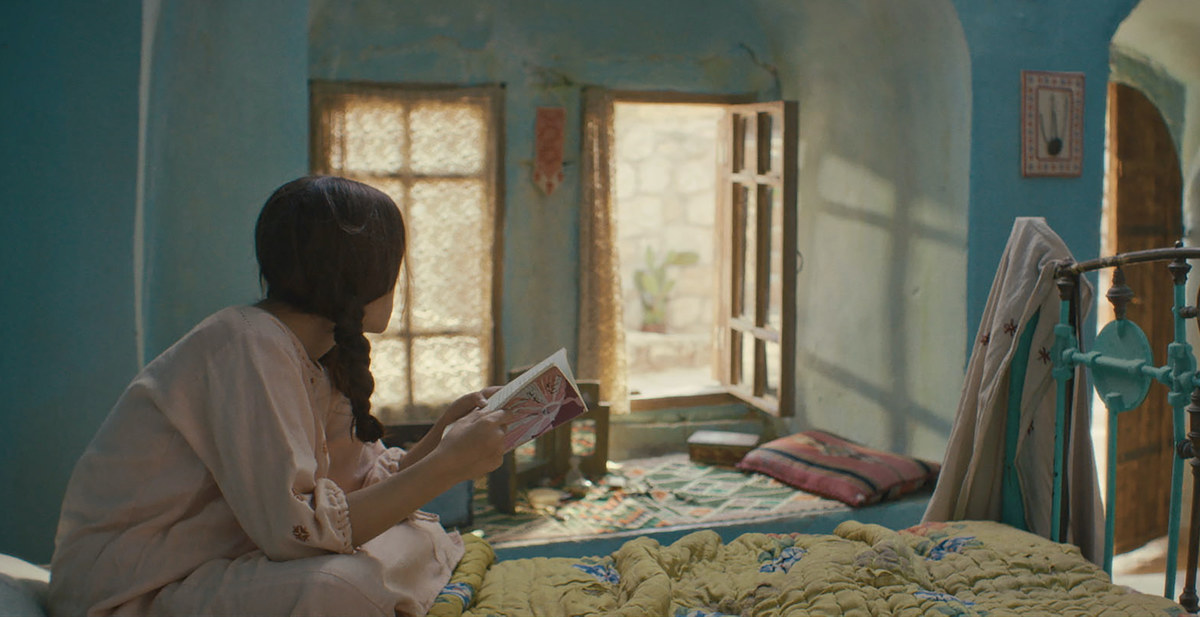
The film addresses the horror of the Nakba (the violent removal of Palestinians from their homeland). (Supplied)
“People need to love her and feel with her and have compassion towards her. She needs to be stubborn and naughty and, in many ways, I was very specific about what I wanted. I was looking for this raw material — a girl who had never acted but was willing to commit. I was looking for the right girl and I knew I would see it in her eyes. Those shiny and passionate eyes. And when I met Karam it wasn’t actually the audition that made me want to invest in her more. She was very shy. She was 14 at the time (15 when shooting began), but I gave her some homework about the Nakba and she sent me a message soon after saying, ‘This is the homework you asked me to do.’ And I said, ‘OK, she’s interested.’”
The second time Sallam met Taher she was more comfortable and ready to learn, so they embarked on a series of one-on-one acting workshops together. “One of the things that I love is working with actors — and non-actors specifically — so I worked with Karam for a few months and she was committed,” says Sallam. “And I was testing that. Is she coming on time? Is she cancelling other stuff with her friends? That was a good sign. Her commitment and passion and dedication were there.”
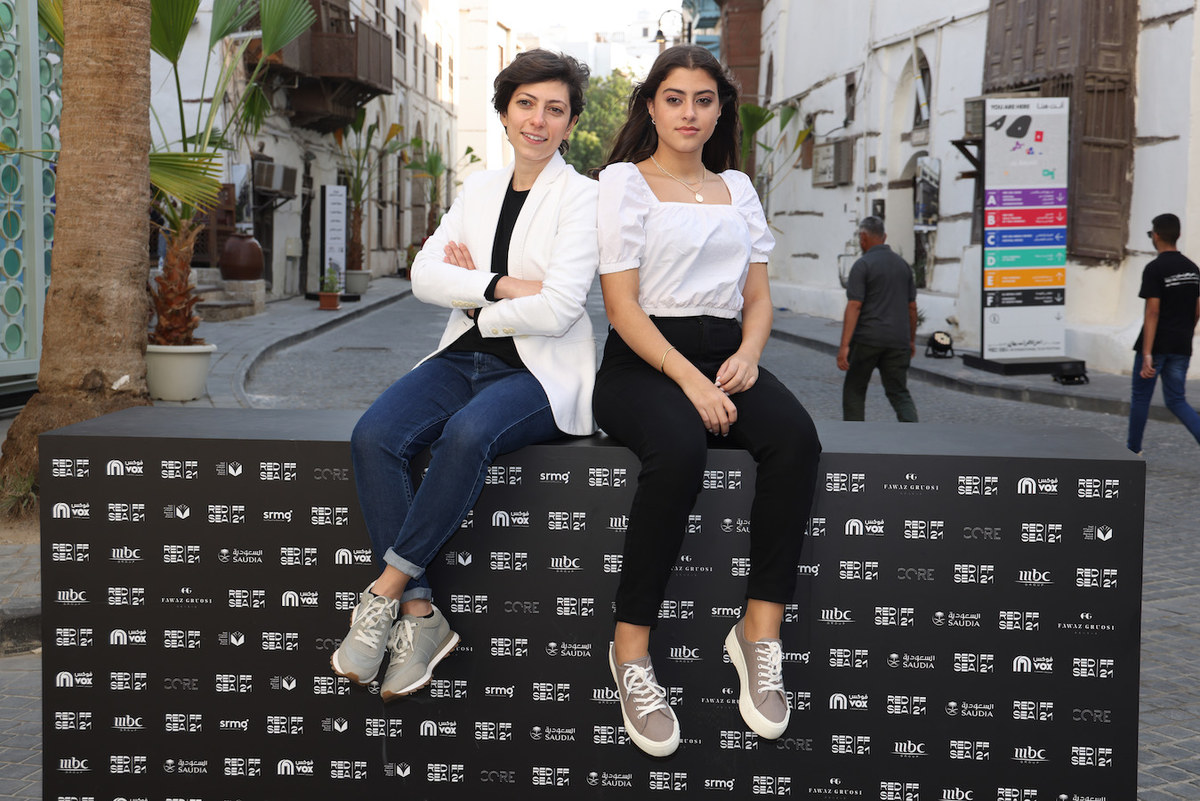
Darin Sallam, director of ‘Farah,’ and her leading actress Karam Taher. (Supplied)
For Taher, who had attended the audition almost on a whim, it was a tough few months of steep learning. “After I auditioned I went back and I told my mum, ‘No, that’s not going to happen. I don’t think they liked my audition or my acting,’” she says. “I was so nervous and shy at the beginning and it was a long trip to be honest. It was Darin who was with me the whole time, getting me into the character, helping me to reach this point where I was comfortable. I feel like I had to open up to Darin, and I did. I trusted her so much. I opened up to her more than I did to anyone else, which helped me to get all of my anger, all of my feelings and emotions out so I was able to finish a scene perfectly the way she wanted it to be.”
Her toughest scenes were two separations, says Taher. The first, from her father (Ashraf Barhom), the second, from her best friend Farida (Tala Gammoh). However, the film also includes scenes that are rarely tackled in regional cinema, including urination and Farha’s first period.
“I wanted to show these things because it’s natural and it’s what would happen to you or me if we were in her shoes,” explains Sallam. “I wasn’t afraid to do it, I was worried that Karam wouldn’t feel comfortable, so I had to work with her and I made sure she was comfortable with the crew and no one was in the room but me and the camera.”
Many people didn’t want “Farha” to be made, Sallam says. The reasons why will become immediately obvious to anyone who watches it. Although the events of 1948 are covered in countless books, poems, articles, and documentaries, the Nakba is rarely shown in fictionalized cinematic form.
“I’m not afraid to tell the truth. We need to do this because films live and we die,” says Sallam. “This is why I decided to make this film. Not because I’m political, but because I’m loyal to the story that I heard.”


