

Saudi Arabia’s KSRelief dispatches 200 trucks of humanitarian aid to Afghanistan via Pakistan

King Salman Humanitarian Aid and Relief Center launches an aid convoy to Afghanistan from Islamabad, Pakistan, on December 21, 2021. (AN Photo)
Short Url
Updated 21 December 2021
Follow

Saudi Arabia’s KSRelief dispatches 200 trucks of humanitarian aid to Afghanistan via Pakistan

  • Pakistan’s Senate chairman says Saudi leadership has always remained at the forefront of helping Muslims around the world
  • The Saudi envoy to Pakistan says the kingdom has pledged one billion Saudi riyals to help the people of Afghanistan

ISLAMABAD: King Salman Humanitarian Aid and Relief Center (KSRelief) launched a project on Tuesday to dispatch 200 trucks carrying food and winter kits for the people of Afghanistan amid the economic meltdown of their country since the departure of international forces in August.
The Taliban takeover of Afghanistan prompted the United States and other donor states to cut off financial assistance to the country and isolate it from the global financial system which paralyzed its banks.
According to the United Nations, nearly 23 million Afghans face extreme levels of hunger, with nine million at risk of famine.
“The kingdom is sending 200 trucks of relief goods which will ease off some of the problems faced by Afghan people,” Pakistan’s Senate chairman Muhammad Sadiq Sanjrani told Arab News after attending the ceremony of sending relief goods to Afghanistan. 
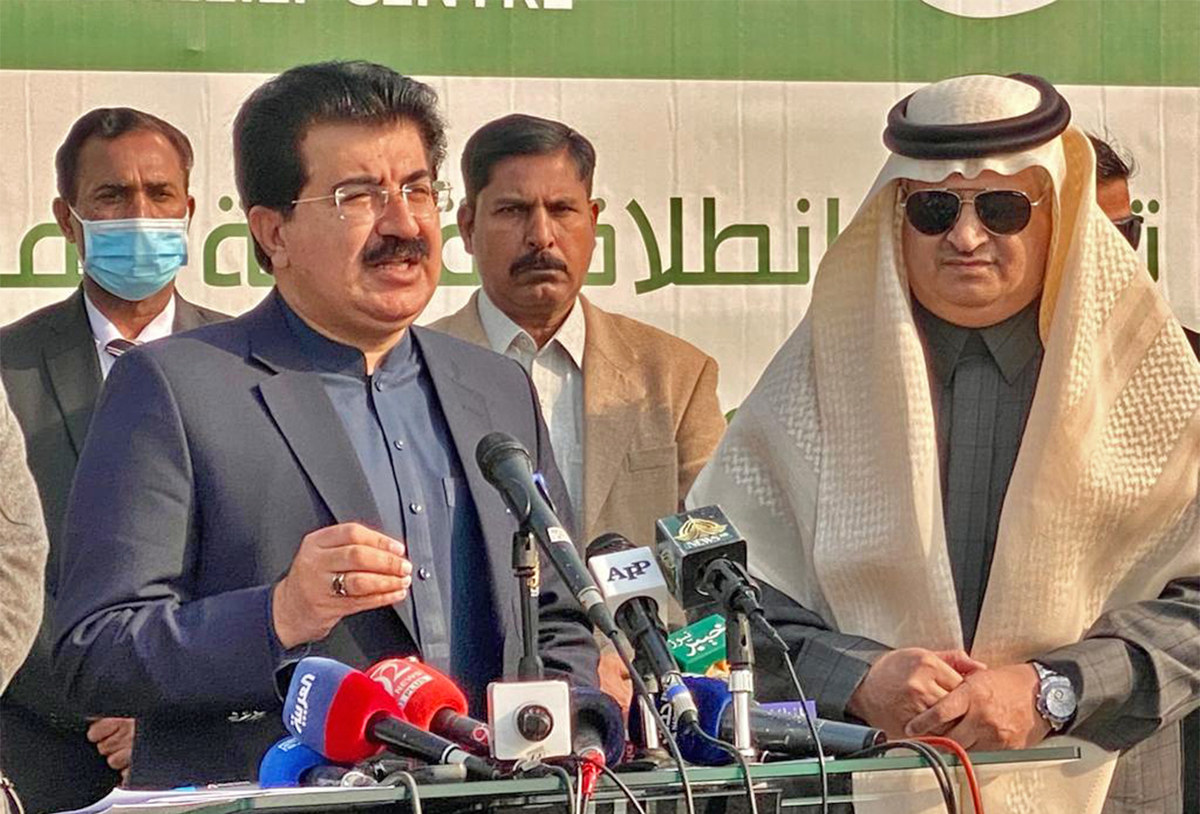


Pakistan’s chairman Senate Muhammad Sadiq Sanjrani (left) is addressing the launching ceremony of Saudi relief convey for Afghanistan in Islamabad, Pakistan, on December 21, 2021. (AN Photo)

He applauded the kingdom for calling the Organization of Islamic Cooperation’s special session on Afghanistan and supporting Pakistan in successfully organizing it.
“It was indeed a great gesture from the Saudi leadership that always remains at the forefront of helping the Muslim ummah,” he added.
Sanjrani urged the international community to come forward and help the people of Afghanistan at a time when their country was at a crucial juncture.
“This is not just our issue as Muslims,” he continued. “It is an issue for the entire humanity. Everyone should join hands with Pakistan and Saudi Arabia to ensure Afghanistan’s stability.”
Saudi ambassador to Pakistan Nawaf bin Said Al-Malki maintained the people of Afghanistan needed urgent help and the kingdom was keen to support them.
“Saudi Arabia already sent six airplanes full of relief goods directly to Kabul last week,” he told Arab News. “With the help of the Pakistani government now, we are sending relief items that will be carried by more than 200 trucks to Afghanistan and will reach there within the next 10 days.”
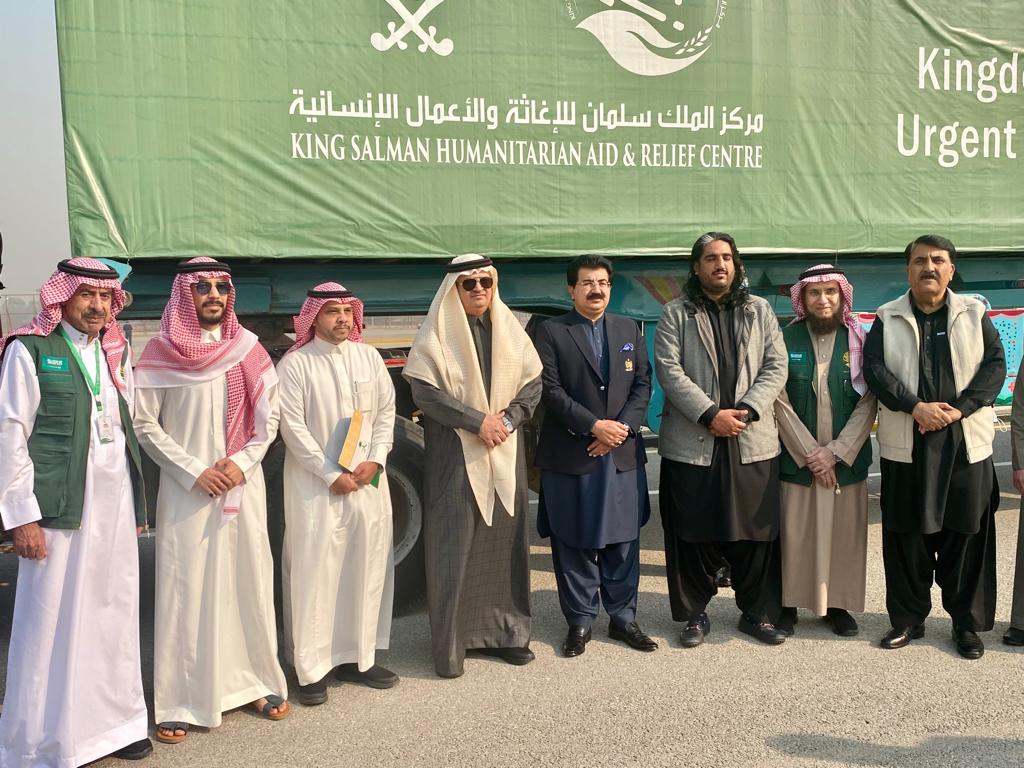


Pakistan’s chairman Senate Muhammad Sadiq Sanjrani (4th right) and Saudi envoy to Pakistan Nawaf bin Said Al-Malki (4th left) can be seen in this group photo with the convoy of Afghan relief aid in Islamabad, Pakistan, on December 21, 2021. (AN Photo)

Al-Malki thanked Pakistani government for facilitating the convoy of relief goods to Kabul.
“The kingdom has pledged one billion Saudi riyals to help the people of Afghanistan through OIC humanitarian trust fund and will try to do more,” he added.
The director of KSRelief in Pakistan Dr. Khaled Muhammad Al-Othmani said 30,000 food packages and 10,000 non-food winter kits would help poor and deserving people living in Afghanistan.
“The project will benefit about 280,000 people in Afghanistan,” he told Arab News. “We have coordinated with the Afghan government and Red Crescent society for the distribution of this aid in different parts of the country.”
He added the first batch of 16 trucks would go to Kabul while others would travel to Herat, Kandahar, Mizar-e-sharif, Jalalabad and other areas of Afghanistan.
“It is the first convoy,” he continued. “We will send more consignments after this gets distributed among Afghan people.”
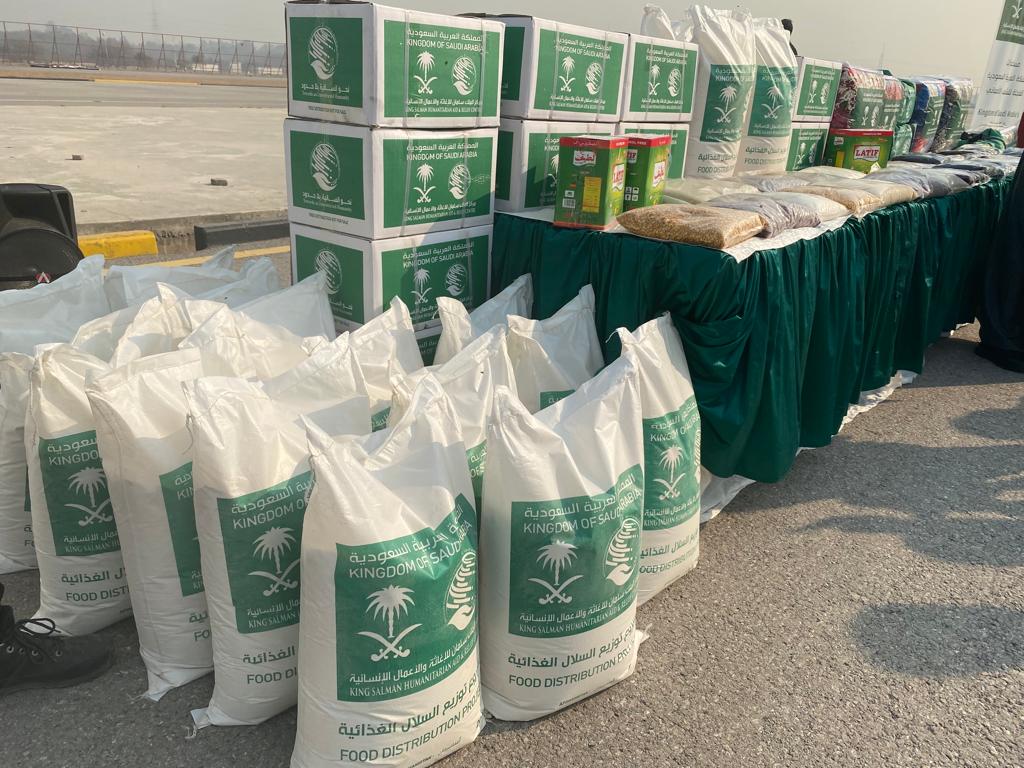


King Salman Humanitarian Aid and Relief Center launches an aid convoy to Afghanistan from Islamabad, Pakistan, on December 21, 2021. (AN Photo)


Pakistan Supreme Court halts trial of prominent lawyer over alleged anti-military tweets

Updated 57 min 11 sec ago
Follow

Pakistan Supreme Court halts trial of prominent lawyer over alleged anti-military tweets

  • Top court orders lower court to pause proceedings after lawyers allege due-process breaches
  • Mazari-Hazir, husband face charges under cybercrime law that carry up to 14 years in prison

ISLAMABAD: Pakistan’s Supreme Court on Thursday halted the cybercrime trial of prominent human rights lawyer Imaan Mazari-Hazir and her husband, Hadi Ali Chattha, after their lawyers argued that a lower court had recorded witness testimony in their absence, violating due-process rules.

Mazari-Hazir, one of Pakistan’s most outspoken civil liberties lawyers, and Chattha are being prosecuted under the Prevention of Electronic Crimes Act (PECA) over posts on X that authorities say incited ethnic divisions and portrayed the military as involved in “terrorism.” Both reject the allegations. If convicted under the relevant PECA provision, they face a prison term of up to 14 years.

The case has drawn broad attention in Pakistan’s legal community because Mazari-Hazir, who has been repeatedly detained over her criticism of the security establishment, argues that the trial court ignored basic procedural guarantees despite her medical leave request. The case also comes as Pakistan faces sustained scrutiny over the use of PECA against activists, journalists and political dissenters, with lawyers arguing that lower courts often move ahead without meeting minimum fair-trial standards.

The couple’s lawyer, Riasat Ali Azad, said his clients filed a petition in the Supreme Court because the lower court had moved ahead improperly.

“Today, the Supreme Court of Pakistan has stayed the lower court proceedings, the trial court proceedings and has said that the [Islamabad] High Court should decide our pending revision petition for which a date has already been fixed,” he told reporters.

Azad said the violation was clear under Pakistan’s Code of Criminal Procedure, which requires evidence to be recorded in the presence of the accused.

“Yet, on that very day, evidence of four witnesses was recorded in their absence, and a state counsel was appointed to conduct cross-examination on their behalf,” he said. “All these things are against the right to a fair trial under Articles 10 and 10-A.”

A three-judge bench led by Justice Muhammad Hashim Khan Kakar ordered the trial court to pause proceedings and instructed the Islamabad High Court to hear the couple’s pending criminal revision petition first.

The trial had been scheduled to resume on Dec.15, but the Supreme Court’s stay now freezes proceedings before both the additional sessions judge and the special PECA court. 

The Islamabad High Court is expected to hear the criminal revision petition next week.

Chattha, who is also a lawyer, said the SC ruling underscored the need for procedural safeguards.

“It is a victory for the constitution and the law,” he said, arguing that the trial court had ignored their request to re-record witness statements in their presence.