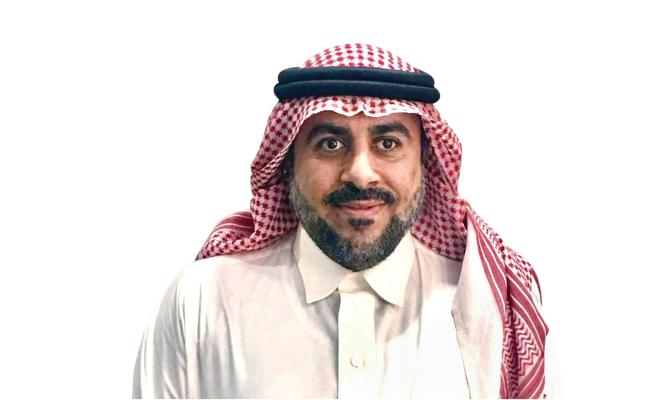
Who’s Who: Dr. Abdullah Almuneef, dean at King Saud University

Dr. Abdullah Almuneef
Short Url
Updated 20 December 2021
Follow

Who’s Who: Dr. Abdullah Almuneef, dean at King Saud University

  • Dr. Abdullah Almuneef has been the dean of the tourism and antiquities faculty at King Saud University

Dr. Abdullah Almuneef has been the dean of the tourism and antiquities faculty at King Saud University since August 2019. He is also an associate professor of the antiquities department.

Almuneef served as a dean of libraries at King Saud University from June 2015 to July 2017.

He held the position of general supervisor of libraries and information at the King Faisal Center for Islamic Research and Studies from November 2011 to October 2016.

Almuneef served as a consultant at the Heritage Foundation for three years, reprising his role at the Moroccan Heritage and Development Agency in 2002, and then at the King Abdulaziz Foundation for Research and Archives from January 2008 to November 2011. He was director of the department of manuscripts and documents at the King Fahd National Library from August 1991 until August 2007.

He served as an adviser to the library deanship of the King Salman Library at King Saud University and was a consultant at the King Faisal Center for Islamic Research and Studies for six months from May 2011.

Almuneef was a member of the supervisory body in charge of organizing the exhibition: “Lights of Wisdom: Dialogue between the Medieval Schools of East and West,” which was held in Paris at the end of 2013 at the Arab World Institute. He was an adviser to the Ministry of the Interior’s Ministerial Agency for Civil Status and served as editor for a number of renowned journals.

He received several prestigious awards in his field and published many books about Saudi history and manuscripts.

Almuneef received a Ph.D. in antiquities and museums from King Saud University in Riyadh. He has also obtained master’s and bachelor’s degrees in antiquities and museums, and a diploma in education from the same university.


Children’s Theater Festival opens in Qassim region

Updated 27 January 2026
Follow

Children’s Theater Festival opens in Qassim region

  • To develop future ‘cultural architects,’ says CEO Khaled Al-Baz
  • ‘Nurture creativity, aesthetic awareness and sense of belonging’

BURAIDAH: The Qassim Children’s Theater Festival opened on Tuesday bringing together professionals from across Saudi Arabia and the Gulf.

The event is being held under the patronage of Prince Dr. Faisal bin Mishaal bin Saud bin Abdulaziz, governor of Qassim, at the Science Center in Unaizah governorate.

It has been Organized by the Theater and Performing Arts Association and executed by the Unaizah Theater Association, the Saudi Press Agency reported.

Running until Jan. 31, it features shows, panel discussions, as well as training workshops to develop children’s theater and strengthen professional skills in the field.

Khaled Al-Baz, CEO of the Theater and Performing Arts Association, told the SPA the festival forms part of a broader strategy to position children’s theater as a distinct cultural sector.

“Children today constitute genuine audiences — tomorrow’s cultural architects,” Al-Baz said.

Ahmed Al-Humaimidi, president of the Unaizah Theater Association, said it was an investment in young people, noting that it extends beyond performances to include cultural and educational programming.

He said the initiative aims to nurture creativity, aesthetic awareness and a sense of belonging, while also identifying emerging talent and encouraging knowledge exchange among theater practitioners.

“Our association recognizes children’s theater as foundational to cultivating aware, creative character,” he said.

The festival serves as both an artistic showcase and a platform for professional dialogue, reflecting the Kingdom’s expanding cultural landscape and growing focus on children’s theater as an educational and cultural tool, the SPA noted.

This occurs alongside support for signature initiatives and performing arts promotion as quality-of-life enhancement.