

Philanthropist covers bills for thousands of poor families in Turkey
Philanthropist covers bills for thousands of poor families in Turkey/node/1989206/middle-east
Philanthropist covers bills for thousands of poor families in Turkey
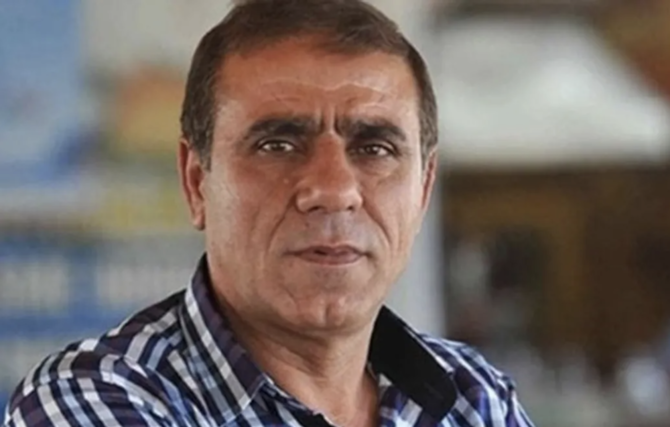
Ilhami Isik, a Kurdish intellectual and writer originally from the southeastern province of Batman, has lent a helping hand to 14,000 families. (Twitter: İlhami Işık/@dunya20101)
Philanthropist covers bills for thousands of poor families in Turkey
His social responsibility projects began in 2014, when he spontaneously initiated a countrywide campaign dubbed “Let’s Prevent Children From Feeling Cold”
Updated 18 December 2021
MENEKSE TOKYAY
ANKARA: Long queues in major cities for cheap bread are not the only sign of the financial pains that Turkish households are experiencing after prices skyrocketed in recent months.
Ilhami Isik, a Kurdish intellectual and writer originally from the southeastern province of Batman, has lent a helping hand to 14,000 families by helping clear around 40,000 bills worth TRY6.1 million ($0.3 million) over the last three years.
“The number of bills keeps growing over years and they come from all over the country, especially from the middle-income and low-income families of Istanbul and southeastern province of Diyarbakir,” Isik told Arab News.
People reach out to him through social media and he shares photos of the bills, requesting philanthropists to come forward and help the poor clear their bills. It is mostly medium-income families and a small number of businessmen who come forward to help.
“Amid rising price of utilities, the bill is not just a bill. It is something that sometimes triggers a divorce, a suicide or causes a child to sleep with an empty stomach. The ability to pay the bill is the main indicator for a family to keep its members alive and healthy for that month,” he said.
Due to the country’s serious economic problems and rising living costs of living in the country, where official inflation rates have reached 21.3 percent, more and more families are calling him for help.
“Sometimes I’m having trouble to find necessary financial means to pay them, but I’ll keep my project going on. We are receiving at least 30 requests per day. It sometimes reaches 50 bills. Families are tearing apart. Children are facing unbelievable traumas due to poverty. Sometimes a bill that I pay discourages a dad from committing suicide when he sees his child freezing in the house after the electricity or natural gas is cut.”
To some, helping people pay their bills may not sound like a sustainable project because, as the saying goes, if they give a man a fish, they have to feed him for a day, but if they teach a man how to fish, they will feed him for a lifetime.
“But my only concern right now is to keep these people alive,” Isik explains. “Finding them jobs is part of a political mechanism. It is the duty of the public welfare authorities to do that. I just want to make sure that these children keep healthy and happy without being under the stress of financial strains. Sometimes a mother calls me and says that they all slept well the day before because they don't have to be concerned about their bills. It is my only concern.”
It is mostly women who reach out to Isik, as men will not take the initiative out of shame.
His social responsibility projects began in 2014, when he spontaneously initiated a countrywide campaign dubbed “Let’s Prevent Children From Feeling Cold.”
The project lasted two years and Isik provided about 84,000 children, including refugees, with new and clean coats. Several well-known Turkish brands sent him truckloads of clothes in the eastern and southeastern provinces.
Sky-high bills have been on the agenda of households for some time. Over the last two years, electricity prices have increased by 47 percent and gas prices by 42 percent. Electricity prices have increased by 21.9 percent so far this year.
Istanbul and Ankara municipalities have launched social solidarity campaigns, such as “Bill Pending,” to help thousands of needy families who are having difficulties in paying their utility bills.
This year, Ankara municipality helped several families to clear their electricity bills. Official sources from the municipality told Arab News that, in 2021, more than 98,000 bills worth TRY4.7 million were paid with contributions from the city’s philanthropists.
How 1,000 days of war pushed Sudan’s health system to the brink of collapse
After nearly three years of fighting, attacks on hospitals, mass displacement and disease outbreaks are crippling care nationwide
As humanitarian needs soar, doctors and aid agencies warn Sudan’s health system cannot survive without peace and access
Updated 15 January 2026
Robert Edwards
LONDON: After more than 1,000 days of war, Sudan’s health system is buckling under the combined weight of violence, displacement, disease and hunger, pushing millions of civilians toward a crisis with few historical parallels.
What began as a power struggle between the Sudanese Armed Forces and the paramilitary Rapid Support Forces has evolved into what UN agencies now describe as the world’s largest humanitarian and health emergency.
According to the World Health Organization, more than 20 million people in Sudan now require health assistance, while an estimated 33.7 million — roughly two-thirds of the population — are expected to need humanitarian aid this year.
(AFP/File)
At least 21 million people face acute food insecurity, with famine already confirmed in parts of North Darfur and South Kordofan.
“One thousand days of conflict in Sudan have driven the health system to the brink of collapse,” Dr. Shible Sahbani, WHO’s representative in Sudan, said in a statement. “Under the strain of disease, hunger and a lack of access to basic services, people face a devastating situation.”
The health system’s deterioration has been swift and severe. Since the war began in April 2023, WHO has verified 201 attacks on health care, resulting in 1,858 deaths and 490 injuries.
More than one third of health facilities nationwide — 37 percent — are now non-functional, depriving millions of people of essential and lifesaving care.
“Healthcare facilities are being attacked, there is a shortage of medicines and supplies, and a lack of financial and human resources to operate health services,” Sahbani said. “This means that the system is on the verge of collapse.”
In the hardest-hit regions, particularly Darfur and Kordofan, the picture is even bleaker.
Aid groups estimate that in some areas up to 80 percent of health facilities are no longer operational, leaving overstretched clinics struggling to cope with outbreaks of cholera, malaria, dengue and measles.
“The weather and conditions in Sudan are conducive to the spread of malaria and dengue fever by mosquitoes,” Sahbani said. “Outbreaks of vaccine-preventable diseases, such as measles and polio, are also being reported in many states right now.”
A view of the burnt Khartoum Teaching Hospital building. (Reuters/File)
Sudan is now the world’s largest displacement crisis. An estimated 13.6 million people have been forced from their homes — around 9.3 million internally displaced and a further 4.3 million seeking refuge in neighboring countries.
Overcrowded displacement sites, poor sanitation and the collapse of routine health and water services have created ideal conditions for disease outbreaks. Cholera has now been reported in all 18 states, dengue in 14 states, and malaria in 16.
“As the relentless conflict renders some areas inaccessible, particularly in the Darfur and Kordofan regions, the population’s health needs continue to increase,” Sahbani said.
“To meet these mounting needs and prevent the crisis from spiraling out of hand, WHO and humanitarian partners require safe and unimpeded access to all areas of Sudan, and increased financial resources.”
Children are bearing the heaviest burden of Sudan’s collapse. According to the UN children’s agency, UNICEF, roughly half of those expected to need humanitarian assistance in 2026 are children.
“For the children of Sudan, the world is 1,000 days late,” Edouard Beigbeder, UNICEF’s regional director for the Middle East and North Africa, said in a statement.
Patients suffering from cholera receive treatment at a rural isolation centre in Wad Al-Hilu in Kassala state in eastern Sudan. (AFP/File)
“Since fighting erupted in April 2023, Sudan has become one of the largest and most devastating humanitarian crises in the world, pushing millions of children to the brink of survival.”
More than 5 million children have been displaced — the equivalent of 5,000 children displaced every day — often repeatedly, as violence follows families from one location to another.
“Millions of children in Sudan are at risk of rape and other forms of sexual violence, which is being used as a tactic of war, with children as young as one reported among survivors,” Beigbeder said.
Malnutrition is compounding the crisis. In North Darfur alone, nearly 85,000 children suffering from severe acute malnutrition were treated between January and November 2025 — “equivalent to one child every six minutes.”
“The collapse of health systems, critical water shortages and the breakdown of basic services are compounding the crisis, fueling deadly disease outbreaks and placing an estimated 3.4 million children under five at risk,” Beigbeder said.
Hunger is worsening Sudan’s health crisis.
“Sudan was once considered to be the food basket of the entire region,” Sahbani said. “Today, it is facing one of the most serious food crises in the world: more than 21 million people face high levels of acute malnutrition and food insecurity.”
Children under five and pregnant or breastfeeding women are particularly vulnerable. “We estimate that nearly 800,000 children under the age of five will have suffered severe acute malnutrition in 2025,” Sahbani added.
People walk past on the grounds of a damaged hospital in Khartoum. (AFP/File)
UNICEF warns that the breakdown of maternal and child health services has turned childbirth into a life-threatening event, particularly in displacement camps where access to skilled care and surgical facilities is limited or nonexistent.
A Port Sudan-based doctor, who asked to remain anonymous, said the cumulative impact of the war had shattered the country’s health system, with facilities, staff and infrastructure systematically dismantled.
“After a thousand days of awful war, the health system in Sudan remains in a dire situation,” the doctor told Arab News.
“The health system and of course the infrastructure have seen direct attack, where 75 percent of the hospitals and health facilities sustained damage, either via direct shelling or looting of their equipment.”
The conflict has also hollowed out Sudan’s medical workforce. “Many of the health personnel and workforce had to flee, as they were targeted themselves,” the doctor said, warning that the loss of staff has sharply reduced the country’s ability to deliver even basic care.
A hospital director shows the bullet and shell holes on one of the internal walls of the Saudi hospital in Khartoum's twin-city Omdurman. (AFP/File)
The collapse of routine services has accelerated the spread of disease, particularly among children. “We started to see the emergence of outbreaks of vaccine-preventable diseases like diphtheria and measles — many outbreaks that we are seeing among children,” the doctor said.
Damage to water infrastructure has further compounded the crisis. “Attacks on water stations led to outbreaks like cholera and hepatitis E with high fatalities among pregnant women,” the doctor added.
Reversing the damage will require far more than short-term emergency aid, the doctor said.
“Sudan’s health system requires huge rehabilitation and rebuilding,” they said, stressing that the consequences of inaction extend well beyond Sudan’s borders. “Health is now global health — whenever there is an outbreak somewhere, there is a risk of it spreading all over.”
The doctor called for urgent international support to stabilize services and rebuild infrastructure.
“There is a need for urgent donations to fill the huge gap in life-saving health services to the people and also to rebuild the health infrastructure,” they said, adding that support must focus on areas of greatest need, “especially conflict areas as well as areas that have been freed of the RSF where now people are returning.”
As international access remains constrained and funding dwindles, much of the burden of care has fallen on Sudanese communities themselves — including diaspora-funded initiatives and volunteer-run clinics and the Emergency Response Rooms
“The conflict has exacerbated all the vulnerabilities Sudan’s health system faced before the war,” Dr. Majdi Osman, a University of Cambridge scientist and founder of Nubia Health, a diaspora-funded clinic in Wadi Halfa in Sudan’s Northern State, told Arab News.
A cholera patient sits on his bed at an isolation unit outside the Bashayer Hospital, south of Khartoum. (AFP/File)
“Decades of under-investment, especially outside of Khartoum, left the health system fragile, but the current violence has pushed it into a state of collapse.”
Supply chains have fragmented, driving up costs and limiting access to essential medicines. “Getting basic medicines has become a challenge but somehow health workers in Sudan are adapting and have been able to get medicines to communities in need,” Osman said.
“For patients with chronic diseases, the war has forced an impossible choice. Stay in a collapsing system or flee across dangerous routes to reach Egypt just to access life-saving treatment that should be a basic right.
“We are seeing families separated and lives risked on these journeys because the local medical infrastructure can no longer sustain the continuous care required for conditions like kidney disease or cancer.”
Despite the devastation, Sudan’s medical workforce has not disappeared. “Sudan does not lack medical expertise; it lacks the infrastructure and stability,” Osman said.
In Wadi Halfa, displaced doctors have arrived from Khartoum, Blue Nile and other conflict-affected regions. “At Nubia Health we are trying to provide them with the resources they need to support health in their communities,” Osman added.
A Doctors Without Borders (MSF) medical team urgently evacuates a Sudanese refugee from Touloum camp to the Iriba hospital at the Touloum refugee camp in the Wadi Fira province, Chad. (AFP/File)
Some organizations are attempting to restore fragments of the national health system. The Sudanese American Physicians Association, a leading humanitarian medical group, has sent a large delegation to Sudan to assess conditions and reopen facilities.
“Our delegation is on the ground to help reopen and restore essential hospital services disrupted by war — starting with the most critical hospitals across the health system’s resiliency, not only in Khartoum but also across the country,” Dr. Anmar Homeida, SAPA’s strategic adviser, told Arab News.
On Wednesday, SAPA announced the reopening of Bahri Teaching Hospital, one of the state’s largest referral facilities, “which represents a lifeline for children, mothers, and people with chronic and hard-to-treat conditions,” said Homeida.
“The impact we’re aiming for is simple: reduce preventable deaths, help local medical providers and humanitarian personnel deliver quality care to people in need, and support families returning home and those still displaced across the country, especially from Darfur and Kordofan, to have quality access to healthcare.
“With Sudan’s health system severely damaged and outbreaks spreading, reopening functional referral hospitals in Khartoum and supporting frontline services across other states is a practical step toward stabilizing communities and enabling recovery.”
Despite insecurity and access constraints, WHO says it continues to deliver lifesaving assistance wherever possible.
Members of Sudanese armed forces sit on an army vehicle in Omdurman. (Reuters/File)
Since April 2023, the agency has delivered more than 3,300 metric tons of medicines and medical supplies worth around $40 million, including treatments for cholera, malaria, dengue and severe malnutrition.
About 24 million people have received cholera vaccinations, while more than 3.3 million have accessed care at WHO-supported hospitals, primary health facilities and mobile clinics.
More than 112,400 children with severe acute malnutrition have received treatment at WHO-supported stabilization centers.
“WHO is doing what we can, where we can, and we know we are saving lives and rebuilding the health system,” Sahbani said. “Despite the challenges, we are also working on recovery of the health system.”
Aid agencies are clear that humanitarian action alone cannot resolve Sudan’s crisis. “Humanitarian action can save lives, but it cannot replace the protection that only peace can provide,” Beigbeder said.
WHO, UNICEF and Sudanese doctors are united in their call for an end to the fighting and unimpeded humanitarian access.
“All parties must uphold their obligations under international humanitarian law: protect civilians, stop attacks on infrastructure, and allow safe, sustained and unimpeded humanitarian access across Sudan,” Beigbeder said.
For Osman, the message to donors is equally stark.
A doctor visits a cholera patient at an isolation unit outside the Bashayer Hospital, south of Khartoum. (AFP/File)
“Firstly, the international community needs to move quickly and support Sudanese, community-led efforts that are delivering care today,” he said.
“When I recently visited Sudan, I was expecting to see a global response to the world’s largest humanitarian crisis. I found almost nothing.
“Secondly, the best cure for Sudan’s health crisis is peace. We can’t allow children in Sudan to go through another 1,000 days of conflict to pass otherwise we risk the health of a whole generation growing up in this pointless war.”