

Al-Qaeda, Deash will ‘get advantage,’ Pakistan warns as delegates arrive for OIC Afghanistan session

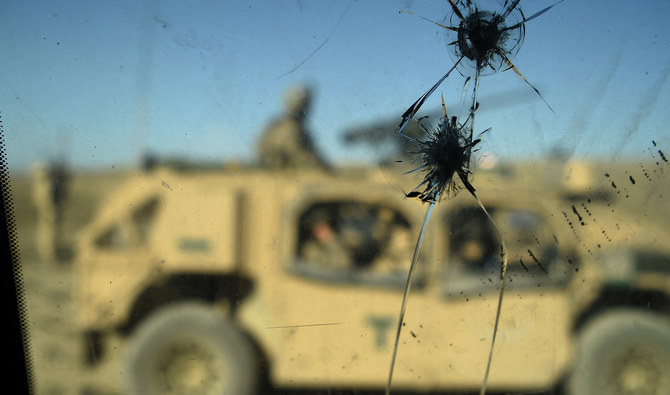
US Army soldiers are seen through a cracked window of an armed vehicle in a checkpoint during a patrol against Daesh militants in Deh Bala district in the eastern Afghan province of Nangarhar on July 7, 2018. (AFP/File)
Short Url
Updated 18 December 2021
Follow

Al-Qaeda, Deash will ‘get advantage,’ Pakistan warns as delegates arrive for OIC Afghanistan session

  • US Central Command warned last week that Al-Qaeda is attempting to rebuild its presence inside Afghanistan
  • Washington's special representative for Afghanistan Tom West has confirmed his participation in the OIC meeting

ISLAMABAD: Groups such as Al-Qaeda and Deash will get advantage of the Afghan crisis, Pakistan foreign minister Shah Mahmood Qureshi warned on Friday as delegates for the Organization of Islamic Cooperation's (OIC) special session on Afghanistan started to arrive in Islamabad.

The 17th Extraordinary Session of the OIC's Council of Foreign Ministers was called by Saudi Arabia and will be hosted by Islamabad on Dec. 19. The meeting's focus is on the humanitarian situation in Afghanistan, where the economy plunged into free fall in mid-August when the Taliban took control as US-led foreign troops withdrew after 20 years of presence.

Concerns over the unchecked presence of extremist groups on Afghan soil have been raised since the beginning of the US withdrawal, but last week the head of the US Central Command said it was clear that Al-Qaeda is attempting to rebuild its presence inside Afghanistan, which was the base from which it planned the Sept. 11, 2001 attacks against the US.

"The likes of Al-Qaeda and Daesh will get advantage of the crisis and will increase their footprints in Afghanistan," Qureshi told reporters during a press briefing. 
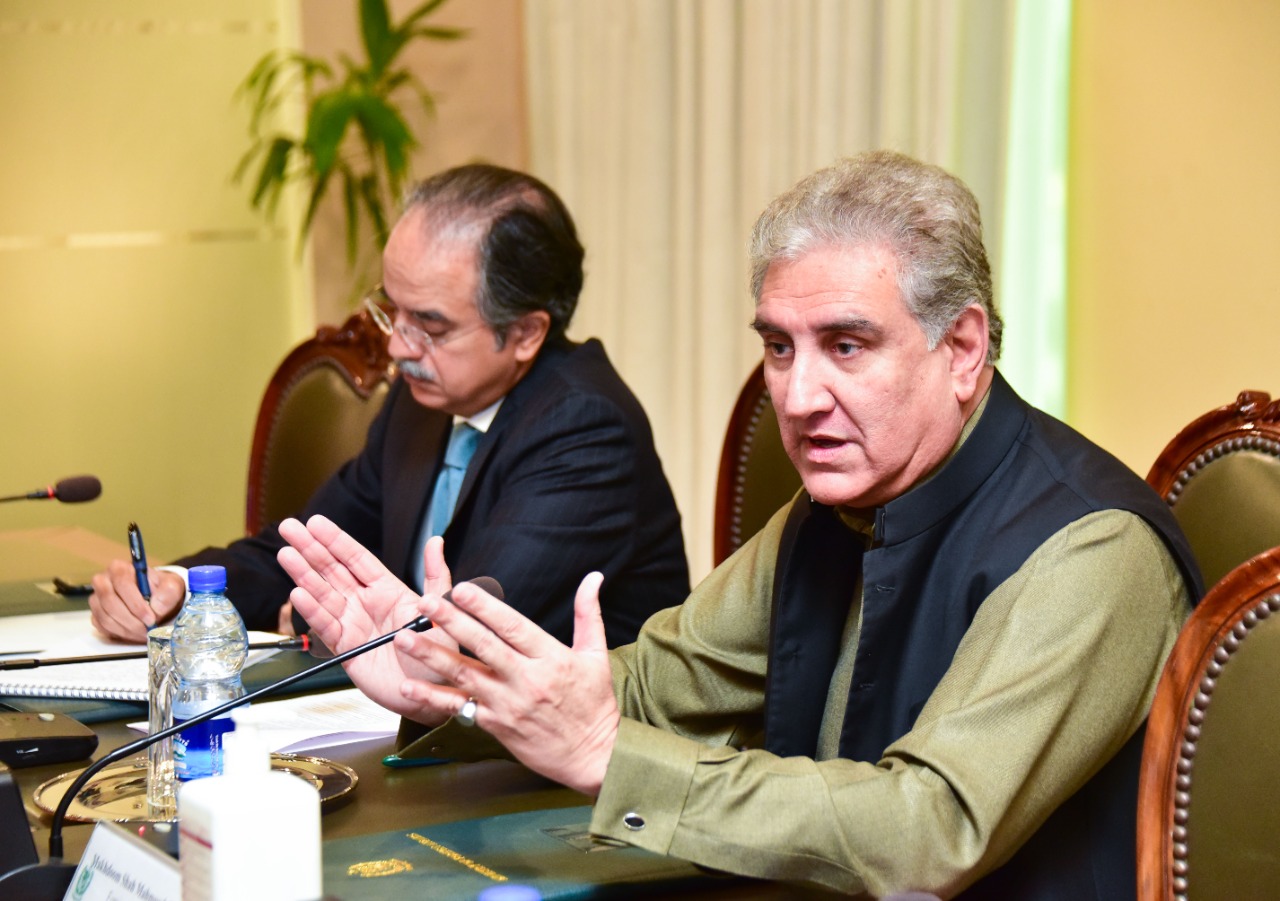


Pakistan foreign minister Shah Mahmood Qureshi (R) is addressing a media briefing ahead of OIC meeting on Afghanistan in Islamabad on December 17, 2021. (Courtesy: Ministry of foreign affairs)

The Taliban takeover prompted the US and other donors to cut off financial aid on which Afghanistan became dependent during 20 years of war, and froze $9.5 billion in Afghan central bank assets, isolating the country from the global financial system and paralyzing its banks.

UN agencies say nearly 23 million people — about 55 percent of the Afghan population — are now facing extreme levels of hunger, with 9 million at risk of famine.

"If we will not act now this will become the largest humanitarian crisis in the world," Qureshi said. "All you have invested in Afghanistan in last 20 years in education, and other sectors will be ruined. The gains the world has made will evaporate."

As delegates for the OIC meeting started to arrive in Islamabad, including the organization's secretary general Hissein Brahim Taha and Islamic Development Bank president Muhammad Sulaiman Al-Jasser, Qureshi said US Special Representative for Afghanistan Tom West has also confirmed his participation.

"That gives US an opportunity of assessing the situation right sitting next door," he said, adding that he had also discussed the unfreezing of the Afghan central bank assets with US Secretary of State Antony Blinken, who cited "certain legal issues" hindering the release of funds.

"I think within those legal issues there is still a cushion of around $2 billion which is not tied to that legal issue. By releasing those $2 billion US can ease immediate sufferings of Afghan people, so what we are saying is they should consider that," Qureshi said.

"Rebooting the banking system would be a big step in the direction of economic stability that is the immediate step that is required."

He added that Afghanistan's acting foreign minister Amir Khan Muttaqi is also scheduled to attend the OIC meeting, which will give the international community an opportunity to express their concerns and expectations directly to the Taliban.


Pakistan’s president defends ongoing strikes in Afghanistan, urges Kabul to dismantle militants

Updated 02 March 2026
Follow

Pakistan’s president defends ongoing strikes in Afghanistan, urges Kabul to dismantle militants

  • Afghanistan on Thursday launched attacks in retaliation for Pakistani airstrikes the previous Sunday
  • Pakistan’s military says it is only targeting Afghan military installations to avoid civilian casualties

ISLAMABAD: Pakistan’s president on Monday defended his country’s ongoing military strikes in neighboring Afghanistan, saying Islamabad tried all forms of diplomacy before targeting militants operating from Afghan territory, and called on the Taliban government in Kabul to disarm groups responsible for attacks in Pakistan.

Pakistan earlier said it is in “open war” with Afghanistan, alarming the international community. The border area remains a stronghold for militant organizations including Al-Qaeda and the Daesh (Islamic State) group.

“(The Afghan Taliban) must choose to dismantle the terror groups that survive on conflict and its war economy,” Asif Ali Zardari said during a speech to lawmakers, adding that “no state accepts serial attacks on its soil.”

Afghanistan on Thursday launched attacks in retaliation for Pakistani airstrikes the previous Sunday. Since then, Pakistan has carried out operations along the border, with Information Minister Attaullah Tarar claiming the killing of 435 Afghan forces and the capture of 31 Afghan positions.

Kabul has denied such claims.

In Afghanistan, the deputy government spokesman Hamdullah Fitrat said Pakistan’s military fired mortar shells at a refugee camp in eastern Kunar province, killing three children and injuring three others.

Afghanistan’s defense ministry said Afghan forces carried out strikes targeting a Pakistani military facility near Paktia province, causing “substantial losses and heavy casualties.”

Pakistan’s military did not respond to questions. It has said Pakistan is only targeting Afghan military installations to avoid civilian casualties.

Pakistan has witnessed a surge of violence in recent months and blames it on the outlawed Pakistani Taliban, known as Tehreek-e-Taliban Pakistan or TTP. It operates both inside Pakistan and from Afghan territory.
Islamabad accuses Afghanistan’s Taliban government of providing safe havens for the TTP, which Kabul denies.

The latest cross-border fighting ended a ceasefire brokered by Qatar and Turkiye in October. The two sides failed to reach a permanent agreement during talks in Istanbul.

Zardari reiterated Pakistan’s call for talks, saying, “We have never walked away from dialogue.”

The Pakistani leader again accused Afghanistan of acting as a proxy for India by sheltering militant groups.

“Stop being used by another country as a battlefield for their ambitions,” he said.

Zardari cited a recent report from the United Nations Security Council’s monitoring team that described the presence of militant groups in Afghanistan as an extra-regional threat.