Who’s Who: Dr. Abdul Karim Al-Sammak, Arab historian

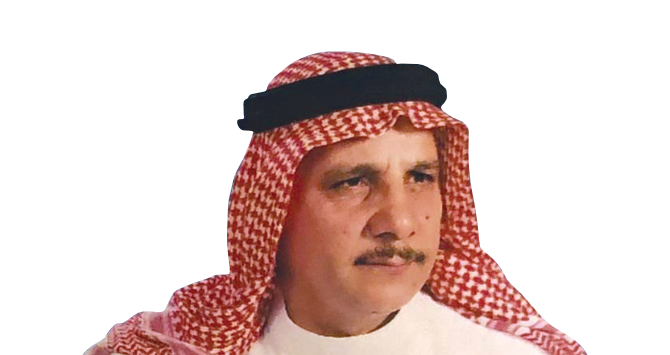
Dr. Abdul Karim Al-Sammak
Short Url
Updated 15 December 2021
Follow

Who’s Who: Dr. Abdul Karim Al-Sammak, Arab historian

Dr. Abdul Karim Al-Sammak is currently working on a major project to publish all the books of the late Syrian journalist and historian Ameen Saeed. 

Al-Sammak is a full-time researcher of modern Arab political history and also works on political and historical studies focusing on Syria’s modern history.

He was born in 1945, growing up in Hama and graduating from high school in the Syrian city. 

He joined the history department of Beirut Arab University, but did not continue with the institution. 

In 1974, he traveled to Saudi Arabia to work as a nurse as he held a diploma in nursing. 

However, he worked at Imam Mohammad ibn Saud Islamic University and earned a bachelor’s and master’s degree in history. His master’s thesis focused on a book by Iskander Ibn Yaqub Abkarius about the mid-19th century sectarian conflict in the Levant and the influential European role in the region’s sectarian crises.

Al-Sammak, who has spent around 50 years in the Kingdom, has published several biographies of statesmen from the time of Saudi Arabia’s foundation, especially those who worked with King Abdulaziz. 

Much of his work has been inspired by Saeed. He has published many of his books focusing on the Saudi state as well as the archives of his magazine, Al-Sharq Al-Adna, which is considered a key source for the history of the Kingdom of Hejaz and Nejd and their annexation. 

Al-Sammak presented his findings in a two-volume book, adding valuable and rare work to the library of Saudi history.

He has had more than 150 research papers and studies published in peer-reviewed journals. His work has also been published in newspapers and magazines. 

He received a doctorate in 2015 from the Russian Academy of Sciences. 


‘Masterpieces of Saudi Orchestra’ shine at Maraya in AlUla

The “Masterpieces of Saudi Orchestra” concert opened at Maraya Concert Hall in AlUla on Thursday. (Supplied)
Updated 23 January 2026
Follow

‘Masterpieces of Saudi Orchestra’ shine at Maraya in AlUla

  • The concert on its opening night presented a seamless artistic journey, where orchestral works met Saudi musical identity
  • It underlined the Music Commission’s aim to present Saudi artistry at a high professional level

RIYADH: The “Masterpieces of Saudi Orchestra” concert opened at Maraya Concert Hall in AlUla on Thursday under the patronage of the Kingdom’s Minister of Culture and Chairman of the board of the Music Commission Prince Bader bin Abdullah.

Organized by the Music Commission, the concert on its opening night presented a seamless artistic journey, where orchestral works met Saudi musical identity.

The Saudi National Orchestra and Choir, conducted by Maestro Hani Farhat, led audiences through carefully curated pieces reflecting heritage and modern creativity.

The repertoire combined traditional influences with orchestral scoring, offering listeners heritage-based compositions alongside recent arrangements.

Regional rhythms and layered musical textures were used to echo the Kingdom’s history, while pieces rooted in Saudi classical music tradition connected audiences with familiar cultural references in a fresh format.

The concert underlined the Music Commission’s aim to present Saudi artistry at a high professional level.

The series seeks to honor national heritage while encouraging contemporary artistic engagement, and its growing local and international presence was highlighted throughout the evening.

The program also featured a visual dimension led by the Theater and Performing Arts Commission, which staged live performances of Saudi folk arts. 

Audiences saw presentations of Samri, Dahha, Rafeihi, Yanbawi, Zair and Khabeeti, synchronized with the orchestra to create one integrated artistic experience.

These folk elements were arranged to complement the orchestral sound, reinforcing the richness and variety of Saudi cultural identity. The combination of music and movement aimed to show how traditional forms can engage with large-scale concert settings while retaining their historical character and community roots.

This performance is an extension of the series of successes achieved by the Saudi Orchestra’s masterpieces both locally and internationally, and reaffirms the Music Commission’s commitment to showcasing Saudi music in its finest form.