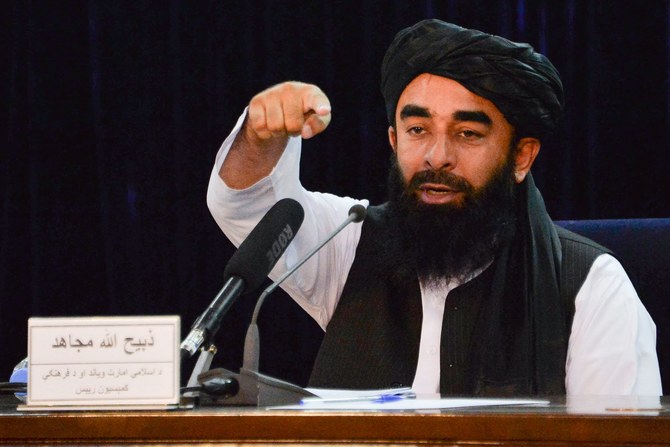
DUBAI/PESHAWAR: Taliban chief spokesman Zabihullah Mujahid on Friday called on members of the Organization of Islamic Cooperation to recognize the Afghan Taliban’s government during an upcoming meeting in neighboring Pakistan.
Pakistan will be hosting an ‘extraordinary’ session of the OIC Council of Foreign Ministers on December 19 to draw the attention of the international community to the growing humanitarian crisis in Afghanistan, its foreign ministry announced earlier this week. The meeting will include delegations from the European Union. United States, Britain, France, Russia and China are also invited.
Pakistan has said the meeting will focus on drawing attention to the humanitarian crisis facing Afghanistan and not on according recognition to the Taliban.
Afghanistan faces an acute economic and humanitarian crisis since billions of dollars’ worth of international aid was abruptly cut following the Taliban takeover of the country on August 15 and the US froze some $9.5 billion in Afghan central bank assets.
While no country has recognized the Taliban government yet, senior officials from a number of countries have met with the movement’s leadership both in Kabul and abroad.
“We want good relations with the OIC countries, and we ask the upcoming meeting to support us, and to recognize the government of the Islamic Emirates of Afghanistan,” Mujahid told Arab News. “We are their brother, and they should support us and recognize the Afghan government. We need their recognition, support and cooperation.”
The Taliban took over Afghanistan when US-led foreign troops withdrew after 20 years of military presence earlier this year, prompting the previous Western-backed government to flee. The Taliban claimed near total control of the country in August, with the last enclave of opposition, led by the National Resistance Front of Afghanistan, remaining in the mountainous northern region of Panjshir Valley until mid-September.
Members of NRFA leadership left for neighboring Tajikistan shortly after the Taliban took over Panjshir.
“Instead of living in Tajikistan and Europe and speaking from there about a resistance that does not exist in Afghanistan, we ask them, instead, return to Kabul and live with us as brothers,” Mujahid said. “Afghanistan is peaceful now, and under our control, but we want to talk to all Afghans.”


![]()

Taliban call on OIC to recognize government during upcoming Pakistan meeting
Short Url
https://arab.news/6begq
Taliban call on OIC to recognize government during upcoming Pakistan meeting
- Islamabad will host ‘extraordinary’ session of OIC Council of Foreign Ministers on December 19
- Taliban spokesperson asks leadership of Afghan opposition forces to return to the country
Latest updates


Recommended


© 2026 SAUDI RESEARCH & PUBLISHING COMPANY, All Rights Reserved And subject to Terms of Use Agreement.