

Pakistan politely refuses participation in US summit on democracy

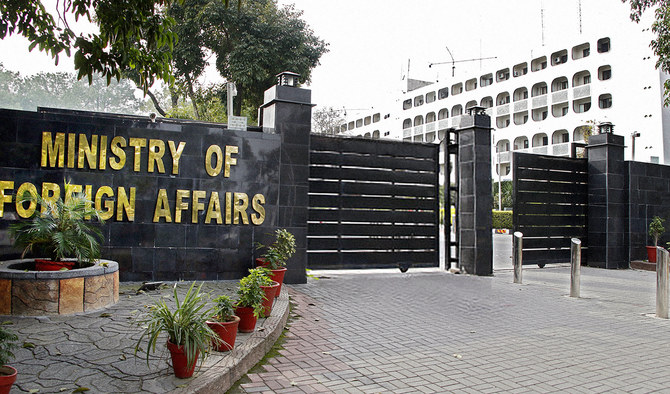
The photograph shows the Ministry of Foreign Affairs building in Islamabad, Pakistan, on January 22, 2020. (AN photo/File)
Short Url
Updated 08 December 2021
Follow

Pakistan politely refuses participation in US summit on democracy

  • The two-day virtual event seeks to bring together a select group of countries and is scheduled to be held on December 9-10
  • The US-Pakistan relations have remained strained for several years, though they have suffered a greater setback since the arrival of President Joe Biden

ISLAMABAD: Pakistan on Wednesday refused to participate in a two-day virtual democracy summit convened by the United States, as the administration in Washington tries to bring together a select group of countries to join the online gathering.

The bilateral relations between the two countries have remained strained for the last several years since the US officials thought they were not getting requisite support from Pakistan to win the war in Afghanistan.

However, they have suffered a greater setback since the arrival of President Joe Biden who refused to speak to Pakistan's prime minister, even as his administration continued to seek Pakistan's support in Afghanistan.

"We are thankful to the United States for inviting Pakistan for participation in the Summit for Democracy, being held virtually on 9-10 December 2021," said the foreign office in a statement, adding: "We value our partnership with the U.S. which we wish to expand both bilaterally as well as in terms of regional and international cooperation. We remain in contact with the U.S. on a range of issues and believe that we can engage on this subject at an opportune time in the future."

The statement maintained Pakistan had "a large functioning democracy with an independent judiciary, vibrant civil society, and a free media."

It added the country was already striving to strengthen the democratic processes by instituting wide-ranging reforms to fulfil the objective.

Without specifying any reason why it wanted to stay away from the summit, the statement promised that Pakistan would work for greater international cooperation and constructive engagement with the US.

The democracy summit was a major campaign promise made by President Biden who said he wanted to hold such an event to prevent democratic backsliding by strengthening human rights and basic freedoms across the world.

The event became controversial, however, after Russia and China were not invited to it, making some analysts describe it as an American attempt to contain China.

"Clearly, strategic considerations about countering China are at play in inviting very troubled, backsliding democracies like India and the Philippines that are in China's neighborhood," Reuters quoted research director at the Project on Middle East Democracy Amy Hawthorne while reporting on the preparations of the event.

The top diplomats of Russia and China in Washington also criticized the way the US was planning the conference, saying it reflected Washington's "Cold-War mentality" in a joint op-ed article.

The two diplomats added that the US had empowered itself to define "who is a 'democratic country' and who is not eligible for such status" by holding the event.


Pakistan reports decline in polio cases in 2025

Updated 4 sec ago
Follow

Pakistan reports decline in polio cases in 2025

  • Cases drop to 30 from 74 in 2024, with no new infections recorded since September
  • Authorities plan intensified targeted drives in 2026 to halt remaining transmission

ISLAMABAD: Pakistan reported a sharp decline in polio cases in 2025, with infections falling to 30 from 74 a year earlier, as intensified vaccination campaigns and improved surveillance helped curb the spread of the virus, health authorities said on Wednesday.

No new polio cases have been recorded anywhere in the country since September, said a statement, as Pakistan carried out six polio campaigns, including five nationwide drives, trying to reach children in high-risk areas and improve monitoring of virus circulation.

Despite the decline, the authorities cautioned that poliovirus continues to circulate in some districts, requiring sustained vigilance to prevent a resurgence.

“Targeted interventions, robust community engagement, and ongoing vaccination efforts remain essential to reach every missed child and prevent any resurgence,” the official statement said.

“Frontline health workers, security personnel, and local authorities continue to work in close coordination to maintain high immunity levels and ensure that Pakistan remains on course toward becoming polio-free,” it added.

The most recent nationwide campaign, conducted from Dec. 15 to 21, achieved more than 98 percent coverage across the country, including all four provinces, Azad Jammu and Kashmir, Gilgit-Baltistan and the capital, Islamabad.

Authorities reported an 18 percent reduction in the number of missed children compared with the previous round, with notable improvements in access and operations in southern Khyber Pakhtunkhwa, a longstanding challenge area.

Pakistan’s polio eradication drive relies on close coordination between health workers, security personnel and local authorities, amid ongoing resistance in some communities and access constraints in remote or insecure regions.

Officials said district-specific interventions, including improved microplanning, better deployment of vaccination teams and enhanced community outreach, were being used to address remaining gaps, particularly in parts of southern Khyber Pakhtunkhwa.

The statement said Pakistan plans to intensify targeted efforts in 2026 to interrupt the remaining transmission chains and move closer to eliminating the disease.