TOKYO: The family of a famed Hiroshima atomic bomb victim is fundraising to take a flame burning since the wartime attack to Pearl Harbor to light a peace monument, they said Friday.
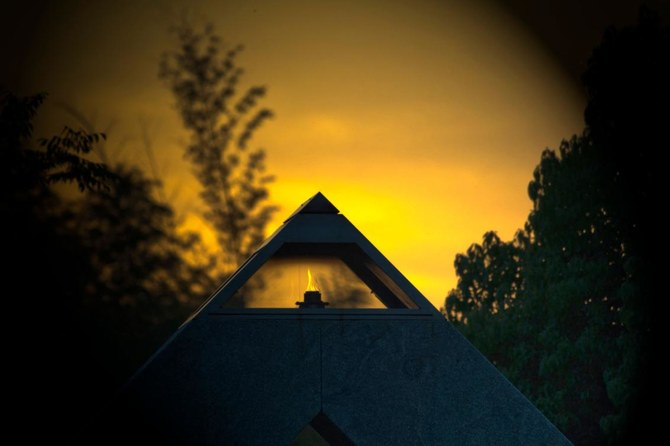
The “flame of peace” is said to have been taken from the smoldering ruins of Hiroshima after the world’s first nuclear attack. It was kept alive first in a private home before being moved to a peace tower in Japan’s Fukuoka in 1968.
Now, the family of Sadako Sasaki, who died at 12 of radiation-induced leukaemia a decade after the attack, wants the flame to be taken to the site of the deadly Japanese attack to promote peace.
“We want this plan to be a symbol of peace after Japan and the United States, once enemies, have overcome their hatred,” Sasaki’s brother Masahiro Sasaki told AFP.
A majority of Americans “still support the atomic bombings in Hiroshima and Nagasaki, and their reaction to our calls for ‘no more Hiroshima, no more Nagasaki’ is ‘you attacked Pearl Harbor,’ but we have to overcome the hatred,” the 80-year-old said.
He is soliciting private donations in Japan and the US to transport the flame next summer, and are discussing a site for the monument with authorities in Hawaii.
“We’re hoping that it will be at the memorial” built over the remains of the USS Arizona, which sank during the attack, he said.
The “flame of peace” has been taken abroad before including to the Vatican in 2019 when atomic bomb survivors were granted an audience with the Pope.
Sadako Sasaki is widely remembered for having folded one thousand paper cranes before dying on October 25, 1955, after a long battle with leukaemia.
She set out to fold the cranes while in hospital, after hearing a tradition that doing so would make a wish come true.
Her brother Masahiro, also an atomic bomb survivor, and her nephew Yuji have used her story to educate people globally about the dangers of war.
In 2012, they donated one of Sasaki’s paper cranes to the memorial built over the remains of the Arizona.
December 8 will mark 80 years since the Pearl Harbor attack, which killed more than 2,400 Americans and opened the war between Japan and the US.
Around 140,000 people died in the bombing of Hiroshima on August 6, 1945, a toll that includes those who survived the explosion but died soon after from radiation exposure.
Three days later the US dropped a plutonium bomb on the port city of Nagasaki, killing about 74,000 people and leading to the end of World War II.


![]()

Hiroshima attack flame offered for Pearl Harbor memorial
Short Url
https://arab.news/bf88h
Hiroshima attack flame offered for Pearl Harbor memorial
- The “flame of peace” is said to have been taken from the smoldering ruins of Hiroshima after the world’s first nuclear attack
- December 8 will mark 80 years since the Pearl Harbor attack


Latest updates


© 2026 SAUDI RESEARCH & PUBLISHING COMPANY, All Rights Reserved And subject to Terms of Use Agreement.