ISLAMABAD: Saudi Arabia will increase the number of flights arriving from Pakistan, Riyadh’s envoy to Islamabad said on Wednesday, as the first flight departed to Jeddah after Saudi authorities lifted a ban on direct entry to the kingdom.
Saudi Arabia’s ban on direct travel from Pakistan and several other countries came to an end on Wednesday as the kingdom continues to relax travel restrictions imposed due to the coronavirus pandemic.
Saudi Arabia suspended all flights to and from the kingdom on March 14, 2020, after the World Health Organization declared the COVID-19 outbreak a global pandemic.
Entry to the kingdom by air, land and sea resumed on January 3, 2021, though a direct entry ban was imposed on certain countries of concern the following month.
Now, however, travelers from six countries — India, Egypt, Pakistan, Indonesia, Brazil and Vietnam — can arrive in the Kingdom without having to spend 14 days outside those countries before entering Saudi Arabia.
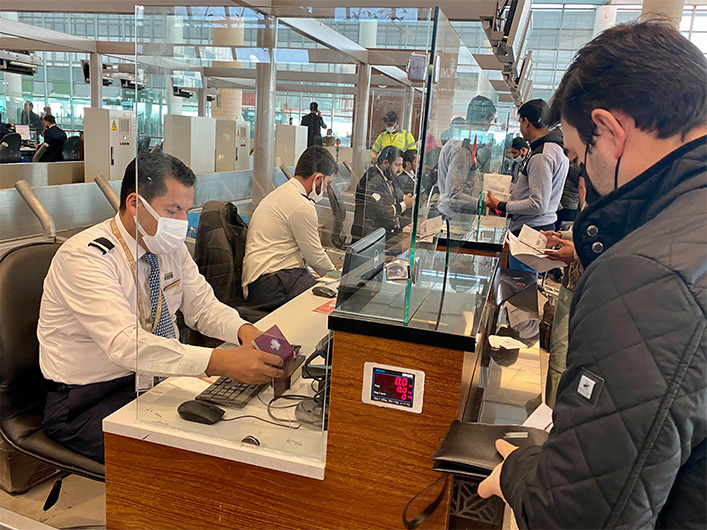
Saudi airlines officials issue boarding passes to passengers of the first flight to Jeddah at the Islamabad International Airport in Islamabad, Pakistan on December 1, 2021, after the kingdom removes a travel ban on Pakistan. (AN Photo)
On Wednesday, a Saudi Airlines flight, SV-727, became the first to depart from Islamabad to Jeddah, with Saudi Ambassador Nawaf bin Said Al-Malki calling it a “great development” that would benefit hundreds of thousands of people.
“We will increase the number of these flights since there are more than 300,000 Pakistanis waiting to return to Saudi Arabia,” Ambassador Al-Malki told Arab News.
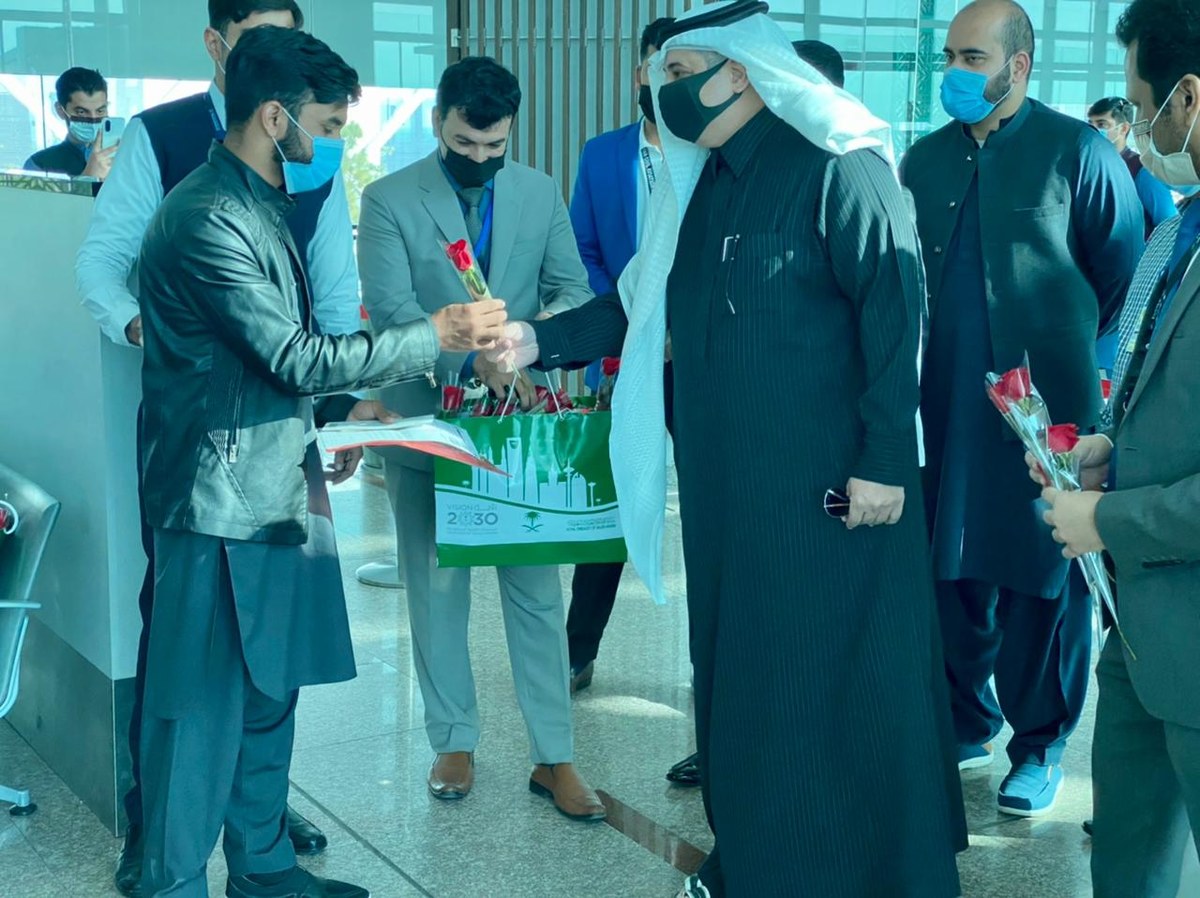
Saudi Arabia's Ambassador to Pakistan Nawaf bin Said Al-Malki bids farewell to passengers of the first flight to Jeddah at the Islamabad International Airport in Islamabad, Pakistan on December 1, 2021, after the kingdom removes a travel ban on Pakistan. (AN Photo)
“This is a great development especially for Pakistani people who were waiting to go back to the kingdom.”
The Saudi ambassador said the kingdom was like a second home to the people of Pakistan, hoping that the resumption of direct flights would resolve problems faced by many people. “I am happy that they will safely return to work [in the kingdom],” he added.
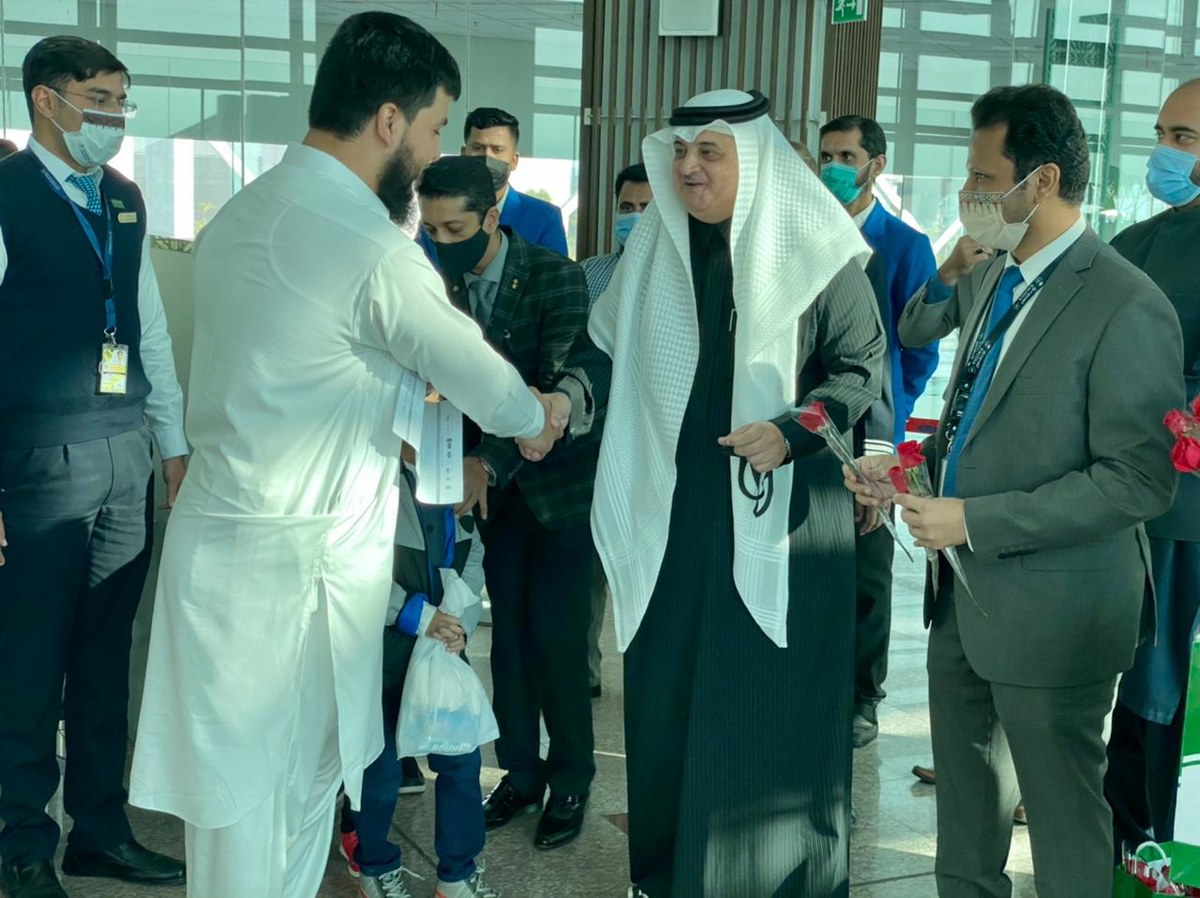
Saudi Arabia's Ambassador to Pakistan Nawaf bin Said Al-Malki bids farewell to passengers of the first flight to Jeddah at the Islamabad International Airport in Islamabad, Pakistan on December 1, 2021, after the kingdom removes a travel ban on Pakistan. (AN Photo)
The Saudi commercial airliner carried 231 passengers after Riyadh lifted the ban on direct travel. Travelers are now allowed to fly to the kingdom without having to spend 14 days outside of their country before entering Saudi Arabia. They, however, will still need a valid PCR certificate and register themselves on the Qdoom platform 72 hours before departure.
Passengers will also be required to enter institutional quarantine for five days upon arrival in the kingdom, regardless of their immunization status, and take tests on the first and the fifth day of quarantine.
Ambassador Al-Malki said the Saudi Airlines would also launch direct flights from Lahore, Karachi, Riyadh and Jeddah next week.
Pakistani passengers also welcomed the resumption of flights between the two countries.
“It has been a long time that we were waiting to meet our families as many of us were stranded in Pakistan for the last one and a half years,” a passenger, Javeriah Ashfaq, told Arab News.
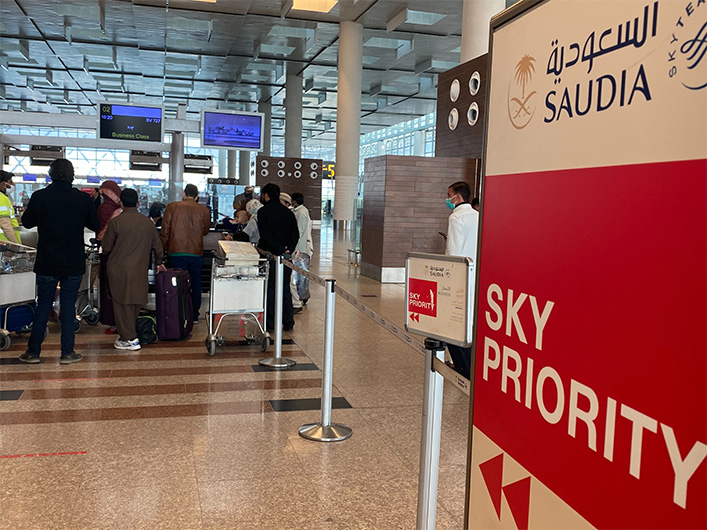
Saudi airlines officials issue boarding passes to passengers of the first flight to Jeddah at the Islamabad International Airport in Islamabad, Pakistan on December 1, 2021, after the kingdom removes a travel ban on Pakistan. (AN Photo)
“My husband works in Jeddah,” she continued. “I came to Pakistan to visit my family but could not go back. Thank God, I will now reunite with my family.”
Another passenger, Ikramullah Khan, who works in the Kingdom as a driver, said he would return to his workplace after seven months.
“I came to Pakistan on leave for a month but could not go back for the last seven months,” he told Arab News.
“I was very worried about losing my job. Now, direct flights to Saudi Arabia are open once again and it is a relief that I can go back to the kingdom.”
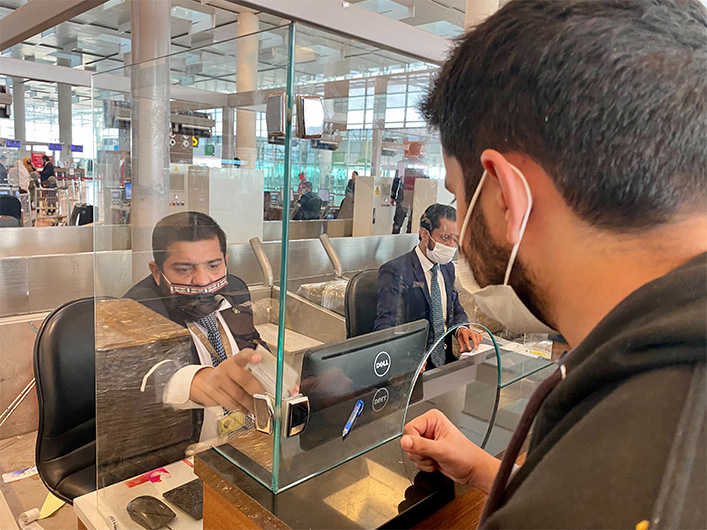
Saudi airlines officials issue boarding passes to passengers of the first flight to Jeddah at the Islamabad International Airport in Islamabad, Pakistan on December 1, 2021, after the kingdom removes a travel ban on Pakistan. (AN Photo)