

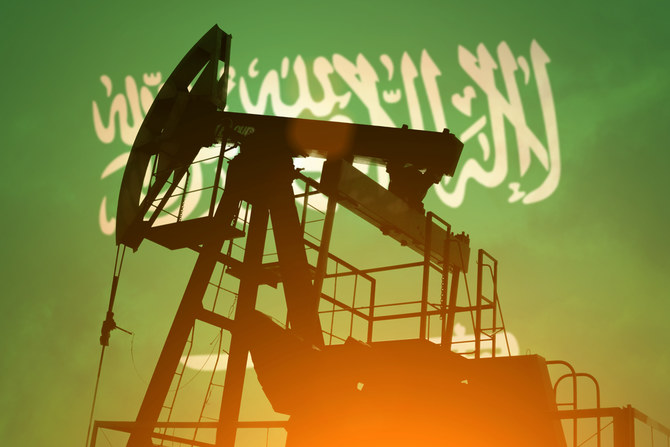
Saudi Arabia may raise January oil prices to Asia

Image: Shutterstock
Short Url
Updated 01 December 2021
Follow

Saudi Arabia may raise January oil prices to Asia

  • Global oil prices have lost about $10 a barrel since Thursday when news of Omicron shook investors


Top oil exporter Saudi Arabia may raise crude prices for Asia in January following large gains in the Middle East spot market last month, but weak refining margins and an oil reserves release by consumers may cap gains, trade sources said.

The January official selling price (OSP) for flagship Arab Light crude could stay little changed or rise as much as $1.20 a barrel to track a similar gain in Dubai benchmark on strong spot crude demand last month, a Reuters survey of sources from seven Asian refiners showed.

A decision on Thursday by the Organization of the Petroleum Exporting Countries and their allies, a group known as OPEC+, whether to continue increasing production by 400,000 barrels per day in January will also affect how Saudi Arabia sets the OSPs, traders said. read more

In addition to weighing the impact of the 50 million barrels of crude release from the United States which some analysts say could lead to surplus in the first quarter, OPEC+ will also be assessing how the Omicron coronavirus variant could affect fuel demand as nations re-impose border restrictions to curb the disease's spread. read more

Global oil prices have lost about $10 a barrel since Thursday when news of Omicron shook investors.

Two of the seven respondents expect Arab Light's January OSP to rise by more than $1 while forecasts from three others are in the 50-80 cents range. The remaining two expect the price to stay unchanged or rise by 10-20 cents.

Spot premiums for several Middle East and Russian grades hit near two-year highs last month on tight supply and robust winter demand, but the SPR release dented sentiment. read more

There's far too much supply with the SPR release, and refining margins have seen a huge drop, said one respondent, referring to the slide in Singapore complex margins from about $8 to $2

“COVID uncertainty has also set in,” he added.

Another trader said supplies from other regions have improved and Saudi crude prices will have to stay competitive. Saudi crude OSPs are usually released around the fifth of each month, and set the trend for Iranian, Kuwaiti and Iraqi prices, affecting about 9 million barrels per day of crude bound for Asia.

State oil giant Saudi Aramco sets its crude prices based on recommendations from customers and after calculating the change in the value of its oil over the past month, based on yields and product prices.

Saudi Aramco officials as a matter of policy do not comment on the kingdom's monthly OSPs.


Arab Energy Fund approved for Panda bonds, first MENA multilateral issuer in China

Updated 5 sec ago
Follow

Arab Energy Fund approved for Panda bonds, first MENA multilateral issuer in China

RIYADH: The Arab Energy Fund has received regulatory approval to issue Panda bonds in China, marking a significant step in linking Middle Eastern and Chinese capital markets.

This decision makes the Riyadh-based institution the first multilateral financial institution from the Middle East and North Africa region to secure such approval, granting it direct access to China’s domestic bond market.

According to a press release, the approval was granted by the Asian country’s National Association of Financial Market Institutional Investors, the regulator overseeing the interbank bond market.

This milestone reflects rapidly deepening ties between the Gulf Cooperation Council, especially Saudi Arabia, and China.

Recent high-level engagements have prioritized strategic investment and technology transfer in Vision 2030 sectors, resulting in dozens of agreements, and in December Foreign Minister Wang Yi described the China-GCC partnership as vital for safeguarding common interests and strengthening Global South resilience.

Under the program, TAEF is authorized to issue up to 10 billion Chinese yuan ($1.4 billion) in Renminbi-denominated bonds. The fund can issue these Panda bonds in multiple tranches over a two-year period, providing flexible, long-term capital for its strategic investments.

Vicky Bhatia, chief financial officer of the Arab Energy Fund, said: “This milestone allows us to further diversify our funding sources by tapping into a deep pool of Chinese investors, while laying a strong foundation for closer collaboration between a highly rated multilateral financial institution from the MENA region and China’s capital markets.”

This access represents a major diversification of TAEF’s funding strategy. Panda bonds provide a stable and direct source of Renminbi financing, strengthening the Fund’s capital planning capabilities as it supports projects across the energy spectrum. 

With a 50-year history, strong governance, and a high international credit rating, TAEF invests in conventional energy, energy infrastructure, and broader energy transition solutions.

By entering the onshore Panda bond market, the Arab Energy Fund reinforces its position as a trusted multilateral partner and an active, innovative participant in global capital markets. 

The move signals China’s growing role as a pivotal source of capital for international energy projects and highlights the increasing financial interconnectivity between the MENA region and Asia.