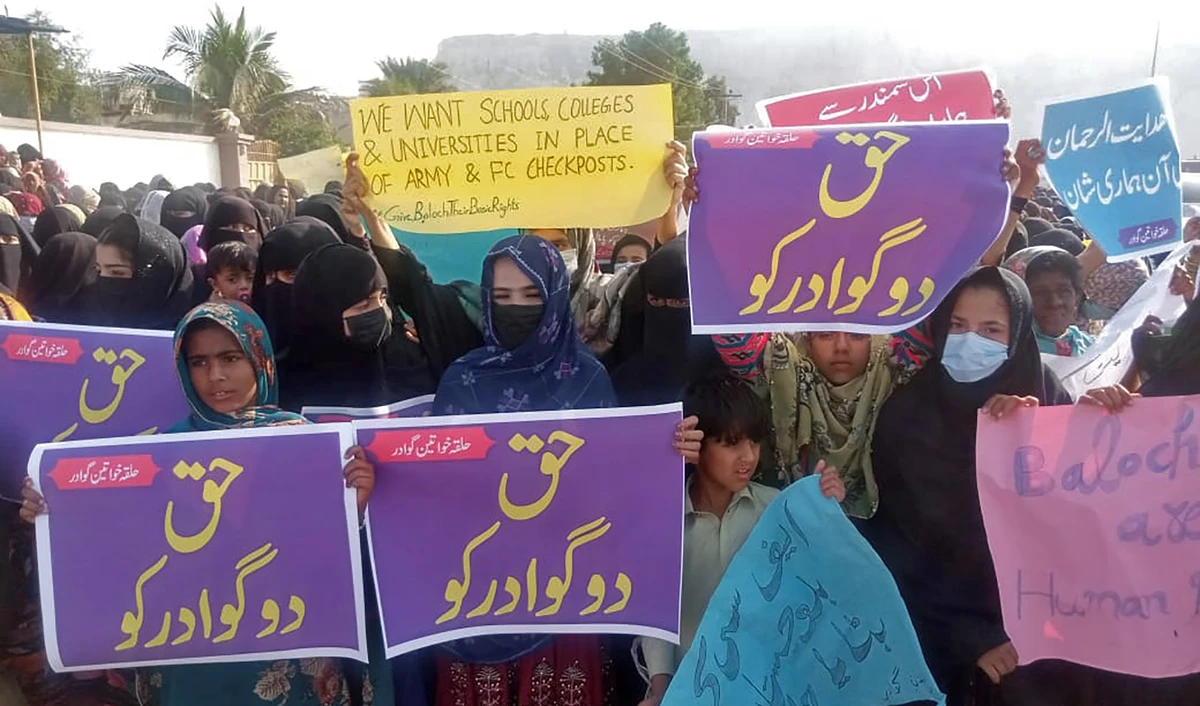
- Protests against lack of basic facilities have gone on for over two weeks under banner of “Give Gwadar its Rights”
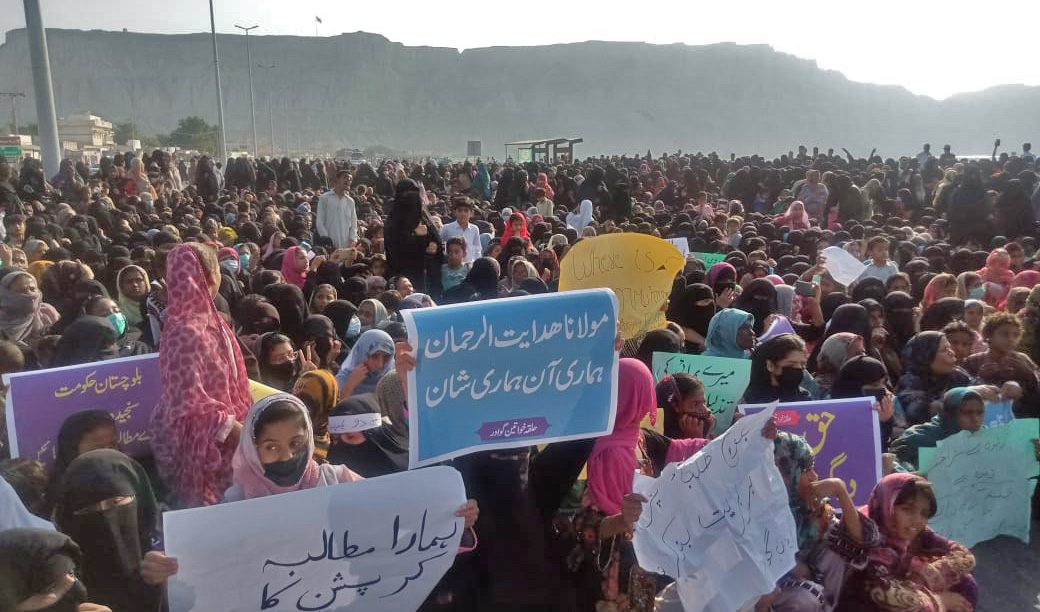
- Thousands of women joined the protests on Monday in what analysts have called "largest women’s rally in Balochistan’s history"
QUETTA: Thousands of women in Pakistan’s Gwadar marched on the streets of the port city this week demanding basic rights and action against illegal trawling in the Arabian Sea, which protesters say has rendered local fisherfolk and others jobless.
Gwadar is in Pakistan’s impoverished southwestern province of Balochistan, a sparsely populated, mountainous, desert region bordering Afghanistan and Iran. China is involved in the development of the Gwadar port on the Arabian Sea as part of a $60 billion China-Pakistan Economic Corridor, which is itself part of China's Belt and Road infrastructure project.
But locals of the city have long complained that Chinese presence and investment in the area has done little to improve their lives, particularly with regards to water scarcity and jobs. Protests against the lack of basic facilities have gone on for over two weeks under the banner of “Give Gwadar its Rights,” but in an unprecedented development, thousands of women joined the protests on Monday, and also participated in a sit-in on Tuesday.
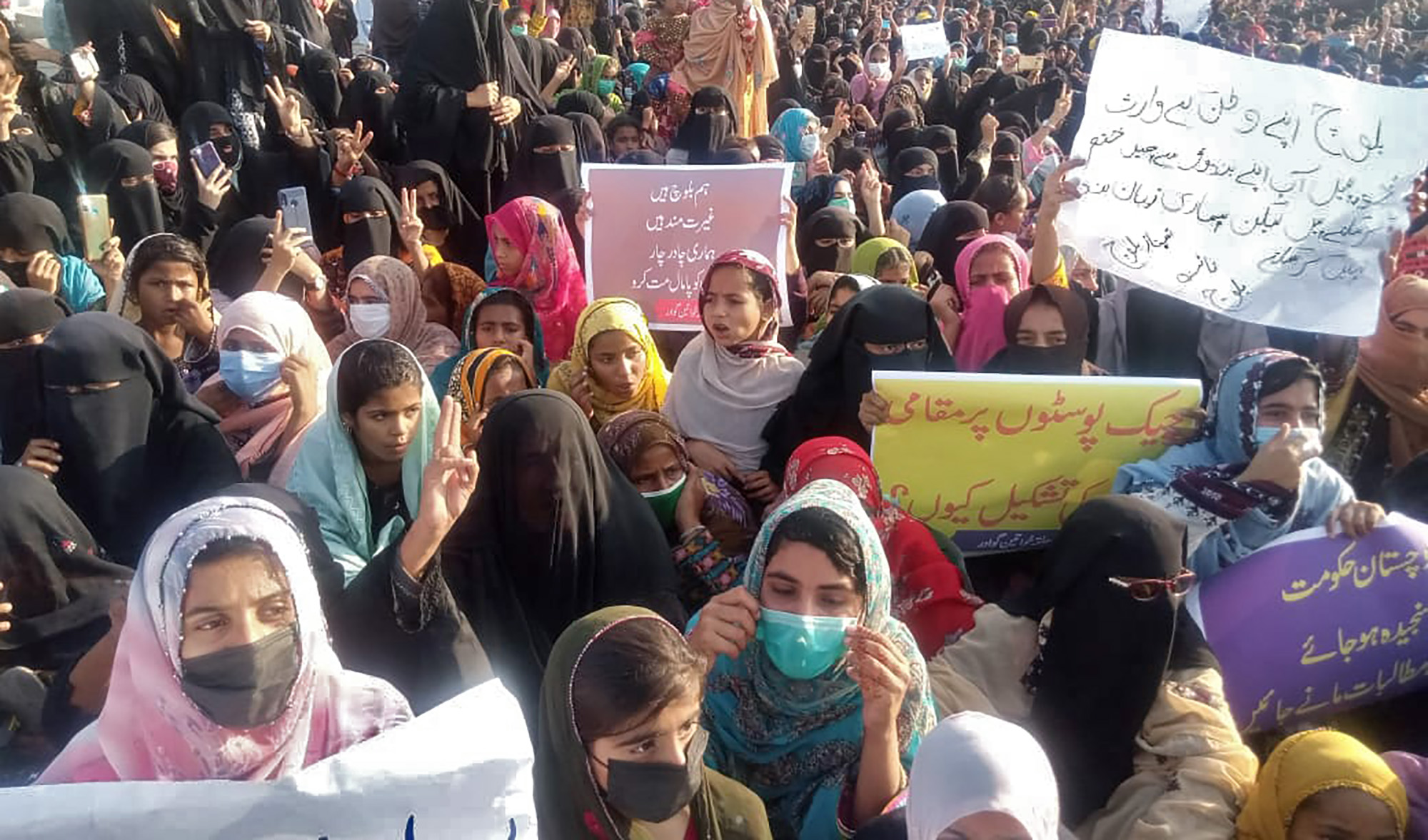
Social media and TV footage on Monday showed thousands of women on the streets in what analysts have called "the largest women’s rally in the history of Balochistan province."
“Thousands of women have poured into the streets of Gwadar because a majority of people in Gwadar have been turning jobless,” protester Sughra Wadela, 19, told Arab News. “Previously we used to earn enough money through the fishing industry as men in Gwadar only have fishing as a source of living, but illegal trawling has ruined the business which has been the profession of our ancestors for many decades.”
“Majority of people in Gwadar are starving because the sea in Gwadar is empty due to illegal trawling,” she added.
Maulana Hidayat-ur-Rehman, a cleric leading the protest movement, said the demonstrations would continue until the government took actions and met the demands for basic rights. Critics of the central government in the province have long complained Balochistan, which makes up 43 percent of Pakistan’s land mass, has received paltry royalties on its vast mineral, oil and gas resources, while remaining one of the country’s poorest regions.
“We have been protesting against illegal trawling, restrictions of business on the Pakistan-Iran border, unnecessary security check-posts and the drugs’ trade in the city,” Rehman told Arab News. “The government has issued four notifications on our demands but we haven’t seen any action on the ground.”
He said the protesters would block the coastal highway connecting Gwadar to Pakistan’s financial hub of Karachi and other parts of the country from Friday if action was not taken by then.
Masi Zeni, 57, who participated in Monday's rally said young people in Gwadar were taking to drugs as drug dealers and smugglers were being allowed to operate with full impunity.
“Despite various complaints, the administration didn’t take any action against people involved in the drug trade,” she said. “Opium, poppy, marijuana and ice are being sold to our youth, which will destroy their future.”
According to a local fishermen union, 80% of the population in Gwadar is associated with the fishing sector and has few other job prospects.
A majority of family members of Sameera Siddique, 40, work as fishermen in Gwadar, she said, but were now “sitting empty handed because of illegal trawling."
“Majority men in Gwadar have been taking loans to fulfil their daily financial needs,” she said.
Zahoor Buledi, provincial minister for Planning and Development, who has been heading the government's negotiations committee, said the incumbent government in Balochistan believed the people of Gwadar should be given all basic rights, and said their demands would be addressed on priority.
“The members provincial assembly from Makran Division have toppled the previous regime [of chief minister Jam Kamal Khan last month] because we had realized that the government was neglecting the people of Gwadar,” Buledi said at a press conference on Tuesday, “but the current regime is serious about giving all rights to people living in every corner of the province.”