JOHANNESBURG: South Africa’s daily COVID-19 infection rate could triple to more than 10,000 by the end of this week as the new Omicron variant spreads rapidly, a top infectious disease expert said on Monday.
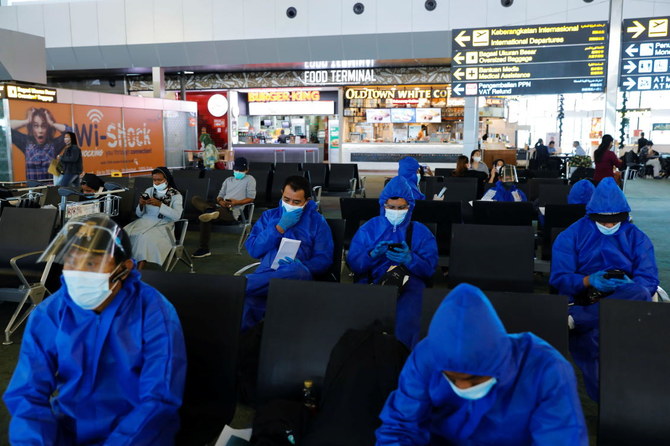
Professor Salim Abdool Karim, the government’s chief adviser during the initial response to the pandemic, also said that, while existing vaccines should be effective at preventing severe disease from the variant, South African hospitals could be under pressure from a flood of admissions within two to three weeks.
“Even if Omicron is not clinically worse, and certainly the anecdotes don’t raise any red flags just yet ..., we are going to see this (pressure on hospitals) in all likelihood because of the rapidity of transmission,” he told a news conference.
The discovery of the variant in southern Africa has caused global alarm, with countries limiting travel from the region and imposing other restrictions for fear it could spread quickly even in vaccinated populations.
The World Health Organization said on Monday that the variant posed a very high global risk of infection surges, though further research was needed to assess its potential to evade protection against immunity induced by vaccines and previous infections.
Abdool Karim, a professor at South Africa’s University of KwaZulu-Natal and Columbia University in the United States, said vaccines were still likely to confer good protection against Omicron because of T-cell immunity, different from the antibody immunity that often blocks infections.
“Even if there’s some escape from antibodies it’s very hard to escape T-cell immunity,” he said.
Doctors who have treated South African COVID-19 patients say Omicron so far appears to be producing mild symptoms, including a dry cough, fever and night sweats. But public health experts say it is too early to draw firm conclusions.
The government says it is doing everything possible to prepare health facilities to cope with the variant and is asking countries that imposed travel restrictions on southern Africa to reverse them, Health Minister Joe Phaahla told the same news conference.
So far, there hasn’t been a steep increase in hospital admissions or COVID-19 deaths since the variant was first detected in South Africa last week, in samples from earlier in November.
On Sunday, the National Institute for Communicable Diseases reported 2,858 new cases, down from 3,220 on Saturday but compared to roughly 300 two weeks ago when the country, where around 35 percent of adults have been fully vaccinated against COVID-19, was experiencing a lull after a third wave of infections.


![]()

S.Africa’s COVID-19 cases could triple this week, says expert
Short Url
https://arab.news/msaas
S.Africa’s COVID-19 cases could triple this week, says expert
- South African hospitals could be under pressure from a flood of admissions within two to three weeks
- WHO said on Monday that the variant posed a very high global risk of infection surges


Latest updates


Recommended


© 2026 SAUDI RESEARCH & PUBLISHING COMPANY, All Rights Reserved And subject to Terms of Use Agreement.