ISTANBUL: Recent deadly clashes in Syria’s Aleppo were an attempt by Kurdish fighters to sabotage Turkiye’s efforts to end a decades-long conflict with the Kurdish militant PKK group, Ankara’s ruling party said Monday.
“The YPG/SDF terrorist organization’s attacks and the operation in Aleppo... is an attempt to sabotage the goal of a terror-free Turkiye,” said Omer Celik, spokesman for President Recep Tayyip Erdogan’s ruling AKP, referring to the Kurdish-dominated Syrian Democratic Forces (SDF).
Over the past year, Turkiye has been engaged in efforts to draw a line under its four-decade conflict with the Kurdistan Workers’ Party (PKK), which it refers to as the “terror-free Turkiye” process.
Last year, the PKK announced an end to its armed struggle and began destroying its weapons, but Turkiye has insisted that the move include armed Kurdish groups in Syria, which Ankara sees as PKK offshoots.
Turkiye has long been hostile to the SDF that controls swathes of northeastern Syria, seeing it as a major threat along its southern border and repeatedly calling for its integration into the Syrian military and security apparatus.
That was supposed to have happened by the end of 2025 under a deal reached in March, but implementation has stalled over sharp differences between the sides, notably Kurdish demands for decentralized rule.
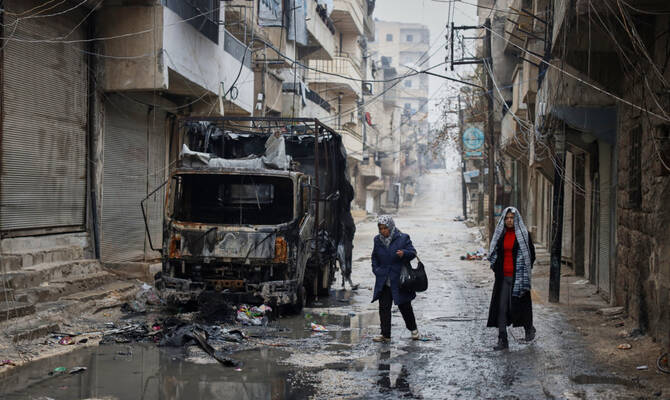
The tensions descended into violence last week, which only ended on Sunday as Syrian government forces took full control of Aleppo.
The standoff between Damascus and the SDF has had a chilling effect on Turkiye’s domestic peace moves, which have largely stalled.

Aleppo unrest was Kurdish fighters’ bid to wreck Turkiye peace process: Erdogan’s party
Short Url
https://arab.news/925qh
Aleppo unrest was Kurdish fighters’ bid to wreck Turkiye peace process: Erdogan’s party
- The standoff between Damascus and the SDF has had a chilling effect on Turkiye’s domestic peace moves, which have largely stalled
Israel to take more West Bank powers and relax settler land buys, media say
JERUSALEM: Israel’s security cabinet approved a series of steps on Sunday that would make it easier for settlers in the occupied West Bank to buy land while granting Israeli authorities more enforcement powers over Palestinians, Israeli media reported.
The West Bank is among the territories that the Palestinians seek for a future independent state. Much of it is under Israeli military control, with limited Palestinian self-rule in some areas run by the Western-backed Palestinian Authority (PA).
Citing statements by Finance Minister Bezalel Smotrich and Defense Minister Israel Katz, Israeli news sites Ynet and Haaretz said the measures included scrapping decades-old regulations that prevent Jewish private citizens buying land in the West Bank.
They were also reported to include allowing Israeli authorities to administer some religious sites, and expand supervision and enforcement in areas under PA administration in matters of environmental hazards, water offenses and damage to archaeological sites.
Palestinian President Mahmoud Abbas said the new measures were dangerous, illegal and tantamount to de-facto annexation.
The Israeli ministers did not immediately respond to requests for comment.
The new measures come three days before Prime Minister Benjamin Netanyahu is scheduled to meet in Washington with US President Donald Trump.
In his statement, Abbas urged Trump and the UN Security Council to intervene.
Trump has ruled out Israeli annexation of the West Bank but his administration has not sought to curb Israel’s accelerated settlement building, which the Palestinians say denies them a potential state by eating away at its territory.
Netanyahu, who is facing an election later this year, deems the establishment of any Palestinian state a security threat.
His ruling coalition includes many pro-settler members who want Israel to annex the West Bank, land captured in the 1967 Middle East war to which Israel cites biblical and historical ties.
The United Nations’ highest court said in a non-binding advisory opinion in 2024 that Israel’s occupation of Palestinian territories and settlements there is illegal and should be ended as soon as possible. Israel disputes this view.
The West Bank is among the territories that the Palestinians seek for a future independent state. Much of it is under Israeli military control, with limited Palestinian self-rule in some areas run by the Western-backed Palestinian Authority (PA).
Citing statements by Finance Minister Bezalel Smotrich and Defense Minister Israel Katz, Israeli news sites Ynet and Haaretz said the measures included scrapping decades-old regulations that prevent Jewish private citizens buying land in the West Bank.
They were also reported to include allowing Israeli authorities to administer some religious sites, and expand supervision and enforcement in areas under PA administration in matters of environmental hazards, water offenses and damage to archaeological sites.
Palestinian President Mahmoud Abbas said the new measures were dangerous, illegal and tantamount to de-facto annexation.
The Israeli ministers did not immediately respond to requests for comment.
The new measures come three days before Prime Minister Benjamin Netanyahu is scheduled to meet in Washington with US President Donald Trump.
In his statement, Abbas urged Trump and the UN Security Council to intervene.
Trump has ruled out Israeli annexation of the West Bank but his administration has not sought to curb Israel’s accelerated settlement building, which the Palestinians say denies them a potential state by eating away at its territory.
Netanyahu, who is facing an election later this year, deems the establishment of any Palestinian state a security threat.
His ruling coalition includes many pro-settler members who want Israel to annex the West Bank, land captured in the 1967 Middle East war to which Israel cites biblical and historical ties.
The United Nations’ highest court said in a non-binding advisory opinion in 2024 that Israel’s occupation of Palestinian territories and settlements there is illegal and should be ended as soon as possible. Israel disputes this view.
© 2026 SAUDI RESEARCH & PUBLISHING COMPANY, All Rights Reserved And subject to Terms of Use Agreement.


