DUBAI: Hundreds of protesters, some throwing rocks, clashed with police in Iran's central city of Isfahan on Friday, Iranian news agencies and social media posts said.
Clashes happened after officers fired tear gas at demonstrators backing farmers demanding water for crops.
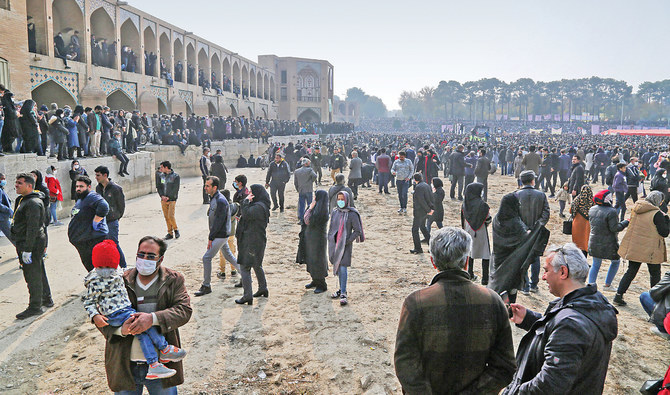
Isfahan, Iran's third largest city, has been the site of protests over water shortages held in the dried up riverbed of the Zayandeh Rud, the largest river in the region.
The semi-official news agency Fars said demonstrators threw rocks and set fire to a police motorcycle and an ambulance. "They are in groups of 40-50 on streets around Khaju Bridge and are estimated at around 300," Fars said.
State TV showed police firing teargas at demonstrators gathered in the dried riverbed. A video posted on social media showed protesters chanting back: "Shame on you!" Reuters could not independently verify the clip.
Overnight, farmers holding a two-week long peaceful sit-in to protest against water shortages in the drought-stricken region were dispersed by unidentified men who set fire to their tents. Social media posts said they were security forces while state media said they were "thugs".
State media earlier said farmers had agreed to leave after reaching a deal with authorities.
The farmers in Isfahan province have for years protested against the diversion of water from the Zayandeh Rud to supply other areas, leaving their farms dry and threatening their livelihoods. A pipeline carrying water to Yazd province has been repeatedly damaged, according to Iranian media.
In July, street protests broke out over water shortages in Iran's oil-producing southwest, with the United Nations' human rights chief criticising the fatal shooting of protesters. Tehran rejected the criticism.
Iran has blamed its worst drought in 50 years for the water shortages, while critics also point to mismanagement.
With an economy crippled by U.S. sanctions, Iran has been the Middle East's worst-hit country in the COVID-19 pandemic. The drought has forced Iran to import a record volume of wheat.


![]()

Protesters, police clash in central Iran after rally over water shortages
Short Url
https://arab.news/ptx35
Protesters, police clash in central Iran after rally over water shortages
- Isfahan has been the site of protests over water shortages held in the dried up riverbed of Zayandeh Rud, the region’s largest river
- Semi-official news agency Fars said demonstrators threw rocks and set fire to a police motorcycle and an ambulance


Latest updates




© 2026 SAUDI RESEARCH & PUBLISHING COMPANY, All Rights Reserved And subject to Terms of Use Agreement.