


Saudi Arabia is making the transition to a more diversified economy, after being reliant upon oil for much of the past century — a trend sparked by Vision 2030 as well as commitments made at the COP26 Summit last month.
While corporate giants such as Aramco and Sabic continue to dominate the economy, a culture of enterprise is taking hold as more and more young people start their own companies.
And contrary to international perceptions, it is Saudi women who are playing a major part in this new era.
No less than 17.7 percent of Saudi women either started or ran a business in 2020, according to a report last month from the Global Entrepreneurship Monitor, a London-based data group that tracks startups across the world. This is considerably higher than the global average of 11 percent of females who go into business.
The report also noted that over 30 percent of Saudi women intended to launch a business in the next three years; and that, compared to men, women were “more likely to act on these intentions.”
GEM says these moves are backed by “recent government policies and interventions to support female entrepreneurs in the Kingdom.”
Nouf Al-Qahtani, the owner of the NSHQ chain of perfumeries, is a case in point. Al-Qahtani first went into business in 2005, repackaging and reselling her perfume collection.
Her startup took her from the souqs of Kuwait to the essential oil dealers of France and Italy, and a SR300,000 ($80,000) loan from the Prince Sultan Fund allowed her to launch her first shop in Alkhobar in 2015.
Today, she runs three perfume boutiques in Alkhobar and Riyadh with a staff of 14, while a fourth outlet is on the way.
“It is easier for Saudi women to go into business now,” Al-Qahtani told Arab News.
She adds: “Many businessmen in Saudi Arabia did not even want to talk to a single woman when I started my company. They would say, ‘Come back with your father or your brother and we will talk to him.’
“But now Saudi women are more powerful. They encourage each other, and even the mentality of Saudi men has changed. If they start any business, they want a female partner. You know why? Because she will work harder, she will do her best to prove herself and she will be more organized.”
Al-Qahtani credits this cultural shift to the reforms introduced by Crown Prince Mohammed bin Salman.
She says: “I love the way he makes Saudi citizens, and especially women, believe in themselves and their national identity. Saudi consumers used to want only imported products — now they are really interested in local producers like myself.”
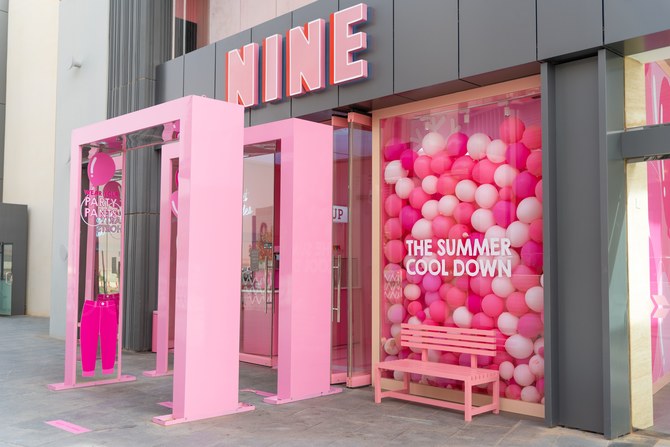
Abeer Al-Hashim, the owner of the Nine Soft Serve chain of ice-cream outlets, is another woman who started more or less from scratch and went on to greater things.
Beginning with a single Alkhobar-based mobile unit in the Kingdom’s Eastern Province in 2018, Al-Hashim now operates six retail outlets — four in Riyadh and two in Alkhobar.
Al-Hashim agrees that circumstances have rapidly improved for female entrepreneurs in Saudi Arabia.
She says: “Even five years ago it was very tough for women to have an independent life and to run an independent company.”
“The entire commercial process is easier now, especially in terms of tech applications – it’s so simple to communicate with the government online, and as a woman you no longer need a man to speak on your behalf.”
Al-Hashim was recently approached by Monsha’at — the General Authority of Small for Medium Enterprises — which told her that her product was ideal for franchising. It went on to provide Al-Hashim with guidance and resources to expand her operation locally and internationally, including putting her in touch with a franchising consultancy.
This is an example of the proactive new approach of the Saudi government — a sea change from the cumbersome red tape and excessive delays that used to await anybody doing business in the Kingdom.
“We get such a lot of official support,” says Al-Qahtani, “and that’s something that I’m very proud of.”
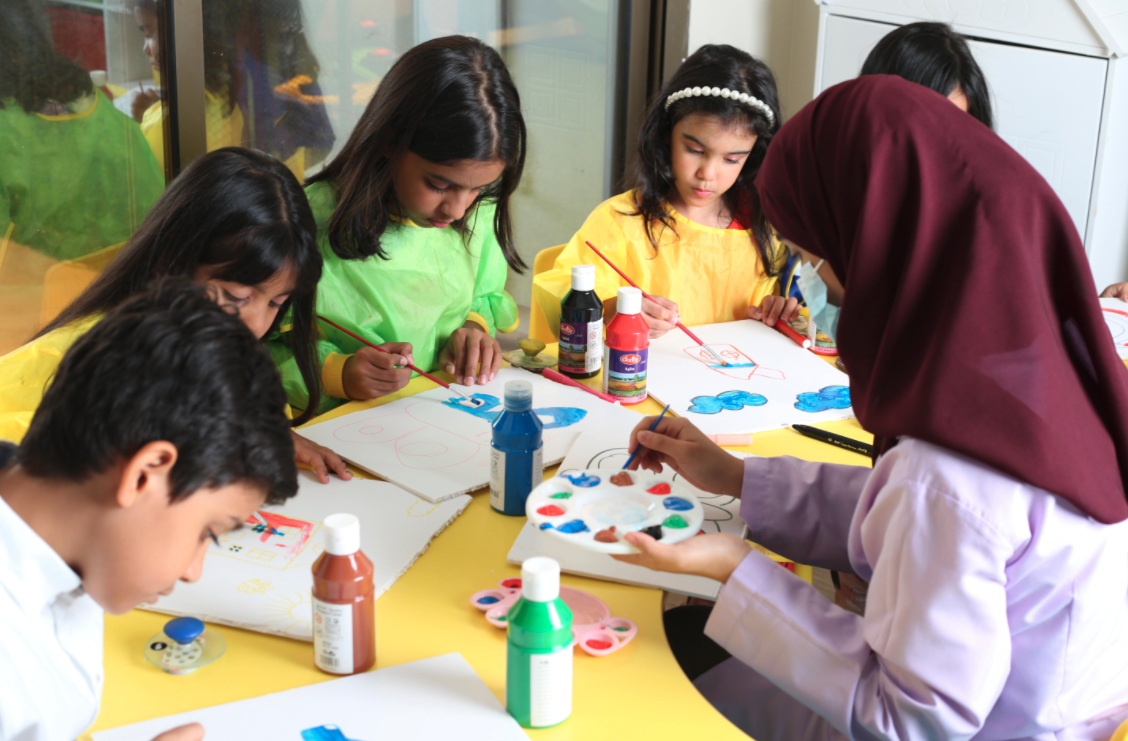
Language & Learning Stimulation Center, Jeddah: Established by Rana Mirza in 2012 to assist children with language disabilities
Rana Mirza, who faced successive hurdles when establishing her Jeddah-based Language & Listening Stimulation Center for children with learning disabilities in 2012, wishes she had enjoyed the benefits that female startup founders now take for granted in Saudi Arabia.
Mirza said: “I had to pay a man to follow up on all the paperwork in the various government offices, but now I can do it all myself. And the government e-services save a huge amount of time and energy, because you don’t have to visit a physical office anymore. It’s all online.”
This is an important factor for Mirza, whose 40-employee center requires numerous official licenses to provide a range of linguistic and psychological therapies.
These businesswomen have their own clear message for other women considering a new startup.
“I would advise her to believe in herself,” says Al-Qahtani. “If she believes in herself, others will believe in her too.”
Al-Hashim said: “You cannot start something without a sense of passion. If you don't have passion for what you’re doing, you’re wasting your time.”
Mirza’s advice is more hands-on: “Try to have knowledge of management, quality control, finance and customer service — before you start your business. I learned that the hard way. It's not just about your passion — it’s about the know-how.”
All three of these entrepreneurs are testament to the fact that significant opportunities exist for anybody, male or female, who takes advantage of the emerging culture of enterprise in Saudi Arabia.


