LONDON: Bahrain’s King Hamad on Thursday sent a message to Pope Francis that included an official invitation to visit the kingdom.
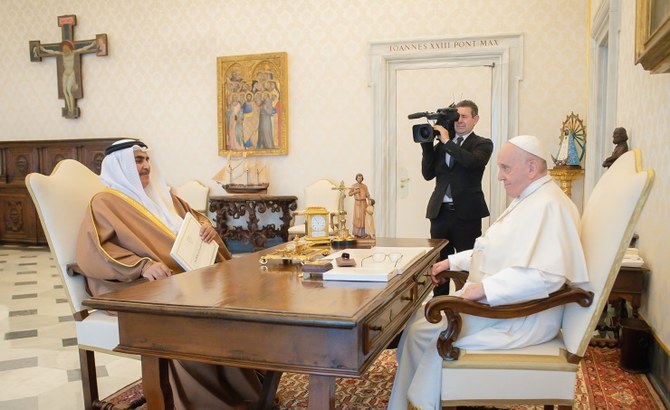
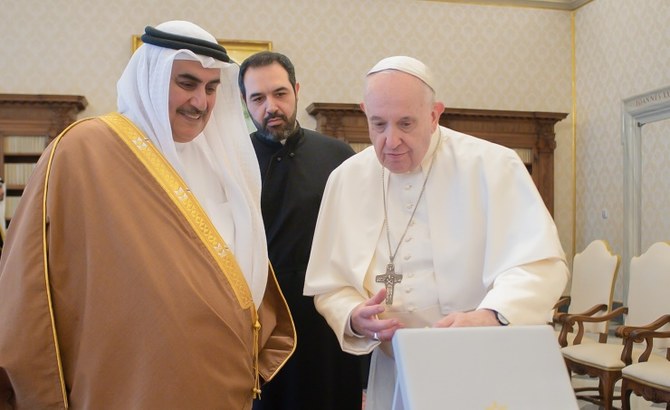
The message was delivered by Sheikh Khalid bin Ahmed bin Mohammed, the king’s adviser for diplomatic affairs, during a meeting with the pope at the Vatican.
Sheikh Khalid expressed King Hamad’s appreciation for the pontiff’s “pivotal and prominent role in establishing and strengthening interfaith dialogue and understanding between different cultures and civilizations, and spreading the values of human brotherhood and coexistence among all,” Bahrain News Agency reported.
He reiterated the king’s support for the Document on Human Fraternity for World Peace and Living Together, also known as the Abu Dhabi declaration, and the importance of building on it to ensure a more prosperous future for all of humanity.
Pope Francis thanked King Hamad for the invitation to visit Bahrain.
He said the invitation embodies the kingdom’s “character as a role model for openness and coexistence among all components of society,” praising King Hamad’s constant keenness to promote a culture of dialogue and tolerance, and his initiatives to spread the principles of coexistence and brotherhood among all countries and peoples.
The Abu Dhabi agreement was signed by Pope Francis on behalf of the Roman Catholic Church, and the grand imam of Egypt’s Al-Azhar in 2019 in the UAE, during the pope’s historic visit to the Arabian Peninsula.


![]()
![]()
![]()
![]()

Bahrain’s King Hamad invites Pope Francis to visit Manama


Short Url
https://arab.news/23qqt
Bahrain’s King Hamad invites Pope Francis to visit Manama
- Pope Francis thanked King Hamad for the invitation to visit Bahrain


Latest updates


© 2026 SAUDI RESEARCH & PUBLISHING COMPANY, All Rights Reserved And subject to Terms of Use Agreement.