Prominent Afghan doctor kidnapped, killed in northern city

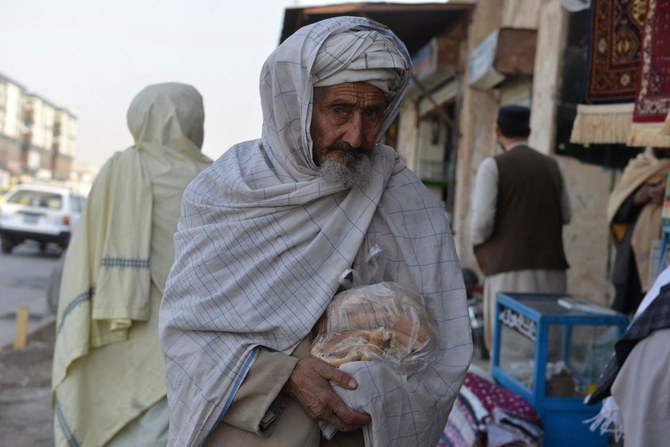
An elderly man walks along a street in Kandahar in Afghanistan, where a prominent doctor was kidnapped and killed in the north, his family said Saturday. (AFP)
Short Url
Updated 20 November 2021
Follow

Prominent Afghan doctor kidnapped, killed in northern city

  • Mohamed Nader Alemi was abducted two months ago in the city of Mazar-i-Sharif
  • Despite the payment, the kidnappers then killed Alemi, leaving his body in the street, his son said

KABUL, Afghanistan: A prominent doctor was kidnapped and killed in northern Afghanistan, his family said Saturday.
Mohamed Nader Alemi was abducted two months ago in the city of Mazar-i-Sharif, and his kidnappers demanded a ransom for his release, his son Roheen Alemi said. The family eventually paid them $350,000, after negotiating down their initial demand of more than twice that, he said.
Despite the payment, the kidnappers then killed Alemi, leaving his body in the street, his son said. They called the family and told them where to find it on Friday, he said.
“My father was badly tortured, there are signs of harm on his body,” Roheen Alemi said.
Alemi, a psychiatrist, worked for the government’s provincial hospital in Mazar-i-Sharif. He also owned a private clinic, said to be the city’s first private psychiatric clinic.
Under the previous, US-backed government, crime swelled, including frequent kidnappings for ransom, which prompted several businessmen to flee Afghanistan. The abductions have continued since the Taliban seized power on Aug. 15, though with lower frequency.
The Taliban Interior Ministry spokesman, Saeed Khosty, said Taliban forces arrested eight suspected kidnappers who were behind the abductions of three people, including Alemi, in Balkh Province, where Mazar-i-Sharif is located. He said two of those abducted were rescued but that Alemi was killed before the rescue. Police were searching for two associates of the eight arrested men who were believed to have killed the doctor.
“The Islamic Emirate is committed to find and punish the perpetrators,” he said, using the Taliban name for Afghanistan.
Meanwhile, the Taliban-run Finance Ministry announced that all government employees will be paid a three months’ salary, which had been unpaid since the Taliban takeover. The lack of pay for government workers has been one factor fueling a spike in poverty in Afghanistan amid a crumbling economy.
US special representative for Afghanistan, Thomas West, responded to an open letter sent earlier this week by the Taliban foreign minister to the American Congress. In the letter, Amir Khan Muttaqi said American sanctions on the Taliban are fueling the economic crisis and urged Congress to release billions in Afghan assets.
West said in a series of tweets that the Taliban had been warned that non-humanitarian aid to Afghanistan would be cut off if the insurgents seized power militarily rather than reaching a negotiated settlement.
Legitimacy “must be earned” by establishing an inclusive government and respecting the rights of women and minorities, “including equal access to education and employment, he said. West added that the US is providing $474 million in humanitarian aid to Afghanistan through UN agencies.


How a Syrian refugee chef met Britain’s King Charles

Updated 3 sec ago
Follow

How a Syrian refugee chef met Britain’s King Charles

LONDON: Pots clanged and oil sizzled inside the London kitchen of Syrian chef Imad Alarnab, as the former refugee who fled his country’s civil war recalled hosting King Charles III.
When the chef left his war-torn homeland in 2015, he never imagined that one day he would watch as cameras flashed and wide-eyed crowds greeted the monarch arriving at his Soho restaurant last year.
Alarnab, 48, said he had asked the king to come to the popular eatery when he met him at Buckingham Palace before an event honoring humanitarian work in 2023.
“I told him ‘I would love for you to visit our restaurant one day’ and he said: ‘I would love to’... I was over the Moon to be honest.”
The chef has come a long way since he arrived in London after an arduous journey from Damascus with virtually no money in his pocket.
Fearing for his life, he had escaped Syria after his family was uprooted again and again by fighting.
His culinary empire — restaurants, cafes, and juice bars peppered across the Syrian capital — had been destroyed by bombing in just six days in 2013.
Alarnab spent three months crisscrossing Europe in the back of lorries, aboard trains, on foot and even on a bicycle before he reached the UK.
“When I left, I left with nothing,” he told AFP, as waiters whirled past carrying steaming plates of traditional Syrian fare.
Starving and exhausted, he spent the last of his money on a train ticket to Doncaster where his sister lived.
“Love letter from Syria”
To make a living, Alarnab initially picked up any odd jobs, such as washing and selling cars, saving enough to bring his wife and three daughters over after seven months.
His love of cooking never left him though. In France, while he was sleeping on the steps of a church, Alarnab had often cooked for hundreds of other refugees.
“I always dreamed of going back to cooking,” he said.
So it wasn’t long before he found himself back in the kitchen, cooking up a storm across London with his sold-out supper clubs, bustling pop-up cafes, and crowded lunchtime falafel bars.
Alarnab’s friends gave him the initial boost for his first pop-up in 2017, and profits from his new catering business then covered the costs of later events.
He now runs two restaurants in the city — one in Soho’s buzzing Kingly Court and another nestled in a corner of the vibrant Somerset House arts center.
“I was looking for a city to love when I found London,” Alarnab said, adding it had offered him “space to innovate” and add his own modern twist to classic Syrian dishes.
Far from home, Alarnab said his word-of-mouth success had grown into a “love letter from Syria to the world” that needs no translation.
“You don’t really need to speak Arabic or Syrian to know that this is the best falafel ever,” he said, pointing to a row of colorful plates.
“There is hope”
For Alarnab, spices frying, dough rising and cheese melting inside a kitchen offered an unlikely escape from the real world.
“All my problems, I leave them outside the kitchen and walk in fresh.”
When he fled Syria, Alarnab thought going back to Damascus was forever off the table.
Yet he returned for the first time in October, almost a year to the day after longtime leader Bashar Assad was toppled in a lightning rebel offensive — ending almost 14 years of brutal civil war.
He walked the familiar streets of his old home, where his late mother taught him to cook many years ago.
“To return to Damascus and for her not to be there, that was extremely difficult.”
Torn between the two cities, Alarnab said he longed to one day rebuild his home in Damascus.
“I wish I could go back and live there. But at the same time, I feel like London is now a part of me. I don’t know if I could ever go back and just be in Syria,” he said.
Although Syrians still bear the scars of war, Alarnab said he had seen “hope in people’s eyes which was missing when I left in 2015.”
“The road ahead is still very long, and yes this is only the beginning — but there is hope.”