



PESHAWAR: Pakistani officials and beekeepers said on Thursday the country’s honey production capacity was on a gradual decline due to the extreme weather patterns caused by the global problem of climate change.
In recent years, Pakistan has witnessed untimely rains, flash floods, heatwaves and droughts, making international organizations designate it as one of the most vulnerable countries to environmental risks.
What makes the situation more alarming is the nature of Pakistan’s economy that heavily depends on agricultural production.
“Climate change is making honeybees lose their natural habitat,” said Shamim-ul-Sibtain Shah, director general of the National Agriculture Research Center in Islamabad, while talking to Arab News. “This has also affected honey production in the country since extreme weather, such as unexpected rains, can badly affect the process.”
He informed that Pakistan produced 15,750 metric tons of honey last year and earned $9.8 million by exporting 5,500 metric tons of it.
He added the number of honeybee colonies per kilometer had reduced due to untimely rains and other extreme climatic conditions that made it difficult for honeybees to return to their beehives.
“In winter, honeybees rub them against each other to keep their colony warm,” Shah said while pointing out that they liked moderate weather. “In summer, they bring water to their colonies and create a cooling effect by constantly buzzing their wings.”
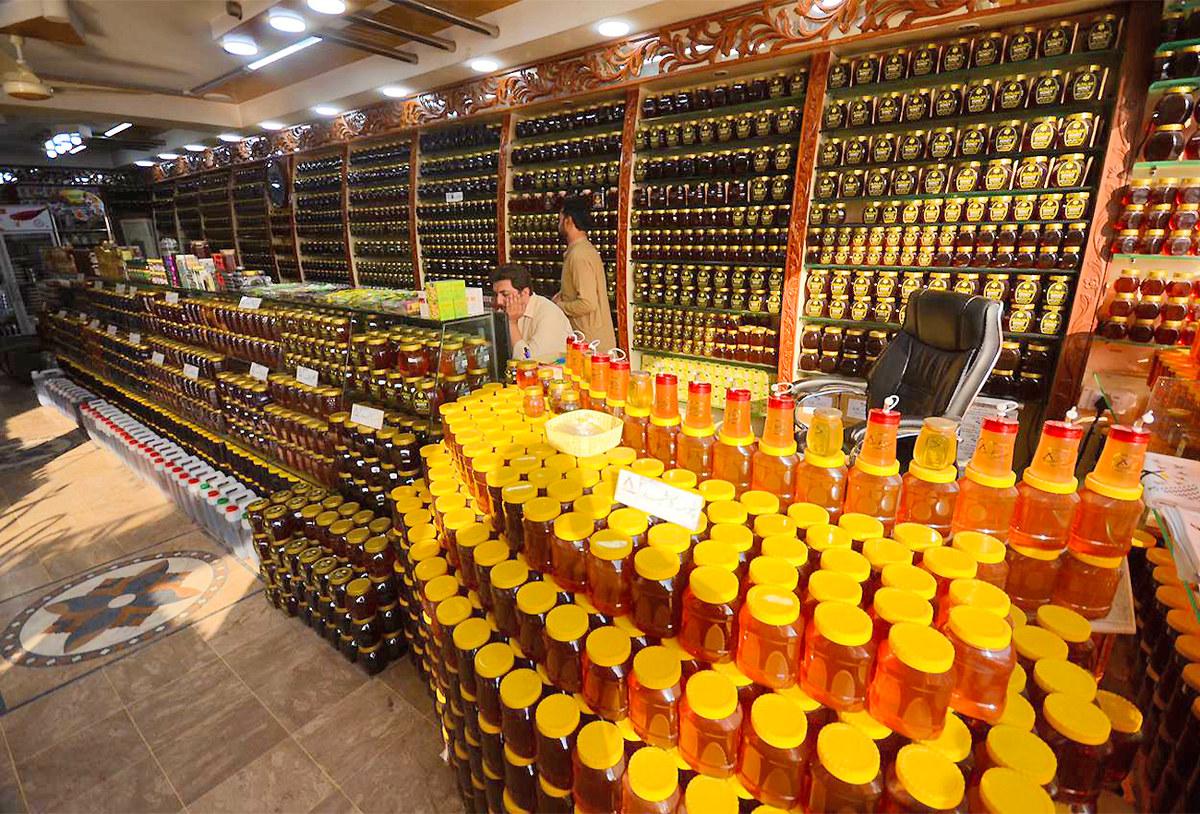
Shopkeepers sit inside their honey shop at Tarnab Farm Honey Market in Peshawar, Pakistan, on November 16, 2021. (AN Photo)
“If the bees remain busy in maintaining specific temperature around them, their honey production capacity decreases,” he continued.
Sheikh Gul Badshah, senior vice president of Pakistan Honeybee Keepers Association, told Arab News that while there was no specific data available to determine the overall honey production in the country, estimates suggested that there was a 40 percent decline this year.
He maintained that recent flash floods triggered by the unexpected rain in Mansehra district in Khyber Pakhtunkhwa province had washed away hundreds of honeybees’ boxes.
“Just a few years ago, our estimates suggested that Pakistan was producing about 30,000 tons of honey annually,” he said. “Now that figure has been reduced to half. Among other factors, the government’s lukewarm approach toward the honeybee industry is affecting our trade.”
Badshah said about 1.5 million people were directly or indirectly associated with the business in Pakistan, adding the government should introduce advanced technology to increase the production capacity since bee keepers were still employing decades-old methods.
Dr. Muhammad Nafees, professor of environmental sciences at University of Peshawar, said climate change had made life much harder for honeybees since it had affected their habitat.
“Incessant but sudden rains followed by flash floods, prolonged droughts, growing use of pesticides and deforestation are among some of the causes behind a decline in honey production,” he said.
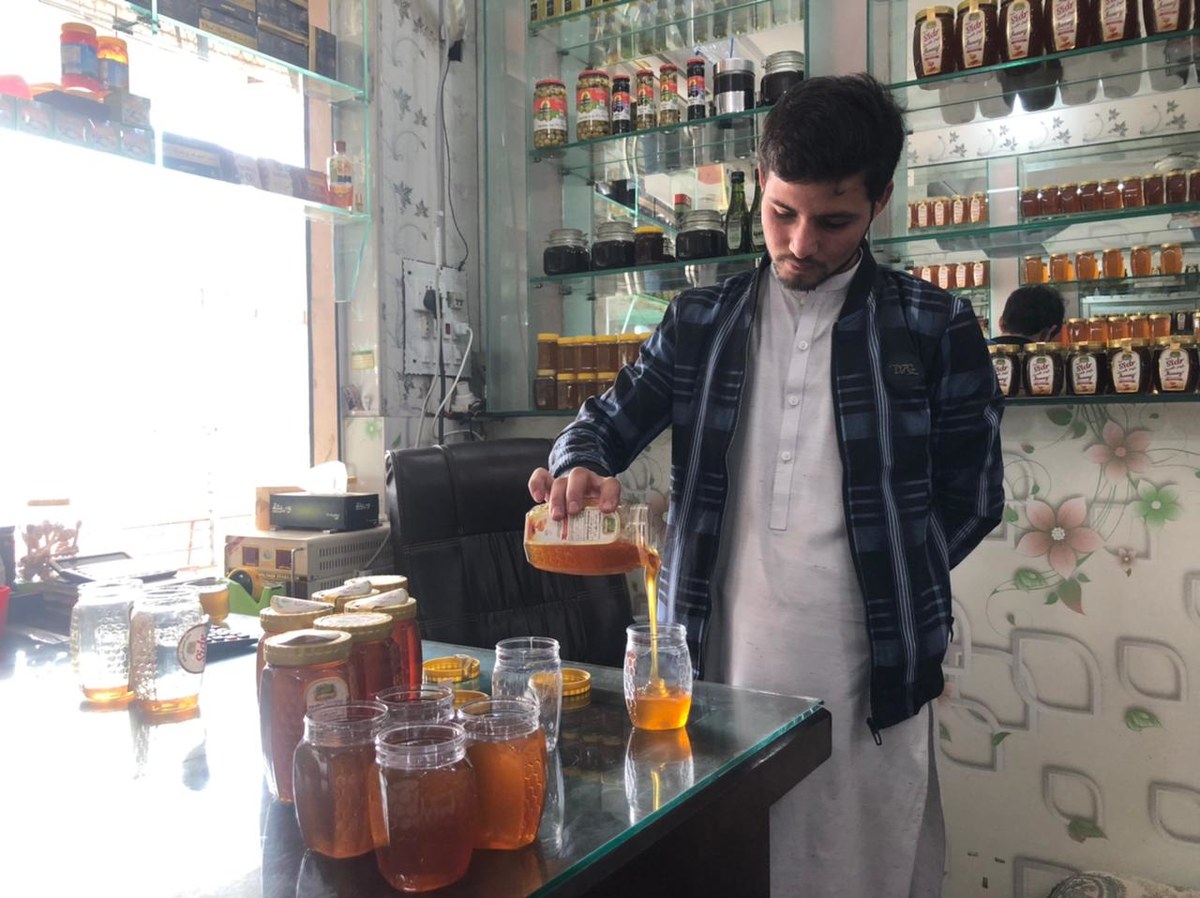
A vendor pours honey into a bottle at his shop at Tarnab Farm Honey Market in Peshawar, Pakistan, on November 16, 2021. (AN Photo)
Saba Rani, a honey trader in Peshawar, told Arab News that the prices of the product had multiplied this year, adding that vendors blame climate change and increasing logistical costs due to rising petroleum prices for the problem.
“The honey that I used to buy for Rs350 per kilogram in 2019 is now available for Rs600,” she said.
Despite the challenges, Shah said, it was still possible for Pakistan to address the declining production trend.
“There should be a ban on cutting bee flora,” he said. “Similarly, we should also provide modern beekeeping equipment to people associated with the business.”


