

Pakistan signs $190 million water supply project with Kuwaiti firm

This picture taken on May 24, 2018 shows a Pakistani worker starting a water drawing pump at a site to store water in Islamkot, in the Tharparkar district of Pakistan's southern Sindh province. (AFP/File)
Short Url
Updated 19 November 2021
Follow

Pakistan signs $190 million water supply project with Kuwaiti firm

  • Project has been envisaged to ensure supply of industrial water to coal-based power sector near Tharparkar
  • Agreement requires Kuwaiti state-owned company to construct a 61-kilometer pipeline from Nabisar to Vajihar in Sindh

KARACHI: A Kuwaiti state-owned firm will build a 61-kilometer pipeline to supply water from Nabisar to Vajihar in Sindh’s Tharparkar desert, announced Pakistan’s diplomatic mission in Kuwait in an official statement on Thursday. 
The official signing ceremony between EnerTech Holding Company and the provincial administration of Sindh to prepare the financing documents for the project, which is estimated to cost $190 million, was held in Karachi on Wednesday, said the statement. 
Pakistan’s ambassador to Kuwait Syed Sajjad Haider and the chief executive officer of EnerTech Global Abdullah Al-Mutairi attended the event virtually. 
Earlier this year, the two sides also signed a concession agreement in June 2021. 
“The project aims to build and operate a historic water supply and storage project, with a total project cost of about $190 million, in the Thar region of Sindh Province, Pakistan,” the embassy announced. 
It added that the initiative was also going to result in job creation in the area. 
EnerTech Holding Company is wholly owned by the Kuwait Investment Authority (KIA). 
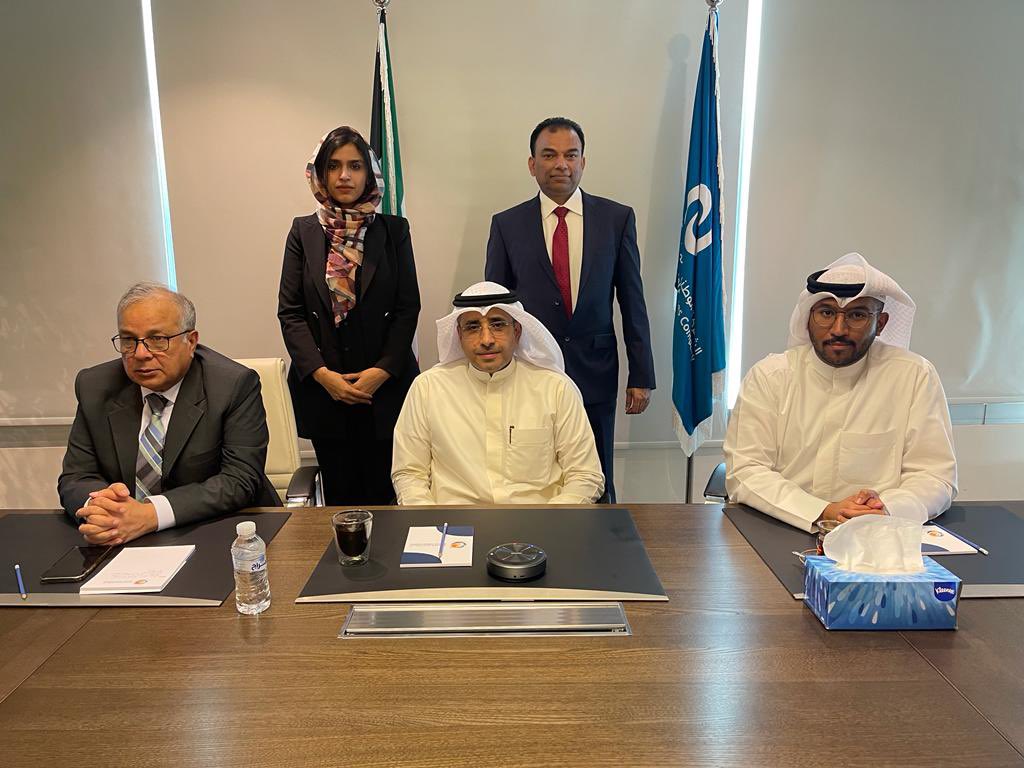


Officials of Kuwaiti state-owned firm EnerTech (virtually) attend the signing of ceremony of the of Nabisar-Vajihar Water Supply project. (@PakinKuwait/Twitter)

The 25-year concession agreement is for the processing and supply of 45 cusecs water from Nabisar to Vajihar. 
Expressing his view on the strategic project, the CEO of the Kuwaiti firm applauded the Pakistani authorities, financial institutions and his own team for making the timely execution of the project possible. 
Al-Mutairi maintained Pakistan was an emerging economy while expressing his desire to develop projects and avail opportunities in areas involving clean water, renewable energy and sustainable infrastructure development. 
The Pakistani ambassador also praised all the stakeholders “on this historic day” and said the realization of the agreement was the manifestation of the growing bilateral relations between the two countries. 
Addressing the concession agreement signing ceremony in June, Sindh Chief Minister Murad Ali Shah mentioned the water supply project would ensure the provision of industrial water to coal-based power sector in the area. 


Pakistan highlights economic reforms at Davos, eyes cooperation in AI, IT and minerals

Updated 21 January 2026
Follow

Pakistan highlights economic reforms at Davos, eyes cooperation in AI, IT and minerals

  • Prime Minister Shehbaz Sharif speaks at breakfast event in Davos at sidelines of World Economic Forum summit
  • Pakistan, rich in gold, copper reserves, has sought cooperation with China, US, Gulf countries in its mineral sector

ISLAMABAD: Prime Minister Shehbaz Sharif highlighted Pakistan’s recent economic reforms during the sidelines of the ongoing World Economic Forum (WEF) summit in Davos on Wednesday, saying that his country was eyeing greater cooperation in mines and minerals, information technology, cryptocurrency and artificial intelligence with other states. 

The Pakistani prime minister was speaking at the Pakistan Pavilion in Davos on the sidelines of the WEF summit at a breakfast event. Sharif arrived in Switzerland on Tuesday to attend the 56th annual meeting of the WEF, which brings together global business leaders, policymakers and politicians to speak on social, economic and political challenges. 

Pakistan has recently undertaken several economic reforms, which include removing subsidies on energy and food, privatization of loss-making state-owned enterprises and expanding its tax base. Islamabad took the measures as part of reforms it agreed with the International Monetary Fund (IMF) in exchange for a financial bailout package. 

“We are now into mines and minerals business in a big way,” Sharif said at the event. “We have signed agreements with American companies and Chinese companies.”

Islamabad has sought to attract foreign investment in its critical minerals sector in recent months. In April 2025, Pakistan hosted an international minerals summit where top companies and government officials from the US, Saudi Arabia, China, Türkiye, the UK, Azerbaijan, and other nations attended.

Pakistan is rich in gold, copper and lithium reserves as well as other minerals, yet its mineral sector contributes only 3.2 percent to the countrys GDP and 0.1 percent to global exports, according to official figures.

Sharif said Pakistan has been blessed with infinite natural resources which are buried in its mountains in the northern Gilgit-Baltistan, Khyber Pakhtunkhwa, Azad Kashmir and southwestern Balochistan regions. 

“But we have now decided to go forward at lightning speed,” he said. “And we are also moving speedily in the field of crypto, AI, IT.”

He said the government’s fiscal and economic measures have reduced inflation from nearly 30 percent a few years ago to single-digit figures, adding that its tax-to-GDP ratio had also increased from 9 to 10.5 percent. 

The prime minister admitted Pakistan’s exports face different kinds of challenges collectively, saying the country’s social indicators needed to improve. 

“But the way forward is very clear: that Pakistan has to have an export-led growth,” he said. 

SHARIF MEETS IMF MANAGING DIRECTOR

Separately, Sharif met IMF Managing Director Kristalina Georgieva on improvements in Pakistan’s macroeconomic indicators, efforts toward stability and progress on institutional reforms, a statement from Sharif’s office said.

He emphasized Pakistan’s commitment to fiscal discipline, revenue mobilization and sustainable development, it added. 

The IMF managing director acknowledged and appreciated Pakistan’s reform efforts, the Prime Minister’s Office (PMO) said.

“Both sides exchanged views on the global economic outlook, challenges facing emerging economies, and the importance of multilateral cooperation in safeguarding economic stability,” the PMO said.