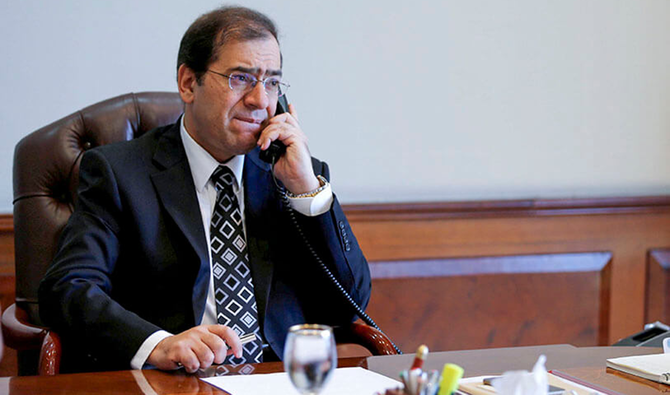
Egypt achieved self-sufficiency in natural gas in 3 years, Petroleum Minister says

Short Url
Updated 15 November 2021
Follow

Egypt achieved self-sufficiency in natural gas in 3 years, Petroleum Minister says

Egypt achieved self-sufficiency of natural gas in three years after the discovery of the Zohr gas field in 2015, Egypt’s Minister of Petroleum and Mineral Resources has said.

Speaking during the ADIPEC 2021 energy conference, Tarek El Mola said that Egypt has become a gas-exporting country and has achieved remarkable revenues during the first quarter of the current fiscal year.

He pointed out that Egypt will use these revenues to invest in the renewable energy sector to reduce emissions.

Zohr gas field is Egypt’s largest gas discovery in the Mediterranean, with production capacity exceeding three billion cubic feet per day, representing 40 percent of Egypt’s total gas output.

The gas field was discovered by the Italian Eni company, and has more than 30 trillion cubic feet of gas in place located within the Shorouk concession, approximately 190 km north of the city of Port Said.

The global energy event, ADIPEC 2021, is held in Abu Dhabi on Monday Nov. 15 until Nov. 18, with the participation of ministers, leaders and experts in the energy sector from around the world.


School, hotel outlays keep Saudi POS weekly spending above $3bn: SAMA

Updated 13 sec ago
Follow

School, hotel outlays keep Saudi POS weekly spending above $3bn: SAMA

RIYADH: Spending on education in Saudi Arabia increased by 4.3 percent for the week ending Jan. 10, while hotel outlays saw a 0.9 percent increase, aiding the total weekly spending to stay above $3 billion.

According to the latest data from the Saudi Central Bank, the overall point-of-sale value dropped 16.6 percent to SR14.2 billion ($3.79 billion) with transactions representing a 7.3 percent week-on-week decrease to 236.7 million.

This week saw negative changes across all the remaining sectors.

Spending in the freight transport, postal, and courier services sector saw the biggest decrease at 35.9 percent to SR47.60 million, followed by telecommunications, which posted a 26.2 percent drop to SR188.42 million.

Expenditure on apparel and clothing saw a fall of 19.3 percent to SR1.3 billion, followed by an 18.3 percent decrease in spending on books and stationery. Jewelry outlays saw a 22.3 percent decrease to reach SR422.54 million.

Spending on car rentals in Saudi Arabia fell by 14.2 percent, while airlines saw a 6.3 percent decrease to SR48.04 million.

Expenditure on food and beverages saw a 23.6 percent decrease to SR2.07 billion, claiming the largest share of the POS. Restaurants and cafes retained the second position despite a 7.3 percent dip to SR1.76 billion.

The Kingdom’s key urban centers mirrored the national decline. Riyadh, which accounted for the largest share of total POS spending, saw a 13.6 percent dip to SR4.85 billion, down from SR5.61 billion the previous week.

The number of transactions in the capital settled at 74.78 million, down 6.1 percent week on week.

In Jeddah, transaction values decreased by 9.5 percent to SR2.02 billion, while Dammam reported a 15 percent decrease to SR707.12 million.

POS data, tracked weekly by SAMA, provides an indicator of consumer spending trends and the ongoing growth of digital payments in the Kingdom. 

The data also highlights the expanding reach of POS infrastructure, extending beyond major retail hubs to smaller cities and service sectors, supporting broader digital inclusion initiatives. 

The growth of digital payment technologies aligns with Saudi Arabia’s Vision 2030 objectives, promoting electronic transactions and contributing to the Kingdom’s broader digital economy.