'The Bazaar,' showcasing traditional crafts, attracts thousands to Pakistan Pavilion at Dubai Expo

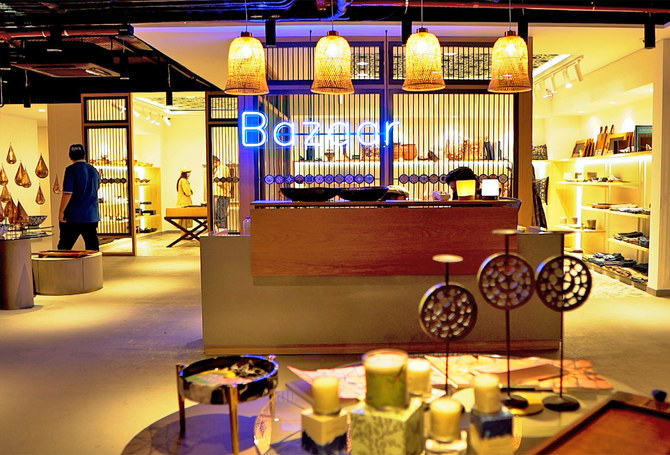
This picture taken on October 27, 2021, shows The Bazaar at the Pakistan Pavilion which has been attracting thousands of visitors at Expo 2020 in Dubai, UAE. (AN Photo)
Short Url
Updated 09 November 2021
Follow

'The Bazaar,' showcasing traditional crafts, attracts thousands to Pakistan Pavilion at Dubai Expo

  • Over 40 products highlighting different facets of Pakistani culture are displayed at the facility
  • Dubai Expo has participation from over 190 countries, multilateral organizations and businesses

DUBAI: From skillfully crafted bronze pieces to delicately fashioned lamps from Himalayan pink salt, The Bazaar is a place that offers a wide range of Pakistani crafts to people visiting the country’s pavilion at Dubai Expo 2020.
While the building’s colorful exterior has attracted thousands of people since the beginning of the global event, The Bazaar has become one of the most popular destinations within the facility.
According to the organizers of the place, over 40 products, representing different facets of the Pakistani culture, are displayed here to encourage investments and promote commerce.
Most of the items are from Koel, a homegrown store pioneered by Noorjehan Bilgrami, an artist and the principal curator of the Pakistan Pavilion.
Among the unique products for sale here are the intricately carved bronze items which benefit from Tanba Kari, a technique that dates back to 7,000 BCE. In its contemporary form, the craft is practiced by artisans in Pakistani cities of Peshawar and Lahore.
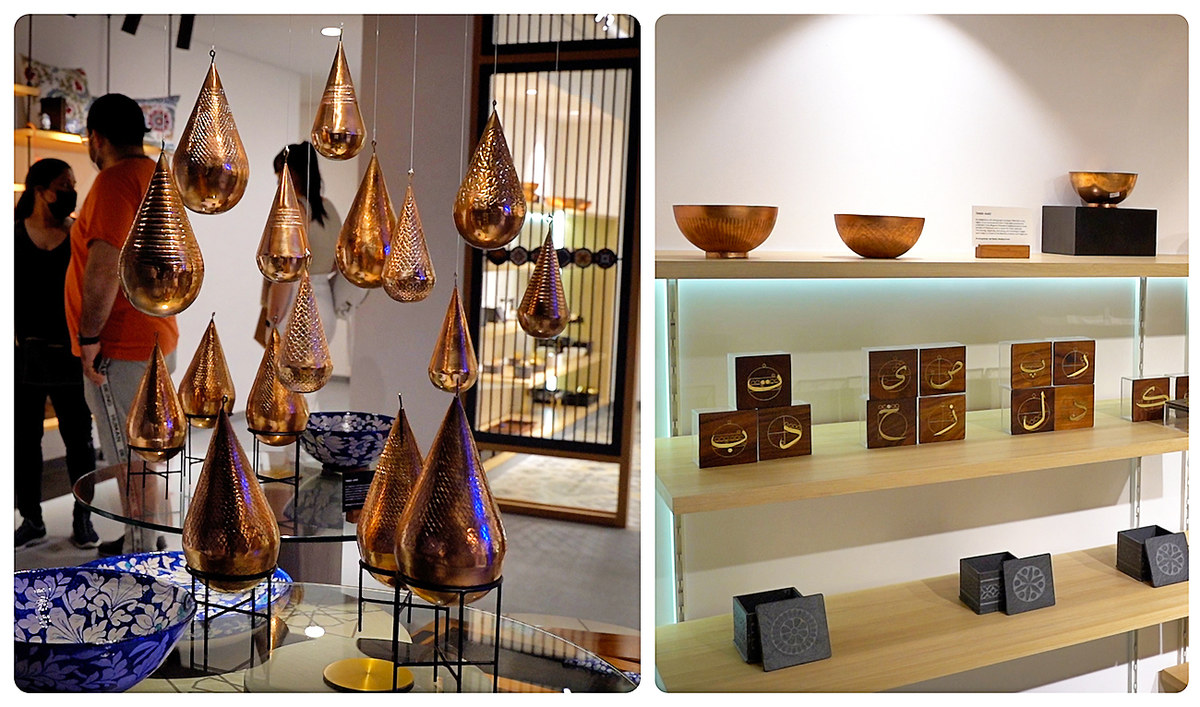


Bronze items made by using an indigenous craft called Tanba Kari are displayed at The Bazaar for visitors at the Pakistan Pavilion as Expo 2020 continues in Dubai, UAE, on October 27, 2021. (AN Photo by Asma Ali Zain)

The Bazaar offers visitors truck art as well that is also referred to as the art that moves. Truck art is a highly flamboyant representation of Pakistan’s culture.
Among other popular items at the venue are the country’s blue pottery products. The craft, also known as Kashikari, features beautiful hand-painted and glazed decoration pieces and cutlery done by craftsmen from Multan.
“The response has been outstanding and people have been praising the pavilion as well as the vibrant bazaar,” Afroz Abro, who looks after the Pakistan Pavilion’s marketing and programming, said on Monday.
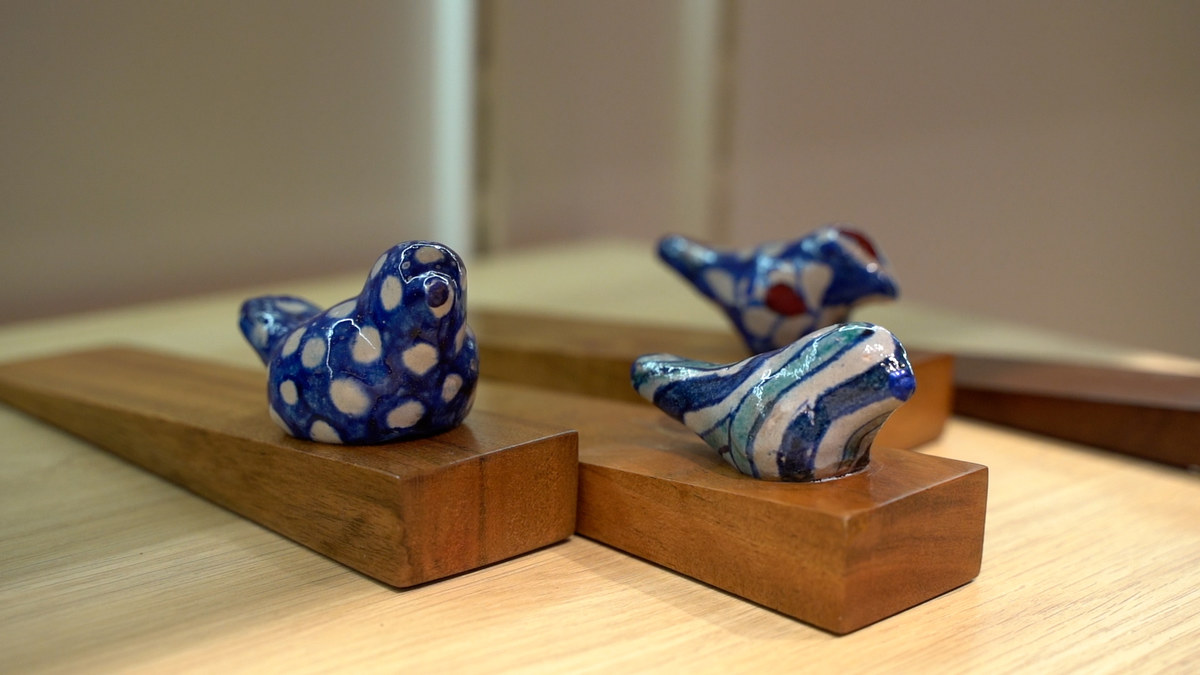


Traditional blue pottery products are displayed at the Pakistan Pavilion at Expo 2020 in Dubai, UAE, on October 27, 2021. (AN Photo by Asma Ali Zain)

“I am amazed at the artwork and products that are for sale here,” Claire Ross, a visitor to Pakistan Pavilion, told Arab New. “I have especially picked up some truck art pieces because I loved the use of the vibrant colors.”
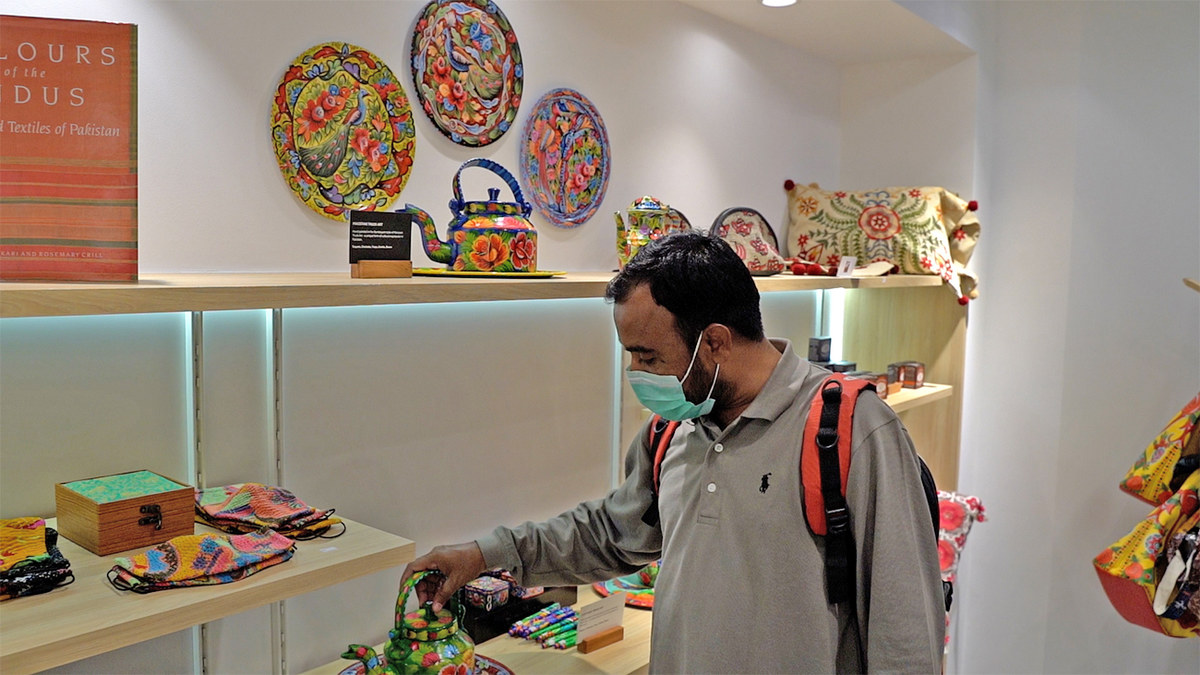


A visitor checks a tea kettle at the Pakistan Pavilion in Dubai, UAE, on October 27, 2021. (AN Photo by Asma Ali Zain)

Dubai Expo 2020 is the largest and most diverse exhibition in the region with participation from over 190 countries, multilateral organizations, and businesses. The expo commenced on October 1 and will last till March 31, 2022.


ADB approves $381 million for climate-resilient agriculture, social services in Punjab

Updated 8 sec ago
Follow

ADB approves $381 million for climate-resilient agriculture, social services in Punjab

  • Support will upgrade Punjab’s education and nursing systems, improving learning outcomes and health care capacity
  • Package includes $124 million for agriculture, $107 million for STEM schooling and $150 million for nursing reforms

KARACHI: The Asian Development Bank (ADB) said on Saturday it approved $381 million in financing for Pakistan’s Punjab province to modernize agriculture and strengthen education and health services, with a major focus on building climate resilience after monsoon floods this year caused widespread destruction across the country’s most populous province.

The package includes concessional loans and grants for farm mechanization, STEM education, and nursing sector reforms.

ADB said the investments are intended to help Punjab, home to more than half of Pakistan’s population and a key contributor to its economy, recover from climate shocks and transition toward more sustainable and resilient development.

“Investing in education, health, and agricultural mechanization will play a transformative role in driving the growth of Punjab, a vital pillar of Pakistan’s economy,” said ADB Country Director for Pakistan Emma Fan. “These strategic investments will modernize agriculture, enhance human capital, and significantly improve livelihoods for millions of people across Punjab.”

The bank approved $120 million in concessional loans and a $4 million grant for the Punjab Climate-Resilient and Low-Carbon Agriculture Mechanization Project, which will support 220,000 rural farm households.

The program aims to reduce climate vulnerability by shifting farmers toward modern, low-emission machinery, provide alternative livelihoods for agricultural workers and train 15,000 women in new skills. It will also introduce a financing model to help small farmers access advanced equipment.

Punjab produces most of Pakistan’s wheat, rice, and maize but still relies on outdated machinery, contributing to grain losses and routine burning of crop residues, a major source of air pollution, said ADB.

It noted the new project will promote modern mechanization, including rice harvesters, to address these issues.

ADB also approved $107 million for the Responsive, Ready, and Resilient STEM Secondary Education in Punjab Program, including a $7 million grant from the Asian Development Fund.

The results-based program aims to modernize secondary schooling by expanding inclusive STEM education, improving access and quality across the province.

A further $150 million concessional loan was approved for the Punjab Nursing and Health Workforce Reform Program, which will upgrade nursing curricula, develop disaster-resilient training facilities, strengthen workforce governance, and introduce digital human-resource systems.

The program seeks to expand the pool of qualified nurses to strengthen health service delivery and meet rising national and global demand.

Key components include the establishment of three centers of excellence in Lahore, Multan and Rawalpindi, equipped with simulation labs, digital learning platforms, and gender-responsive hostels.

ADB said it remains committed to supporting climate-resilient and inclusive development across Asia and the Pacific through innovative financing tools and partnerships.