At Expo Dubai, a spotlight on Balochistan at Pakistan Pavilion

This photo shows a seminar that was held at the Pakistan Pavilion in Dubai, United Arab Emirates, to promote investment and tourism opportunities in Balochistan on October 17, 2021. (Photo courtesy: Pakistan Pavilion Management)
Short Url
Updated 09 November 2021
Follow

At Expo Dubai, a spotlight on Balochistan at Pakistan Pavilion

  • Exhibition kicked off earlier this month and brought together representatives of more than 190 countries 
  • Pakistan to promote business potential, tourist attractions in other provinces in remaining five months 

DUBAI: The Pakistan Pavilion at Dubai Expo 2020 highlighted the investment opportunities, tourism potential and cultural magnificence of the country’s largest province of Balochistan throughout October, the organizers said on Wednesday. 

Described as “the event of the century,” the expo kicked off earlier this month and brought together representatives of more than 190 countries. 

The exhibition is the largest global gathering since the emergence of the coronavirus pandemic and will continue until April 2022. 

Speaking to Arab News, the organizers of the pavilion said they decided to use “Wonders of Balochistan” as the theme of the festival’s opening month to highlight the untapped potential of the country’s biggest province in terms of land area. 

“We arranged several events during October to promote the country’s largest federating unit of Balochistan,” said Afroz Abro, a senior official at the pavilion.  
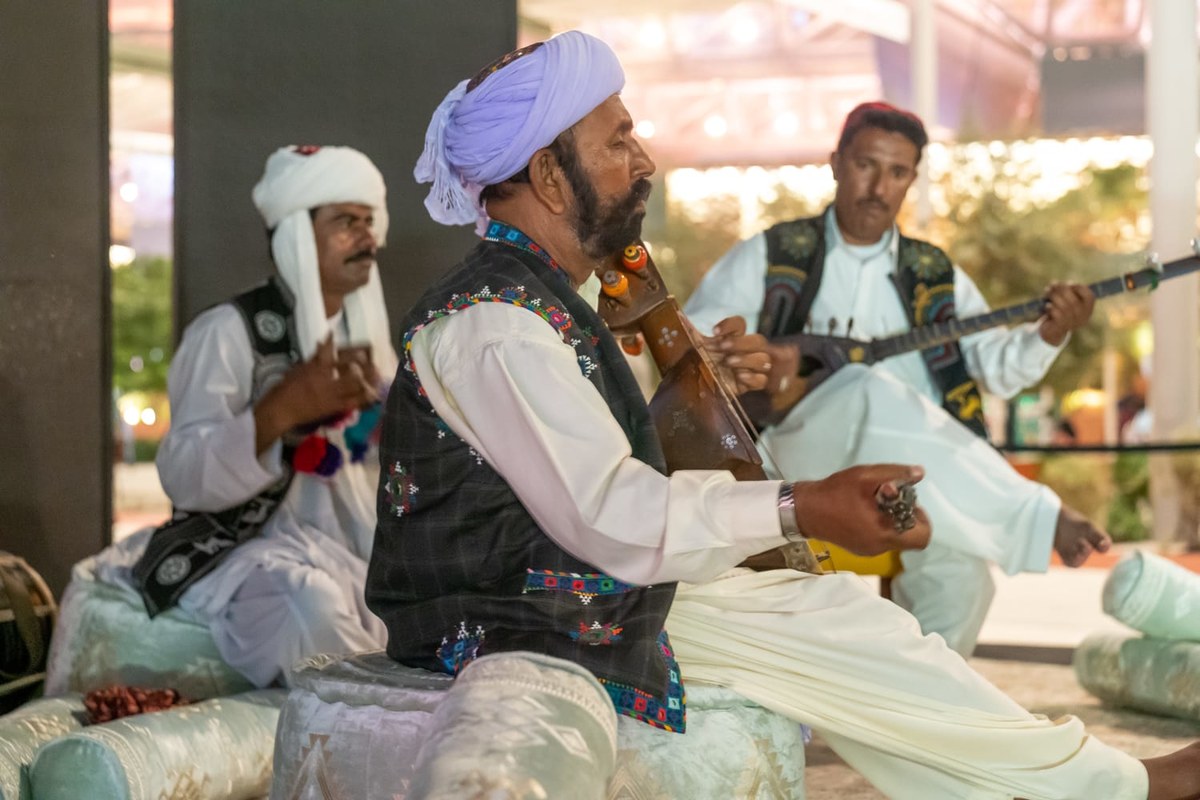


In this undated photo, a group of Baloch musicians can be seen performing a cultural show at the Pakistan Pavilion in Dubai, United Arab Emirates, during the month of October. (Photo courtesy: Pakistan Pavilion Management)

“The Wonders of Balochistan required us to focus on the country’s coastal belt, mines and mineral resources along with the possibility of generating renewable energy in the region. In other words, we tried to project all the strengths of the province during this month.” 

The management of the pavilion also arranged cultural shows, folk performances and a number of business seminars focusing on Balochistan. 

Abro said one such event centered on hi-tech business opportunities in the region, which was addressed by the provincial director of information technology who underscored the unlimited scope and potential for such businesses in Balochistan. 

He also mentioned the possibility of setting up Special Technology Zones and IT Parks in Quetta, Gwadar and Hub. 

The country’s Federal Board of Investment also held a two-day seminar on the Electric Vehicle Policy, while a session on carbon emissions was held by Malik Amin Aslam, Pakistan’s climate change minister, to promote the government’s Clean Green Pakistan initiative. 

The pavilion also ran the “Invest in Pakistan Campaign” during October by arranging multiple events for small and medium enterprises, government entities and entrepreneurs, Abro said. 

Artistes, such as the famous Baloch folk singer Akhtar Chanal Zahri, performed at the global arena and enthralled large numbers of people. 

“We arranged folk performances every evening in the courtyard of the pavilion,” Abro said, “which were attended by hundreds of visitors.” 

A British-Pakistani couple, living in Dubai for the last 10 years, described the Baloch cultural show as “exquisite.” 

“This is the second time we are visiting the pavilion and we are extremely impressed by the performance,” Naila Akhtar said. 

Her husband, Javed, nodded and said: “We did not understand what was being said, but we could still connect with the music.” 

The Pakistan Pavilion has dedicated the remaining five months of the expo to highlight the business potential and tourist attractions of other Pakistani provinces. 


Pakistan raises fuel prices by Rs55 per liter as Middle East conflict drives oil surge

Updated 06 March 2026
Follow

Pakistan raises fuel prices by Rs55 per liter as Middle East conflict drives oil surge

  • Government says adequate fuel stocks in place despite global energy shock
  • Oil prices jump from about $78 to over $106 per barrel amid regional conflict

ISLAMABAD: Pakistan on Friday increased petrol and diesel prices by Rs55 ($0.20) per liter each as escalating conflict in the Middle East sent global oil prices sharply higher and disrupted energy supply routes, officials said.

Global oil markets have been rattled since coordinated strikes by the United States and Israel against Iran began last week, triggering retaliatory attacks across the region, raising fears of disruption to key energy shipping routes and pushing petroleum prices sharply upward.

The price adjustment in Pakistan was announced after a joint press conference by Finance Minister Muhammad Aurangzeb, Deputy Prime Minister and Foreign Minister Ishaq Dar and Petroleum Minister Ali Pervaiz Malik, who said the government was monitoring international energy markets and domestic supply conditions amid the crisis.

“So, the decision we have made by changing the levy a little bit is that we are going ahead with increasing the price of both fuels, petrol and diesel, by Rs55 ($0.20),” Malik told reporters. 

“And as soon as this matter settles, we will revise the prices downward with the same speed and take steps on how to increase people’s income and purchasing power.”

He said Pakistan entered the crisis with “comfortable energy reserves” due to earlier planning but rising global prices had forced the government to adjust domestic fuel rates to maintain supply continuity.

He said international petrol prices had climbed from roughly $78 per barrel on March 1 to around $106.8 per barrel, while diesel prices had risen to about $150 per barrel.

Malik added that the government had taken steps to minimize the burden on consumers, noting diesel plays a critical role in agriculture, transportation and public mobility.

Malik also warned that authorities would take strict action against anyone attempting to hoard fuel or manipulate supply for profiteering.

The minister said Pakistan was working with international partners to secure additional energy supplies, including arrangements with Saudi Aramco and the use of Pakistan National Shipping Corporation vessels to transport crude oil imports.

Finance Minister Aurangzeb said a high-level government committee formed by Prime Minister Shehbaz Sharif had been meeting daily to review developments in global petroleum markets and their potential impact on Pakistan’s economy.

“Pakistan currently maintains adequate energy stocks and macroeconomic stability,” Aurangzeb said, adding that the government’s response was based on preparedness rather than panic.

He said the committee, which includes senior ministers, the governor of the State Bank of Pakistan and other officials, was assessing short-, medium- and long-term implications of the crisis for inflation, foreign exchange reserves and broader economic indicators.

Deputy PM Dar said the regional conflict had significantly disrupted global energy markets, with international petroleum prices rising by as much as 50–70 percent in recent days.

The deputy prime minister added that Pakistan was also engaged in diplomatic efforts aimed at de-escalating tensions and restoring stability in the region.

Petroleum prices will now be reviewed more frequently, potentially on a weekly basis, and any reduction in global oil prices would be passed on to consumers.

Pakistan, which relies heavily on imported fuel to meet its energy needs, is particularly vulnerable to global oil price shocks that can quickly feed into inflation and pressure the country’s external accounts.