- Four-member European Parliament delegation visited Islamabad last week ahead of review of Pakistan’s GPS+ status in February
- Luis Garicano, part of visiting delegation, says deteriorating rights situation "puts into question continuation of preferred trade status"
Islamabad: Luis Garicano, a member of a European Parliament delegation that visited Pakistan last week, has said Pakistan should not take its privileged trade status for granted, adding that Pakistan was making “no progress” on women and minority rights as well as its press freedom record, which it is required to do to get trade concessions beyond 2023.
This April, the European Parliament moved a resolution against Pakistan, seeking an immediate review of its eligibility for GSP+ status over what it called violence and discrimination against religious minorities and other vulnerable groups, as well as a crackdown on media. The EU Ambassador to Islamabad said last month the South Asian nation would have to “redouble” its efforts to meet international rights conventions in order to continue to be a part of the GSP+ scheme.
GSP+ is a special trade arrangement offered to developing economies by European nations in return for their commitment to implement 27 international conventions on human rights, environmental protection and governance.
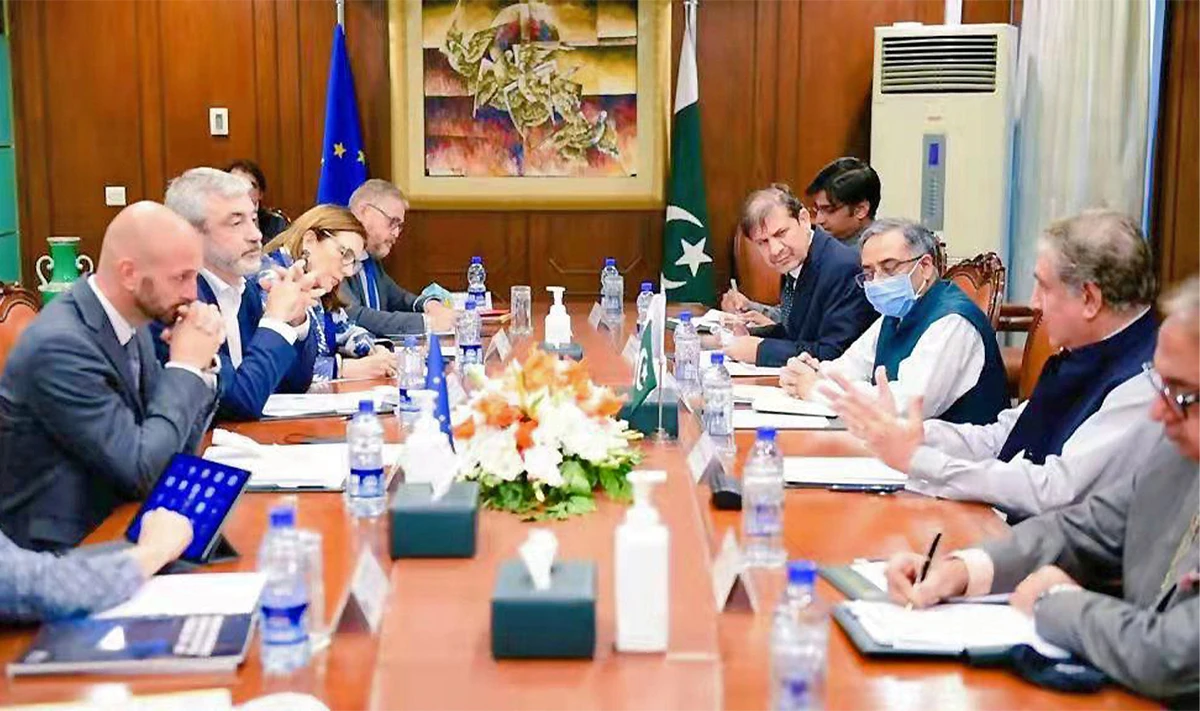
Last week, a four-member European Union Parliamentary Delegation for South Asia Relations visited Pakistan before the EU reviews its decision on the country’s GPS+ status in February.
“No progress on these matters,” Garicano, who was part of the delegation and a member of the legislative body’s Committee on Economic and Monetary Affairs, said on Twitter on Sunday, listing media freedom and women and minority rights. “Our message was clear: Pakistan should not take for granted its privileged trade status. EU has done its part, Pakistan must fulfill its own part.”
The European Parliament, Garicano said, was “very concerned about the deteriorating human rights situation, which puts into question the continuation of the preferred trade status of the country.”
Foreign Minister Shah Mahmood Qureshi said last Wednesday Pakistan was ready to implement all international conventions relating to its GSP+ status.
Speaking to Arab News, the prime minister’s adviser on trade and commerce Abdul Razak Dawood said last month Pakistan would have to file a fresh application for the new scheme.
“Pakistani products … have duty free access in all 27 member states of the European Union since January 1, 2014, until December 31, 2023,” Dawood said, adding that the EU periodically reviewed the commitment to the signed international conventions of all beneficiary nations.
Dawood said all nations, including Pakistan, would be required to ratify and implement five new international conventions, in addition to the previous 27 international covenants, to benefit from a new program to be adopted by the EU from 2024 to 2036.
The EU office in Islamabad said in a statement last month Pakistan was the largest beneficiary of the current GSP+ program.
“In the last monitoring reports, some progress has been positively highlighted, while concerns have been raised regarding child labor, torture, media freedom and access to justice, among others,” the EU statement said.
European Union Ambassador to Pakistan Androulla Kaminara said in a statement last month that Pakistan’s exports to Europe had increased by 60 percent since it was granted GSP+ status in 2014 but “in order to maintain the trade preferences under GSP Plus beyond 2023, Pakistan will have to redouble its efforts to turn the international conventions it signed into reality on the ground.”
“To make the case to be eligible under the new GSP Plus system, Pakistan, like any other potential beneficiary countries will have to demonstrate tangible progress to convince EU parliamentarians and member state governments.”
In fiscal year 2020-21, total bilateral trade with the EU was $ 10.88 billion.