

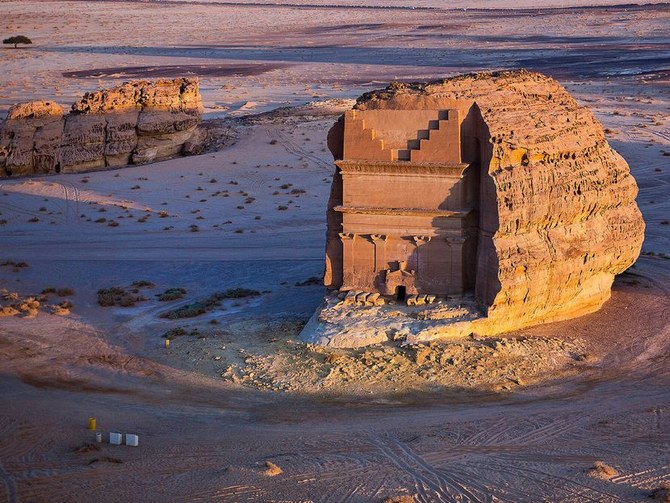
AlUla seeks to attract foreign investors in its $15bn first phase funding

The historical legacy of AlUla goes back thousands of years, when the oasis became the home of the Nabatean culture and eventually a trade hub in the Arabian Peninsula.
Short Url
Updated 29 October 2021
Follow

AlUla seeks to attract foreign investors in its $15bn first phase funding

  • Al-Madani says there is no conflict between project’s ambitions to preserve its legacy, and commercial development

RIYADH: AlUla, the leisure and cultural destination being created in the Saudi Arabian heartland, is looking to attract foreign and private sector investors to help fund the ambitious $15 billion first stage of the project, CEO Amr Al-Madani told Arab News.
“The equation is simple. Our opening program is a $15 billion package, including community and social programs such as schools, hospitals, and education. We are committed to fund as long as we need to, but we have great economics in place and some of the funds are reaching out to us. We hope to become a viable outlet for some of their funds,” he said.
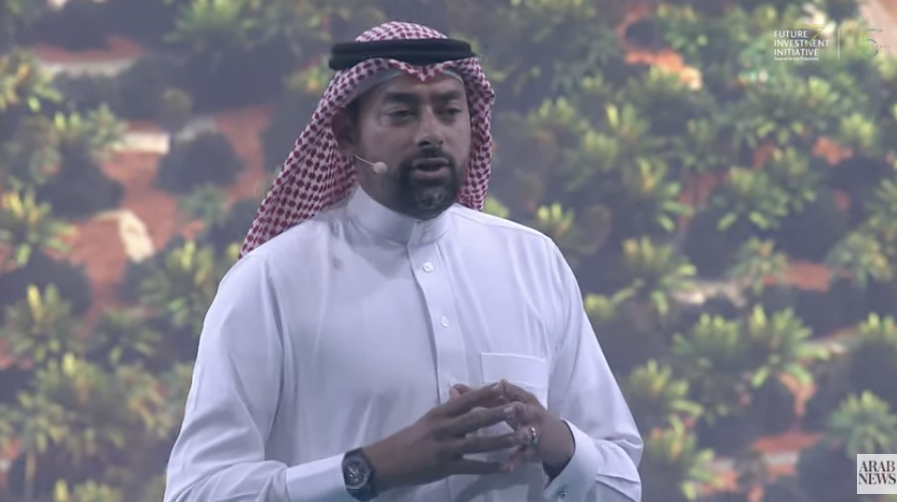


Amr Al-Madani

So far, the project has been funded to the extent of $2 billion by the Royal Commission for AlUla, but the move to seek private funding, from Saudi or international investors, marks a departure for AlUla.
Al-Madani put the total cost of the development at between $20 billion and $30 billion.
He was speaking on the sidelines of the FII 2021 forum in Riyadh, where much of the conversation among leading Saudi and global business people has been on the need to attract foreign direct investment into the Kingdom.

BACKGROUND

So far, the project has been funded to the extent of $2 billion by the Royal Commission for AlUla, but the move to seek private funding, from Saudi or international investors, marks a departure for AlUla.

Earlier in the week, the biggest investment fund in the world, the $10-trillion BlackRock group, agreed to help the Kingdom’s National Development Fund raise and manage a SR200 billion ($53 billion) fund to finance big infrastructure projects in the Kingdom as part of the Vision 2030 strategy of diversification.
At FII, AlUla signed a partnership with Aecom, the American infrastructure consulting firm, to accelerate the first phase of the project, along with a consortium of French companies.
“We are on our way to realizing AlUla as a journey through time and a place to visit when it comes to culture globally. Partnerships are the way to doing this. We celebrated this by engaging some of the top, most innovative companies in the world, that believe in our values and in the importance of eco-system regeneration and local community development and sensible development. We only want to work with those that believe in our vision.”
The historical legacy of AlUla goes back thousands of years, when the oasis became the home of the Nabatean culture and eventually a trade hub in the Arabian Peninsula.
Al-Madani said there was no conflict between the project’s ambitions to preserve and enhance its historical legacy, and the commercial development that will see upmarket tourism become a core feature in the development.


Saudi Arabia’s net FDI inflows jump 34.5% in Q3: GASTAT 

Updated 11 sec ago
Follow

Saudi Arabia’s net FDI inflows jump 34.5% in Q3: GASTAT 

RIYADH: Saudi Arabia’s foreign direct investment net inflows reached SR24.9 billion ($6.64 billion) in the third quarter of this year, marking a 34.5 percent increase from the same period in 2024, official data showed. 

According to a report by the General Authority for Statistics, net inflows also rose 5.2 percent in the third quarter compared with the previous three months. 

The increase reflects Saudi Arabia’s broader efforts to attract long-term foreign capital under its Vision 2030 strategy, which aims to diversify the economy beyond oil revenues. Under the program, the Kingdom is targeting $100 billion in annual FDI by 2030. 

In its latest by GASTAT stated: “The value of FDI inflows amounted to about SR27.7 billion during the third quarter of this year. It achieved an increase of 4.4 percent compared to the third quarter of 2024, which was approximately SR26.5 billion.”   

The report added that FDI inflows rose 3.3 percent in the third quarter compared with the previous three months. 

Saudi Arabia has been implementing regulatory reforms, opening up sectors such as tourism, renewable energy, and technology to international investors, while launching initiatives through the Ministry of Investment to attract foreign capital. 

According to GASTAT, FDI outflows amounted to about SR2.7 billion in the third quarter, representing a 65.7 percent decline from the same period in 2024. Compared with the second quarter, outflows fell 11.4 percent. 

In a separate release in September, GASTAT said FDI inflows rose 24 percent in 2024 to SR119 billion, even as global investment flows slowed. At the time, the Ministry of Investment said inflows had exceeded the National Investment Strategy’s annual target of SR109 billion. 

The ministry added that Saudi Arabia has surpassed its FDI goals for four consecutive years, with annual targets set to rise from SR140 billion in 2025 to SR388 billion by 2030. 

Commenting earlier on the 2024 performance, Investment Minister Khalid Al-Falih said the steady flow of foreign investment, despite global challenges, reflects the Kingdom’s ability to navigate economic headwinds.