

PIF-owned ACWA Power to become a net zero energy producer, CEO says

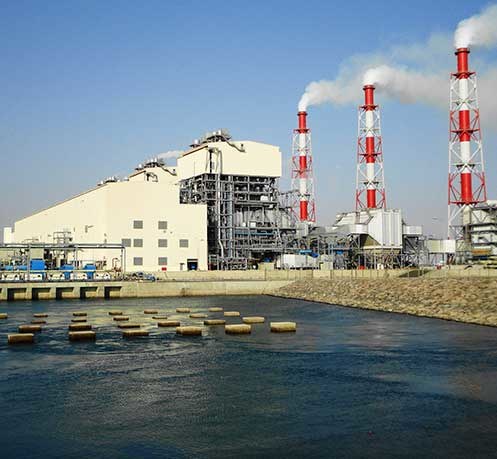
This is the second phase of the Shuqaiq complex that produces water and power for the Assir region and city of Jizan. Shuqaiq is among the 1st projects for ACWA Power (Supplied)
Short Url
Updated 21 October 2021
Follow

PIF-owned ACWA Power to become a net zero energy producer, CEO says

RIYADH: The head of ACWA Power, Saudi Arabia’s only listed company with ambitious renewable projects, plans to end investment in non-renewable schemes as part of the business’s commitment to reaching net zero by 2050.

Speaking ahead of the Saudi Green Initiative forum that will be held in Riyadh on October 23, Paddy Padmanathan, chief executive of ACWA Power, which floated on the Kingdom’s stock exchange earlier this month, told Arab News: “We want to reduce carbon emissions, because climate change is real. We can see it, we can feel it.”

Riyadh-based ACWA, which is 44 percent owned by Saudi Arabia's sovereign wealth fund PIF, is the Kingdom’s most high-profile entity for building renewable energy and hydrogen projects.

The company is expected to deliver at least 70 percent of Saudi Arabia’s renewable schemes by 2030, and is forecast to take part in around $30 billion worth of green projects over the next 10 years, as the Kingdom’s strategy to diversify its economy away from fossil fuels gathers pace. 

ACWA began trading on the Saudi stock market this month after selling an 11 percent stake. The move values the entire company at $10.9 billion.

Padmanathan said: “We will not invest in coal going forward, we will not do any more coal power plants.  We will not obviously do anymore oil. In terms of our existing oil-fired power plants in the Kingdom, the government is committed to shutting those down by 2030, so we'll be working with them on how to shut those down, and then repower them all. The existing fleet of oil assessed will get phased out over the next nine years by repowering.”

Padmanathan confirmed that gas projects will still form part of ACWA’s portfolio but added the business would be “very careful and very selective” about the type of gas-fired power plant schemes it becomes involved in.

He said: “We are working with Saudi counterparts on how best to manage the portfolio in terms of carbon elimination.”

Padmanathan said the increasing reduction in the cost of producing renewable energy means even Middle East petrostates will be able to power their countries more cost effectively with green energy, particularly through increased investment in solar technology.

He said: “Conveniently, the cost comes down to such an extent that for a big part of the energy consumed today it is the cheapest option even for a country like Saudi Arabia, which is blessed with such a low cost of production of fossil fuels, to produce its energy.”

He added: “We have also been able to produce low-cost renewable energy through electrolysis to produce hydrogen, so can now contemplate producing green hydrogen [which doesn’t involve the use of fossil fuels].”

ACWA holds a one-third stake in the massive $5 billion Neom project which will be powered entirely by solar and wind, and will be one of the world’s largest green hydrogen plants when it opens in 2025.


Saudi Arabia’s cultural sector is a new economic engine between Riyadh and Paris, says ambassador

Updated 25 January 2026
Follow

Saudi Arabia’s cultural sector is a new economic engine between Riyadh and Paris, says ambassador

RIYADH: Culture has become a fundamental pillar in bilateral relations between France and Saudi Arabia, according to the French Ambassador to the Kingdom, Patrick Maisonnave.

Maisonnave noted its connection to the entertainment and tourism sectors, which makes it a new engine for economic cooperation between Riyadh and Paris.

He told Al-Eqtisadiah during the opening ceremony of La Fabrique in the Jax district of Diriyah that cultural cooperation with Saudi Arabia is an important element for its attractiveness in the coming decades.

La Fabrique is a space dedicated to artistic creativity and cultural exchange, launched as part of a partnership between the Riyadh Art program and the French Institute in Riyadh. 

Running from Jan. 22 until Feb 14, the initiative will provide an open workspace that allows artists to develop and work on their ideas within a collaborative framework.

Launching La Fabrique as a space dedicated to artistic creativity

The ambassador highlighted that the transformation journey in the Kingdom under Vision 2030 has contributed to the emergence of a new generation of young artists and creators, alongside a growing desire in Saudi society to connect with culture and to embrace what is happening globally. 

He affirmed that the relationship between the two countries is “profound, even cultural par excellence,” with interest from the Saudi side in French culture, matched by increasing interest from the French public and cultural institutions unfolding in the Kingdom.

Latest estimates indicate that the culture-based economy represents about 2.3 percent of France’s gross domestic product, equivalent to more than 90 billion euros ($106.4 billion) in annual revenues, according to government data. The sector directly employs more than 600,000 people, making it one of the largest job-creating sectors in the fields of creativity, publishing, cinema, and visual arts.

Saudi Arabia benefiting from French experience in the cultural field

Maisonnave explained that France possesses established cultural institutions, while Saudi Arabia is building a strong cultural sector, which opens the door for cooperation opportunities.

This comes as an extension of the signing of 10 major cultural agreements a year ago between French and Saudi institutions, aiming to enhance cooperation and transfer French expertise and knowledge to contribute to the development of the cultural system in the Kingdom.

He added that experiences like La Fabrique provide an opportunity to meet the new generation of Saudi creators, who have expressed interest in connecting with French institutions and artists in Paris and France.

La Fabrique encompasses a space for multiple contemporary artistic practices, including performance arts, digital and interactive arts, photography, music, and cinema, while providing the public with an opportunity to witness the stages of producing artistic works and interact with the creative process.