

UK competition watchdog to examine music streaming market

Short Url
Updated 19 October 2021
Follow

UK competition watchdog to examine music streaming market

  • Initial market study could lead to full investigation

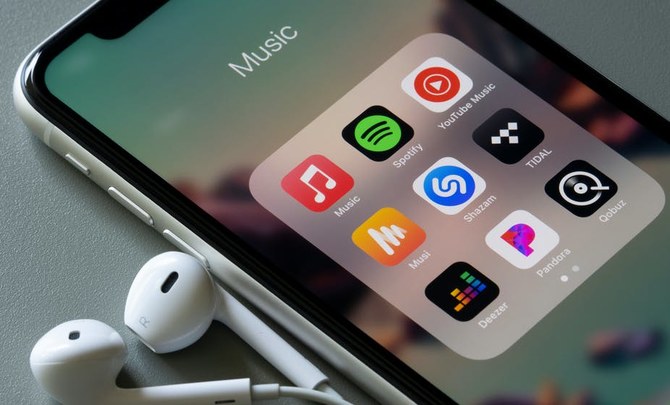
LONDON: Britain’s competition regulator plans to launch an examination of the music streaming market to see whether a sector dominated by platforms such as Spotify and Apple works for consumers.

The watchdog’s announcement on Tuesday follows a report from a UK parliamentary committee this year, which warned that the ties between music majors and streaming platforms could stifle innovation in the sector.

“The UK has a love affair with music and is home to many of the world's most popular artists,” CMA Chief Executive Andrea Coscelli said. “We want to do everything we can to ensure that this sector is competitive, thriving and works in the interests of music lovers.”

A market study is used to examine a sector and decide if an intervention is needed. Outcomes can include asking the government to change regulations, encouraging businesses to self-regulate, taking action against companies and a full, in-depth investigation.

A spokesperson for Spotify declined to comment. The British music industry body, the BPI, said it welcomed the study. “We look forward to seeing the scope of the project in due course and engaging with the CMA to inform its work,” it said.

Britain's Competition and Markets Authority has taken an increasingly proactive role in the regulation of digital markets, with investigations already launched into the power of Google, Facebook and Apple in different parts of the ecosystem.

It said it would now turn its sights to music streaming which, in Britain, accounts for 80 percent of music consumption and is dominated by the likes of Spotify, Apple Music, Amazon and Alphabet Inc-owned YouTube.

Having been hammered by piracy in the late 1990s, the music industry moved toward a streaming model backed by either advertising or subscriptions as a way to secure more sustainable revenue for the sector.

Official figures show that the global recorded music market rose by 7.4 percent in 2020 to $21.6 billion, with a jump in demand for paid streaming services leading the way.

A British report on the sector showed that there were 139 billion audio streams in total last year. Despite the growth, artists have long complained that they do not receive a fair share from streaming platforms.

The UK parliamentary report also noted that the three major music companies, Universal, Sony and Warner , also covered up to 75 percent of the UK recording market and had close ties with streaming platforms, prompting lawmakers to question the level of competition in the sector.


Saudi Arabia leads outcome-based education to prepare future-ready generations: Harvard Business Review

A Harvard sign is seen at the Harvard University campus in Boston, Massachusetts, on May 27, 2025. (AFP)
Updated 10 February 2026
Follow

Saudi Arabia leads outcome-based education to prepare future-ready generations: Harvard Business Review

  • The Riyadh-based school group developed a strategy that links every classroom activity to measurable student competencies, aiming to graduate learners equipped for the digital economy and real-world contexts

RIYADH: Saudi Arabia’s education system is undergoing a sweeping transformation aligned with Vision 2030, shifting from traditional, input-focused methods to outcome-based education designed to equip students with future-ready skills, Harvard Business Review Arabic reported.

The transformation is being adopted and spearheaded by institutions such as Al-Nobala Private Schools, which introduced the Kingdom’s first national “learning outcomes framework,” aimed at preparing a generation of leaders and innovators for an AI-driven future, the report said.

Al-Nobala has leveraged international expertise to localize advanced learning methodologies.

The Riyadh-based school group developed a strategy that links every classroom activity to measurable student competencies, aiming to graduate learners equipped for the digital economy and real-world contexts. The school’s group approach combines traditional values with 21st-century skills such as critical thinking, communication, innovation and digital fluency.

According to the report, the shift addresses the growing gap between outdated models built for low-tech, resource-constrained environments and today’s dynamic world, where learners must navigate real-time information, virtual platforms, and smart technologies.

“This is not just about teaching content, it’s about creating impact,” the report noted, citing how Al-Nobala’s model prepares students to thrive in an AI-driven world while aligning with national priorities.

The report noted that Saudi Arabia’s Ministry of Education has paved the way for this shift by transitioning from a centralized controller to a strategic enabler, allowing schools such as Al-Nobala to tailor their curriculum to meet evolving market and societal needs. This is part of the long-term goal to place the Kingdom among the top 20 global education systems.

Al-Nobala’s work, the report stated, has succeeded in serving the broader national effort to link education outcomes directly to labor market demands, helping to fulfill the Vision 2030 pillar of building a vibrant society with a thriving economy driven by knowledge and innovation.

Last February, Yousef bin Abdullah Al-Benyan, Saudi Arabia’s minister of education, said that the Kingdom was making “an unprecedented investment in education,” with spending aligned to the needs of growth and development. He said that in 2025, education received the second-largest share of the state budget, totaling $53.5 billion.