Iraq signs 1.5 GW solar deals with UAE's Masdar, Norway-led consortium

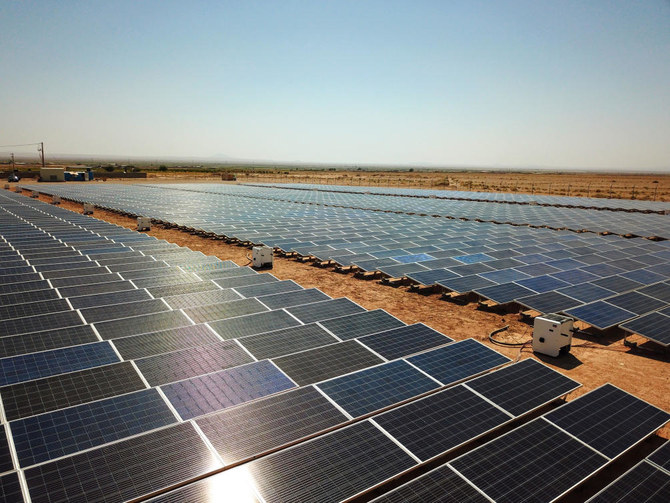
Iraq has grown dependent on gas and electricity imports from neighboring Iran, under exemptions to US sanctions on Tehran. (Shutterstock)
Short Url
Updated 08 October 2021
Follow

Iraq signs 1.5 GW solar deals with UAE's Masdar, Norway-led consortium

  • Iraq signs deals for five solar parks with Masdar and two with Scatec consortium

BAGHDAD: Power-starved Iraq on Thursday signed a deal with a Norwegian-led consortium to build two solar power plants, officials said, a day after inking a similar agreement with the UAE.
War-scarred Iraq is the second-largest producer in the Organization of the Petroleum Exporting Countries (OPEC), but the country faces a severe energy crisis and chronic power cuts that feed social discontent.
Thursday’s agreement with the consortium led by Scatec is for the construction of two solar plants south of Baghdad with a total capacity of 525 megawatts (MW), the oil ministry said.
The project will cost around $500 million, with one plant to be built in Karbala and the other in Babel, it said.
“It is a step toward the development of durable energy,” Oil Minister Ihssan Ismail told a news conference.
Abdelaziz Atribi, Scatec’s vice president for the Middle East and North Africa, told AFP construction should begin “as quickly as possible” and take about a year.
The consortium also includes Egypt’s Orascom Construction and Iraq’s private Albilal Group.
Iraq on Wednesday inked an agreement with UAE-based renewable energy company Masdar to build five solar power plants with a total capacity of 1,000 MW.
They are part of deals with which Iraq aims to add 7,500 MW to its grid by 2023, Suha Daoud Najjar who heads the state’s investment authority, told AFP.
Iraq’s crude accounts for more than 90 percent of Baghdad’s revenues, but decades of conflict, poor maintenance and rampant corruption have battered its energy sector.
Iraq currently produces 16,000 MW of electricity, far short of the estimated 24,000-MW needs of its fast-growing population which the UN says is expected to double by 2050.
Iraq has grown dependent on gas and electricity imports from neighboring Iran, under exemptions to US sanctions on Tehran.
In September, Iraq signed a multi-billion-dollar contract with France’s TotalEnergies on projects including the construction of a 1,000-MW solar plant to supply the southern region of Basra.


Saudi minister at Davos urges collaboration on minerals

Global collaboration on minerals essential to ease geopolitical tensions and secure supply, WEF hears. (Supplied)
Updated 20 January 2026
Follow

Saudi minister at Davos urges collaboration on minerals

  • The reason of the tension of geopolitics is actually the criticality of the minerals

LONDON: Countries need to collaborate on mining and resources to help avoid geopolitical tensions, Saudi Arabia’s minister of industry and mineral resources told the World Economic Forum on Tuesday.

“The reason of the tension of geopolitics is actually the criticality of the minerals, the concentration in different areas of the world,” Bandar Alkhorayef told a panel discussion on the geopolitics of materials.

“The rational thing to do is to collaborate, and that’s what we are doing,” he added. “We are creating a platform of collaboration in Saudi Arabia.”

Bandar Alkhorayef, Saudi Minister of Industry and Mineral Resources 

The Kingdom last week hosted the Future Minerals Forum in Riyadh. Alkhorayef said the platform was launched by the government in 2022 as a contribution to the global community. “It’s very important to have a global movement, and that’s why we launched the Future Minerals Forum,” he said. “It is the most important platform of global mining leaders.”

The Kingdom has made mining one of the key pillars of its economy, rapidly expanding the sector under the Vision 2030 reform program with an eye on diversification. Saudi Arabia has an estimated $2.5 trillion in mineral wealth and the ramping up of extraction comes at a time of intense global competition for resources to drive technological development in areas like AI and renewables.

“We realized that unlocking the value that we have in our natural resources, of the different minerals that we have, will definitely help our economy to grow to diversify,” Alkhorayef said. The Kingdom has worked to reduce the timelines required to set up mines while also protecting local communities, he added. Obtaining mining permits in Saudi Arabia has been reduced to just 30 to 90 days compared to the many years required in other countries, Alkhorayef said.

“We learned very, very early that permitting is a bottleneck in the system,” he added. “We all know, and we have to be very, very frank about this, that mining doesn’t have a good reputation globally.

“We are trying to change this and cutting down the licensing process doesn’t only solve it. You need also to show the communities the impact of the mining on their lives.”

Saudi Arabia’s new mining investment laws have placed great emphasis on the development of society and local communities, along with protecting the environment and incorporating new technologies, Alkhorayef said. “We want to build the future mines; we don’t want to build old mines.”