

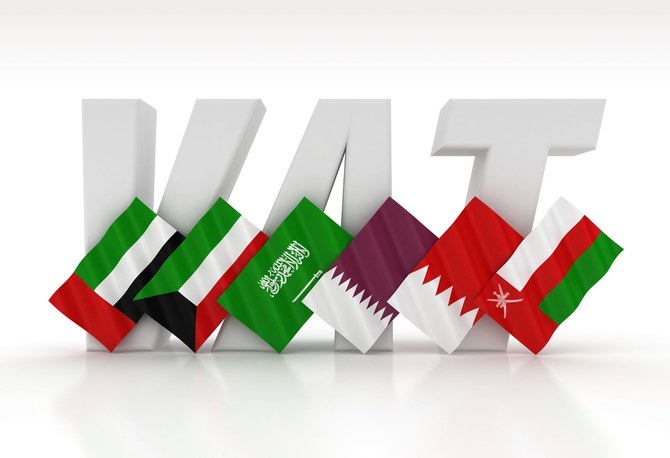
Capital Economics expects Gulf states to reduce VAT on higher oil revenues

Image: (Shutterstock)
Short Url
Updated 08 October 2021
Follow

Capital Economics expects Gulf states to reduce VAT on higher oil revenues

CAIRO: In spite of possible price drops in oil next year, Capital Economics expects that the GCC countries’ revenue from oil exports will intensify in 2022 as oil production is set to increase considerably.

This comes at the backdrop of this month’s OPEC+ meeting which resulted in higher prices of oil on Wednesday. The London-based firm, however, predicts that this trend is not sustainable and states that a fall in oil prices is on the horizon.

While the surge in oil exports will enhance the Gulf countries’ fiscal positions, Capital Economics says that the situation remains diverse for different countries. 

Due to the Saudi Arabia’s tight policy and expected spending cuts, the country is in a favorable position to ease up on VAT rates and the revenue side. The situation is similar in the UAE and Qatar as well, the firm added.

However, a tightening of policy should be a priority for Oman and Bahrain, the economic research company noted, as they need “further fiscal consolidation.”

The firm also laid out its forecasts for the soon-released inflation rates for Saudi Arabia and Egypt. 

A slight increase in annual inflation rate is projected for the Kingdom in September, rising from 0.3 percent in August to 0.4 percent in September. This is mainly the result of price increases in food.

While global supply chain issues are gaining momentum and could have adverse effects on inflation, the company reassured that the Saudi “inflation will remain weak at 1-1.5 percent y/y over the course of 2022-23.”

Concerning Egypt, Capital Economics expects that Egypt’s yearly inflation rate will increase to 6.2 percent in September, up from 5.4 percent in August. As was the case for Saudi Arabia, food inflation is inducing this price hike.

The company added that this will likely prevent the Egyptian Central Bank from cutting rates this month. 


Saudi POS spending opens 2026 with a 31% surge: SAMA 

Updated 4 sec ago
Follow

Saudi POS spending opens 2026 with a 31% surge: SAMA 

RIYADH: Saudi Arabia’s total point-of-sale transactions reached SR17 billion ($4.5 billion) in the week ending Jan. 3, with all sectors recording positive weekly growth. 

According to the latest data from the Saudi Central Bank, the total POS value represented a 30.6 percent week-on-week increase, while the number of transactions rose 15.7 percent to 255.36 million. 

Spending on freight transport, postal and courier services recorded the sharpest increase, surging 110.9 percent to SR74.22 million, followed by education, which rose 66.4 percent to SR235.51 million. 

Expenditure on personal care increased by 31.7 percent, while spending on books and stationery rose 36 percent. Jewelry outlays climbed 48 percent to SR544.12 million. 

Further gains were recorded across other categories. Spending at pharmacies on medical supplies rose 42.1 percent to SR284.81 million, while expenditure on medical services increased 20.8 percent to SR556.27 million. 

The food and beverages sector saw outlays rise 41.4 percent to SR2.7 billion, accounting for the largest share of POS transactions.

Restaurants and cafes followed with a 20.9 percent increase to SR1.9 billion, while apparel and clothing spending rose 30 percent to SR1.6 billion, ranking third. 

Together, the top three categories accounted for approximately 36.53 percent of total POS spending, or SR6.22 billion. 

Saudi Arabia’s major urban centers mirrored the national surge.

Riyadh, which accounted for the largest share of POS spending, saw a 21 percent increase to SR5.61 billion, up from SR4.63 billion the previous week.

The number of transactions in the capital rose 12.2 percent to 79.6 million. 

In Jeddah, transaction values increased 25.6 percent to SR2.24 billion, while Dammam posted a 26.1 percent rise to SR831.93 million. 

POS data, tracked weekly by SAMA, provides an indicator of consumer spending trends and the ongoing growth of digital payments in Saudi Arabia. 

The data also highlights the expanding reach of POS infrastructure, extending beyond major retail hubs to smaller cities and service sectors, supporting broader digital inclusion initiatives. 

The growth of digital payment technologies aligns with Saudi Arabia’s Vision 2030 objectives, promoting electronic transactions and contributing to the Kingdom’s broader digital economy.