


ISLAMABAD: Pakistani President Dr. Arif Alvi on Wednesday signed an ordinance that curtails the jurisdiction of the country’s anti-corruption watchdog by excluding key government entities from the ambit of investigations and enables the president to reappoint the body’s chief or extend their tenure.
The government and the opposition in Pakistan have been at loggerheads in recent weeks over the legislation which allows key changes in the National Accountability Bureau (NAB). The opposition says the amendments will allow the government to use NAB to go after political opponents.
Opposition members have been calling the National Accountability (Second Amendment) Ordinance, 2021 another NRO (National Reconciliation Ordinance), a controversial law passed in 2007 to “promote national reconciliation” by offering amnesty to politicians during former military dictator Pervez Musharraf’s reign. In Pakistan’s political lexicon, using the word NRO is the equivalent of saying someone is being unfairly let off the hook.
As per the new ordinance, its provision will not be applicable to the following persons or transactions:
“All matters pertaining to Federal, Provincial or Local taxation, other levies or imposts, including concealments, refunds, criminality, criminal intention or loss of exchequer pertaining to taxation; decisions of Federal or Provincial Cabinet, their Committees or Sub-Committees, Council of Common Interests (CCI), National Economic Council (NEC), National Finance Commission (NFC), Executive Committee of the National Economic Council (ECNEC), Central Development Working Party (CDWP), Provincial Development Working Party (PDWP) and Departmental Development Working Party (DDWP), or decisions of the Boards of the State Bank of Pakistan,” a copy of the document seen by Arab News says.
The ordinance’s provisions will also not apply to any “person or entity, which are not directly or indirectly connected with the holder of a public office; procedural lapses in any public or governmental work, project or scheme, unless it is shown that a holder of public office or any other person has been conferred or has received any monetary or other material benefit from that particular public or governmental work, whether directly or indirectly on account of such procedural lapses, which the said recipient was otherwise not entitled to receive; an advice, report or opinion rendered or given by a public office holder or any other person in the course of his duty, unless there is sufficient evidence to show that the holder of public office or any other person received or gained any monetary or other material benefit, whether directly or indirectly, on account of such advise, opinion or report, which the said recipient was otherwise not entitled to receive.”
To grant extension in the tenure of the NAB chairman, sub-section b of Section 6 of the National Accountability Ordinance (NAO) has been amended by excluding the word “non-extendable” from the statute.
The amended ordinance has retained the provision that requires consultation between the opposition leader and the leader of the house in the National Assembly for the appointment of the NAB chairman. But the section states that the president would consult both of them.
“There shall be a Chairman, National Accountability Bureau to be appointed by the President in consultation with the Leader of the House and the Leader of the Opposition in the National Assembly. The Chairman shall hold office for a period of four years on such terms and conditions as may be determined by the President and shall not be removed from office except on grounds provided for the removal of a Judge of Supreme Court in the manner and by the forum provided under Article 209 of the Constitution of Pakistan,” the document reads.
“Provided that on expiry of the period of four years, the incumbent Chairman may be appointed for another period of four years by the President...”
The ordinance has enhanced the authority of the NAB prosecutor general, empowering him to play a crucial role in advising the chairman to file or withdraw any reference from a court.
It has also allowed the accountability court to grant bail to any accused. Under the NAB law previously, there was no provision of granting bail to the accused as an under-custody suspect could only apply for bail after the expiry of his 90-day remand and that too under the extraordinary jurisdiction of the high court, under Article 199 of the Constitution of Pakistan, which empowers the court to enforce fundamental rights.
The ordinance also allows the appointment of retired judges of high courts as accountability judges. In addition, it provides that a district and sessions judge and an additional district and sessions judge may also be designated as the judge of an accountability court with the consent of the chief justice of the concerned high court.
Opposition parties have criticized the government over the amended law.
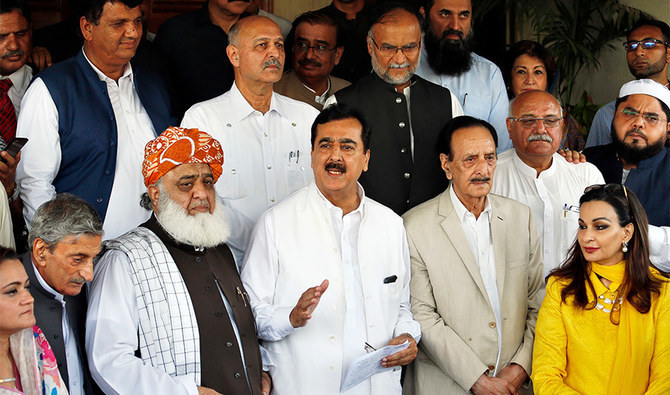
Pakistan People’s Party (PPP) lawmaker Shazia Marri said the government’s move to extend the tenure of the NAB chief was tantamount to “distorting the constitution and law of the country.”
حکومت کی جانب سے نیب چیئرمین کی مدت میں آرڈیننس کے ذریعےتوسیع آیئن اور قانون کو مسخ کرنے کے مترادف ہے۔
موجودہ نیب چیئرمین نے پی ٹی آئی حکومت کےوزیروں و مشیروں کو ریلیف دی۔
عمران خان کاہیلی کاپٹرکیس اچانک بند، مالمجبا کیس سرد خانے میں،پشاور بی آرٹی اور راولپنڈی رنگ روڈ کا کیا ہوا؟— Shazia Atta Marri (@ShaziaAttaMarri) October 6, 2021
Marriyum Aurangzeb, the spokesperson of the Pakistan Muslim League-Nawaz (PML-N), said the procedure to appoint the NAB chairman was already enshrined in the constitution.
چئیرمن نیب کی تقرری کا طریقہ کار آئین پاکستان میں درج ہےفواد چوہدری اپنے جیسے مشورے اپنے پاس ہی رکھیں یہ چیئرمین نیب کی نوکری میں توسیع نہیں بلکہ آٹا چینی بجلی گیس دوائی چور اے ٹی ایمز کو عمران صاحب کا این آر او ہے
— Marriyum Aurangzeb (@Marriyum_A) October 5, 2021
The Awami National Party (ANP) also rejected the extension in the tenure of the NAB chairman through the ordinance, describing it as a violation of the constitution.


