
KARACHI: Pakistan’s imports of used clothing have nearly doubled this year compared to last year as more and more people flock to markets selling secondhand clothes on account of rising inflation and poverty, traders and experts said.
During the last fiscal year (FY21), imports of secondhand clothes rose by 90 percent in terms of quantity to 732,623 metric tons, and were worth $309.56 million, which is a 83.43 percent rise in terms of value as compared to the previous fiscal year (FY20), according to data from the Pakistan Bureau of Statistics.
Pakistan imported 186,299 metric tons of pre-worn clothes during the first two months (July-August) of the fiscal year 2021-22, a 283 percent rise compared to the same period last year.
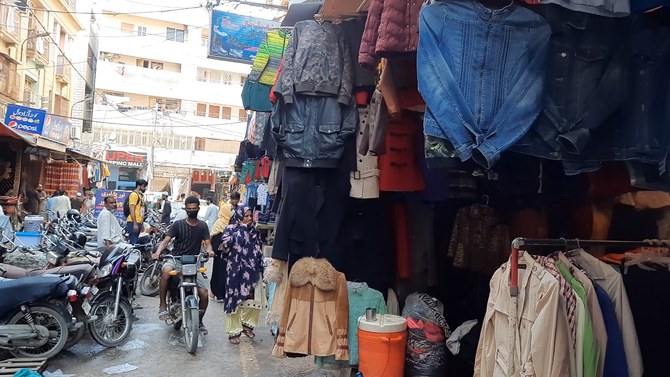
Imported clothes on display as traders and vendors go about their business at a secondhand clothes market on MA Jinnah Road in Karachi, Pakistan, on October 5, 2021. (AN Photo)
Also in the same period, the country spent $79 million on the import of used clothing items, which is 273.4 percent higher than the previous year.
Inflation stood at nine percent in September this year.
“The use and the import of secondhand clothes is rising due to high inflationary trends in the country,” Muhammad Usman Farooqui, the general secretary of the Pakistan Second-hand Clothing Merchants Association (PSHCMA), told Arab News.
“Those who were not previously using secondhand clothes are now turning toward the used clothing market day by day, with majority consumers based in northern parts of the country where extreme weather conditions coupled with poverty are causative factors.”
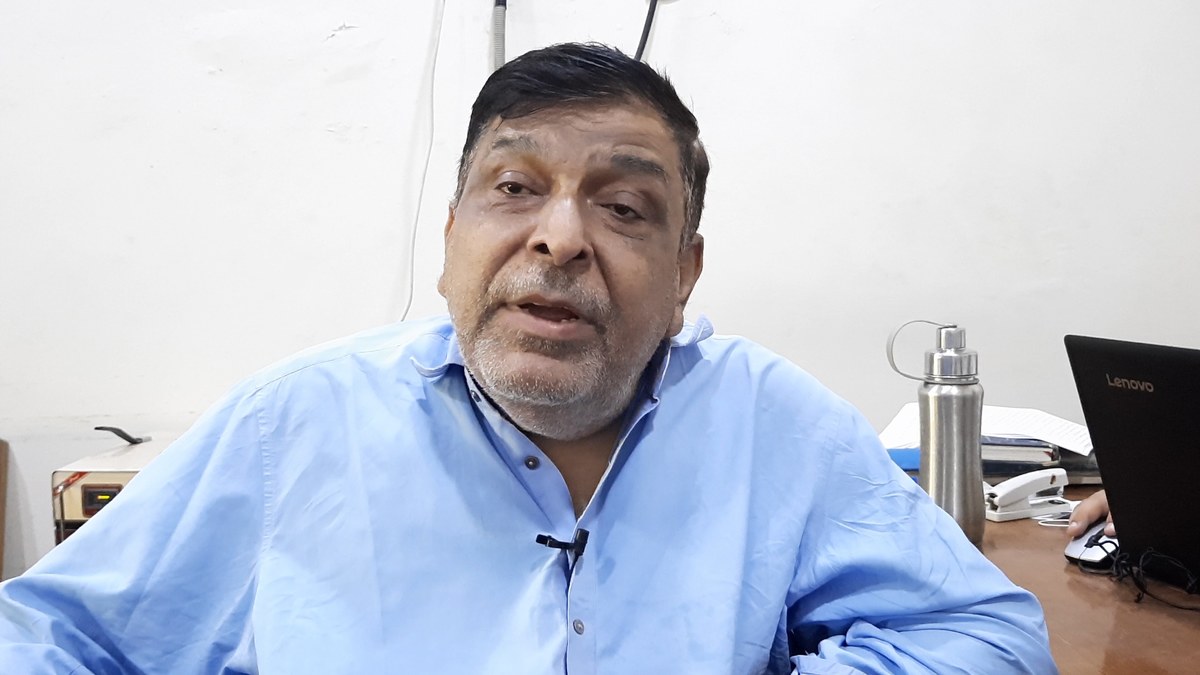
Muhammad Usman Farooqui, General Secretary of the Pakistan Second-Hand Clothing Merchants Association, speaks to Arab News, in Karachi, Pakistan, on October 05, 2021. (AN Photo)
Pakistani traders import secondhand clothes mainly from the United States, Europe, Japan, Australia, China and Korea.
Experts say one of the key reasons for the import of secondhand clothing items is poverty. According to the Pakistan Institute of Development Economics (PIDE), about 39 percent of Pakistanis live in poverty.
“Due to the prevailing poverty, people are left with the choice between clothing and food,” said senior economist Dr. Abdul Jabbar Khan. “Their first choice obviously would be to keep a contact between body and soul.”
Pakistani importers said imported secondhand articles including blankets, jackets and other casual wear were currently meeting around 30 percent of the clothing requirements of the country’s poor.
“Imported pre-worn clothes meet around 25 percent to 30 percent of the requirement of the poor segment, which cannot afford new clothing,” Farooqui said, pointing to a huge difference in the prices of new and old items.
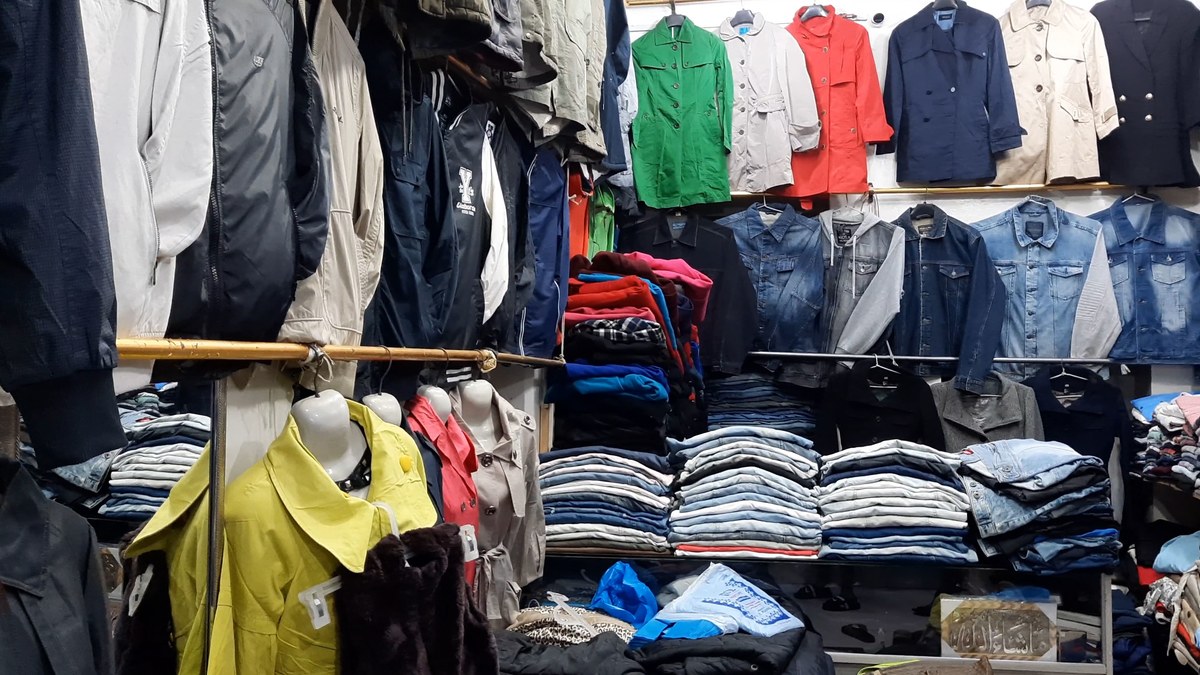
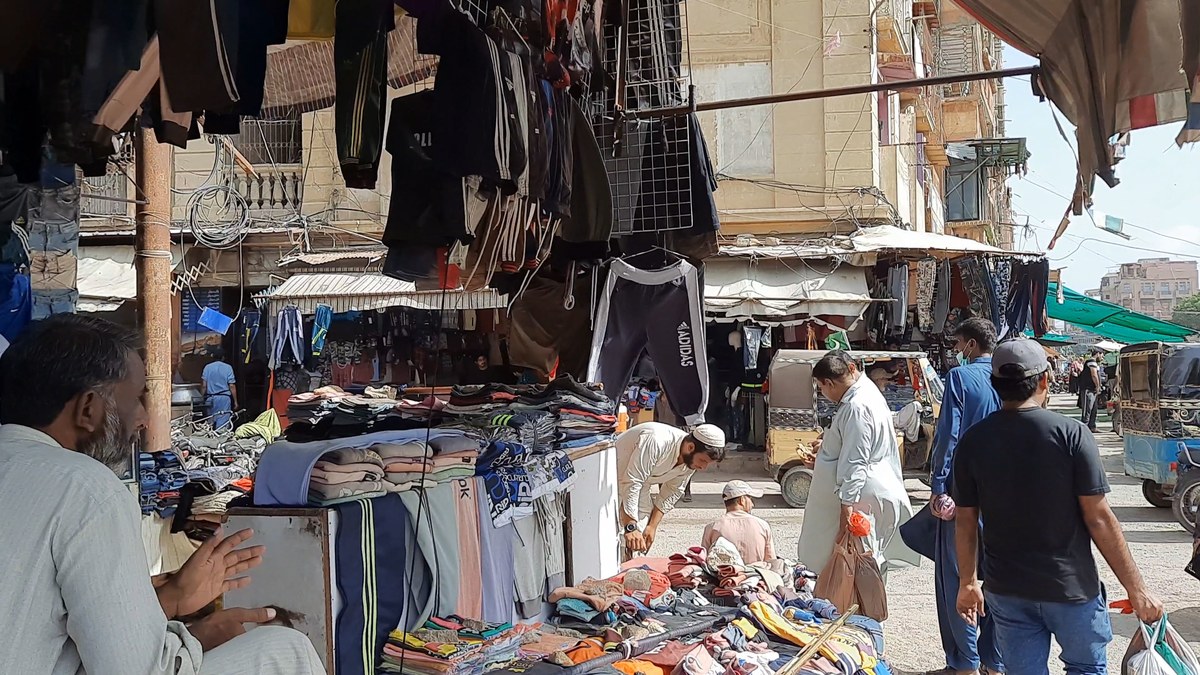
Imported clothes on display as traders and vendors go about their business at a secondhand clothes market on MA Jinnah Road in Karachi, Pakistan, on October 5, 2021. (AN Photo)
“Jeans which are available for Rs100 [at flea markets] would be available for around Rs900 in the other markets. The price difference is the major attraction for buyers apart from the quality of imported articles,” Ismail Khan, a flea market vendor in Karachi, told Arab News.
The used clothes business was previously limited to a few areas around the port city’s MA Jinnah Road, but has now expanded to other parts of the megapolis and across the country.
But traders complain of high import costs like duties, taxes and high freight charges, and call for a 10 percent waiver in regulatory duty on the import of pre-worn clothes and a reduction in five percent general sales tax (GST).
“The cost of imported clothes has increased due to a huge depreciation of Pakistani rupee,” Farooqui said.
“Besides the freight [charges] from USA have increased from $2,000 to over $4,000, from Europe from 1,800 euros to 2,500 euros, while freight from China has increased from $3,000 per container to $9,000. Commercial importers are in crisis.”