Wa’ed startup grants hit over $5.6m after third roadshow event

(@AramcoEC)
Short Url
Updated 13 October 2021
Follow

Wa’ed startup grants hit over $5.6m after third roadshow event

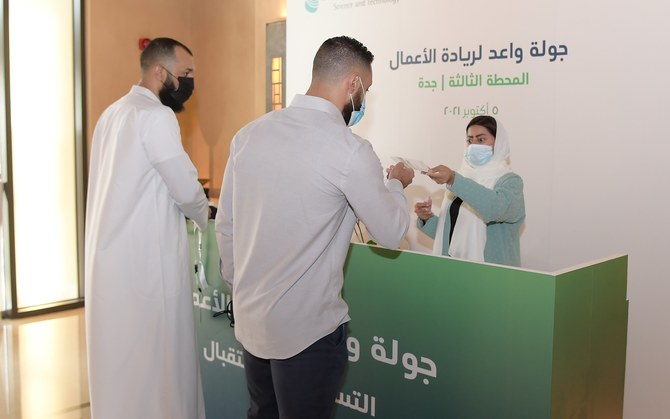
Wa’ed, the entrepreneurship arm of Aramco, has now poured SR21 million ($5.6 million) into Saudi-based startups after its third national roadshow stop in Jeddah.  

The event follows two previous stops held in Al-Jubail and Yanbu industrial cities, where the Aramco unit pledged a number of loans and seed grants to eleven Saudi-based startups. 

Managing director Fahad Alidi said it is important for Wa'ed to provide "accessible and inclusive opportunities across various sectors" in the Kingdom's startup scene.

In an allusion to the Saudi Vision 2030, that puts emphasis on the contribution of small and medium enterprises (SMEs) to the national GDP, he added: "True entrepreneurial innovation makes the backbone of the Kingdom's economic and technological development.”

Wa’ed has also recommended a venture capital fund to Fathom Solutions, a Saudi-based software company that provides enterprise AI and IoT platform solutions to increase digital business agility in the oil and gas industry. 

For seed grants, Wa’ed granted SR75,000 to Mawidy, a deep tech startup utilizing artificial intelligence to enhance healthcare services, and SR50,000 to Last Link (Bubble), a proximity-based online video platform that turns virtual workshops to collaborative and engaging experiences. 

It also pledged a SR25,000 seed grant to Veem, a business-to-business AI-backed virtual commerce platform that helps retail stores boost their customer experience and retention rates.

This comes amid Wa’ed’s aim to promote higher visibility and financial support to key entrepreneurial sectors, as the national roadshow rumbles on in the next two months.


UAE bank assets rise 0.8% to $1.43tn as credit expands: CBUAE data 

Updated 4 sec ago
Follow

UAE bank assets rise 0.8% to $1.43tn as credit expands: CBUAE data 

RIYADH: UAE bank assets rose 0.8 percent in November to 5.25 trillion Emirati dirhams ($1.43 trillion), extending growth in the sector as credit and deposits continued to expand, central bank data showed.  

Gross banking assets increased from 5.2 trillion dirhams in October, according to the Central Bank of the UAE’s Monetary and Banking Developments report. Gross credit rose 0.7 percent to 2.53 trillion dirhams, supported by growth in both domestic and foreign lending. 

The domestic expansion included a 0.4 percent rise in credit to the private sector, aligning with the UAE’s “Projects of the 50” agenda to stimulate private investment and reduce the economy's reliance on hydrocarbons. 

In its latest report, CBUAE stated: “Gross credit increased due to the combined growth in domestic credit by 9 billion dirhams and in foreign credit by 8.7 billion dirhams.” 

It added: “The growth in domestic credit was due to the increases in credit to the government sector by 2.6 percent, in the private sector by 0.4 percent, and in credit to the non-banking financial institutions by 3.6 percent, overshadowing the decrease in credit to the public sector (government-related entities) by 1 percent.” 

A notable shift was observed in the money supply data. While the narrow money supply aggregate M1 decreased by 1.7 percent due to a drop in monetary deposits, broader measures saw significant growth.  

The report stated: “The money supply aggregate M2 increased by 1.5 percent,” primarily due to a substantial 58.2 billion dirhams growth in quasi-monetary deposits.

Similarly, M3, which includes government deposits, also rose by 1.5 percent, “amplified by 8.6 billion dirhams increase in government deposits.” 

The simultaneous fall in M1 and rise in M2 and M3 suggests a liquidity transformation within the system, with money moving from checking accounts into savings, time deposits, and government accounts, which can be used for longer-term lending. 

The foundation of the banking system also strengthened, as “the monetary base increased by 1.7 percent.” This growth was driven by the growth in reserve account by 21.5 percent, in currency issued by 2.6 percent, and in monetary bills and Islamic certificates of deposit by 8.8 percent. 

On the deposits side, the report noted that “banks’ deposits increased by 1 percent,” totaling 3.23 trillion dirhams.

This growth was “driven by the growth in resident deposits by 1.4 percent,” which reached 2.97 trillion dirhams. Within resident deposits, the private sector led with a 1.2 percent increase, while deposits in government-related entities saw a significant 3 percent rise.