WELLINGTON, New Zealand: New Zealand’s government acknowledged Monday what most other countries did long ago: It can no longer completely get rid of the coronavirus.
Prime Minister Jacinda Ardern announced a cautious plan to ease lockdown restrictions in Auckland, despite an outbreak there that continues to simmer.
Since early in the pandemic, New Zealand had pursued an unusual zero-tolerance approach to the virus through strict lockdowns and aggressive contact tracing.
Until recently, that elimination strategy had worked remarkably well for the country of 5 million, which has reported just 27 virus deaths.
While other nations faced rising death tolls and disrupted lives, New Zealanders went back to workplaces, school yards and sports stadiums safe from any community spread.
But that all changed when the more contagious delta variant somehow escaped from a quarantine facility in August after it was brought into the country from a traveler returning from Australia.
Despite New Zealand going into the strictest form of lockdown after just a single local case was detected, it ultimately wasn’t enough to crush the outbreak entirely.
One factor may have been that the disease spread among some groups that are typically more wary of authorities, including gang members and homeless people living in transitional housing.
The outbreak has grown to more than 1,300 cases, with 29 more detected on Monday. A few cases have been found outside of Auckland.
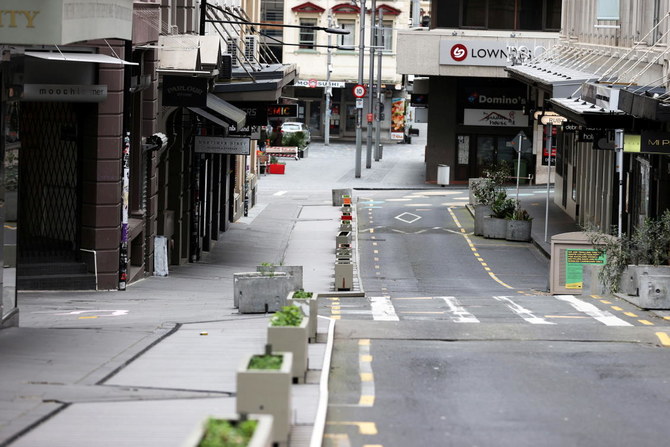
Ardern said that seven weeks of lockdown restrictions in Auckland had helped keep the outbreak under control.
“For this outbreak, it’s clear that long periods of heavy restrictions has not got us to zero cases,” Ardern said. “But that is OK. Elimination was important because we didn’t have vaccines. Now we do, so we can begin to change the way we do things.”
New Zealand began its vaccination campaign slowly compared to most other developed nations. Rates rocketed in August after the outbreak began but have dropped off significantly again since then.
About 65 percent of New Zealanders have had at least one dose and 40 percent are fully vaccinated. Among people age 12 and older, about 79 percent have had at least a single jab.
Under Ardern’s plan that starts Tuesday, Aucklanders will be able to meet outdoors with loved ones from one other household, early childhood centers will reopen and people will be able to go to the beach.
The dates for a phased reopening of retail stores and later bars and restaurants have yet to be decided.
Ardern said the elimination strategy had served the country incredibly well but the government always intended to eventually transition to the protection of vaccines, a change hastened by the delta variant “game changer.”
The government’s elimination approach had been broadly supported by New Zealanders but was facing increasing criticism. Over the weekend, hundreds of people turned out to rallies protesting the lockdown.
Opposition lawmaker Chris Bishop said the government had no clear strategy to deal with the outbreak other than total surrender.
But Ardern said that most measures would remain in place to keep the outbreak under control, including exhaustive contact tracing and isolating those who got infected.
“There’s good cause for us to feel optimistic about the future,” Ardern said. “But we cannot rush.”


New Zealand admits it can no longer get rid of coronavirus
https://arab.news/wv2ne
New Zealand admits it can no longer get rid of coronavirus

- New Zealand began its vaccination campaign slowly compared to most other developed nations


Uganda partially restores internet after president wins 7th term
- “The internet shutdown implemented two days before the elections limited access to information, freedom of association, curtailed economic activities ... it also created suspicion and mistrust on the electoral process,” the team said in their report
KAMPALA: Ugandan authorities have partially restored internet services late after 81-year-old President Yoweri Museveni won a seventh term to extend his rule into a fifth decade with a landslide victory rejected by the opposition.
Users reported being able to reconnect to the internet and some internet service providers sent out a message to customers saying the regulator had ordered them to restore services excluding social media.
“We have restored internet so that businesses that rely on internet can resume work,” David Birungi, spokesperson for Airtel Uganda, one of the country’s biggest telecom companies said. He added that the state communications regulator had ordered that social media remain shut down.
The state-run Uganda Communications Commission said it had cut off internet to curb “misinformation, disinformation, electoral fraud and related risks.” The opposition, however, criticized the move saying it was to cement control over the electoral process and guarantee a win for the incumbent.
The electoral body in the East African country on Saturday declared Museveni the winner of Thursday’s poll with 71.6 percent of the vote, while his rival pop star-turned-politician Bobi Wine was credited with 24 percent of the vote.
A joint report from an election observer team from the African Union and other regional blocs criticized the involvement of the military in the election and the authorities’ decision to cut off internet.
“The internet shutdown implemented two days before the elections limited access to information, freedom of association, curtailed economic activities ... it also created suspicion and mistrust on the electoral process,” the team said in their report.
In power since 1986 and currently Africa’s third longest-ruling head of state, Museveni’s latest win means he will have been in power for nearly half a century when his new term ends in 2031.
He is widely thought to be preparing his son, Muhoozi Kainerugaba, to take over from him. Kainerugaba is currently head of the military and has expressed presidential ambitions.
Wine, who was taking on Museveni for a second time, has rejected the results of the latest vote and alleged mass fraud during the election.
Scattered opposition protests broke out late on Saturday after results were announced, according to a witness and police.
In Magere, a suburb in Kampala’s north where Wine lives, a group of youths burned tires and erected barricades in the road prompting police to respond with tear gas.
Police spokesperson Racheal Kawala said the protests had been quashed and that arrests were made but said the number of those detained would be released later.
Wine’s whereabouts were unknown early on Sunday after he said in a post on X he had escaped a raid by the military on his home. People close to him said he remained at an undisclosed location in Uganda. Wine was briefly held under house arrest following the previous election in 2021.
Wine has said hundreds of his supporters were detained during the months leading up to the vote and that others have been tortured.
Government officials have denied those allegations and say those who have been detained have violated the law and will be put through due process.


