

Saudi Arabia turning into a global player in tech investment: 500 Global chief

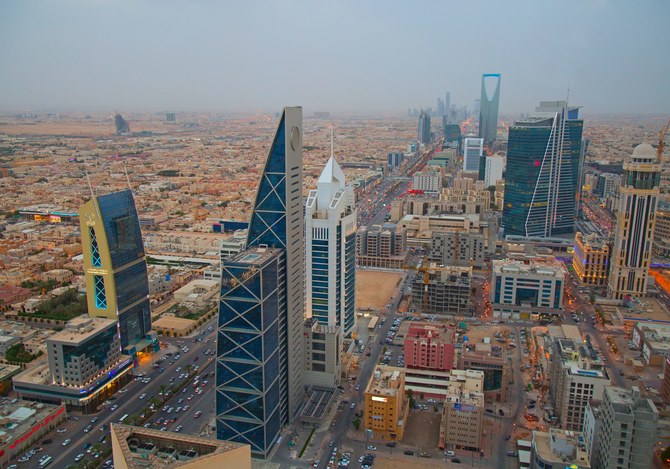
500 Global made its first investment in the Kingdom in 2012 and established its Middle East headquarters in Riyadh last year.  (Shutterstock)
Short Url
Updated 13 October 2021
Follow

Saudi Arabia turning into a global player in tech investment: 500 Global chief

  • 500 Global, previously known as 500 Startups, is a venture capital firm based in San Francisco, California

Saudi Arabia is fast becoming a global player for innovation thanks to a record year for start-ups and funding, the head of an international venture capital firm has declared. 

In an exclusive interview with Arab News, Christine Tsai, CEO of 500 Global, praised the Kingdom for its technological developments in financial technology, e-commerce, and e-health.

500 Global, previously known as 500 Startups, is a venture capital firm based in San Francisco, California. 

It made its first investment in the Kingdom in 2016, and the CEO said there is strong founder talent in Saudi Arabia.

“A lot of this was driven by the fact that we see a lot of very strong founder talent, local talent," she told Arab News, adding: "There was capital gap in a lot of markets and we’ve seen over the past ten years capital starts to catch up, now the world is a very different place, companies are starting to mature and more people are interested in getting exposure to venture capital to tech so as a result there’s more capital coming into market.

“I think what we have also seen over the many years that we have been in the Middle East is that Saudi Arabia has really started to develop and flourish over the past few years, [and] 2020 was really a record year in that sense in terms of startups and venture funding and new funds and a lot of support from various important stakeholders."

500 Global established their Middle East headquarters in Riyadh last year. 

“We have a team there and a number of growing portfolios in Saudi as well. We are quite excited about Saudi being a major hub for tech,” Tsai said.

She highlighted that one of the most prominent sectors in the Kingdom to invest in is financial technology.

“Broadly, we have seen a lot of fintech, there's a lot innovation coming in for fintech both for locally within Saudi as well as the broader MENA region but fintech, commerce or e-commerce, health tech has also been quite interesting as well and in addition to those, we also do see opportunities in software as a service (SAS).”

Tsai said the first thing her firm looks at when considering investing in a startup is the team. 

“We look certainly very closely at the team, which is something quite critical for us especially because we’re usually investing in young companies in terms of the first investment,” she said. 

“So if the team has a strong ability to execute, maybe some sort of domain expertise in the industry that they’re building their company in, and just generally that we can see them scaling the company,” she added.

As well as the team, the product itself is clearly a key factor in investment decisions, as well as the market itself.

She said investment firms are looking for “potentially big outcomes,”, but added: “Sometimes this is actually not that clear from the beginning - we invested in companies all around the world, many co-investors may have looked at certain markets and felt like there it’s impossible to see some big outcome because they haven’t seen big outcomes in a certain country or region.

“But for us, we are also betting on a future and that we will start to see big companies, billion dollar companies coming out of certain countries or certain sectors, so for us that’s something that we have also done quite well over the past ten years.”



Lebanese social entrepreneur Omar Itani recognized by Schwab Foundation

Updated 23 January 2026
Follow

Lebanese social entrepreneur Omar Itani recognized by Schwab Foundation

  • FabricAID co-founder among 21 global recipients recognized for social innovation

DAVOS: Lebanon’s Omar Itani is one of 21 recipients of the Social Entrepreneurs and Innovators of the Year Award by the Schwab Foundation for Social Entrepreneurship.

Itani is the co-founder of social enterprise FabricAID, which aims to “eradicate symptoms of poverty” by collecting and sanitizing secondhand clothing before placing items in stores in “extremely marginalized areas,” he told Arab News on the sidelines of the World Economic Forum in Davos, Switzerland.

With prices ranging from $0.25 to $4, the goal is for people to have a “dignified shopping experience” at affordable prices, he added.

FabricAID operates a network of clothing collection bins across key locations in Lebanon and Jordan, allowing people to donate pre-loved items. The garments are cleaned and sorted before being sold through the organization’s stores, while items that cannot be resold due to damage or heavy wear are repurposed for other uses, including corporate merchandise.

Since its launch, FabricAID has sold more than 1 million items, reached 200,000 beneficiaries and is preparing to expand into the Egyptian market.

Amid uncertainty in the Middle East, Itani advised young entrepreneurs to reframe challenges as opportunities.

“In Lebanon and the Arab world, we complain a lot,” he said. Understandably so, as “there are a lot of issues” in the region, resulting in people feeling frustrated and wanting to move away. But, he added, “a good portion of the challenges” facing the Middle East are “great economic and commercial opportunities.”

Over the past year, social innovators raised a combined $970 million in funding and secured a further $89 million in non-cash contributions, according to the Schwab Foundation’s recent report, “Built to Last: Social Innovation in Transition.”

This is particularly significant in an environment of geopolitical uncertainty and at a time when 82 percent report being affected by shrinking resources, triggering delays in program rollout (70 percent) and disruptions to scaling plans (72 percent).

Francois Bonnici, director of the Schwab Foundation for Social Entrepreneurship and a member of the World Economic Forum’s Executive Committee, said: “The next decade must move the models of social innovation decisively from the margins to the mainstream, transforming not only markets but mindsets.”

Award recipients take part in a structured three-year engagement with the Schwab Foundation, after which they join its global network as lifelong members. The program connects social entrepreneurs with international peers, collaborative initiatives, and capacity-building support aimed at strengthening and scaling their work.
